13
What Do Brits Call T-Shirts? A Guide for Irish Shoppers
UK vs. Ireland Clothing Translator
Click a term below to see its equivalent across the Irish Sea. Perfect for online shopping or packing lists.
Click any red badge (UK) or green badge (IE) above to see the direct translation and usage notes.
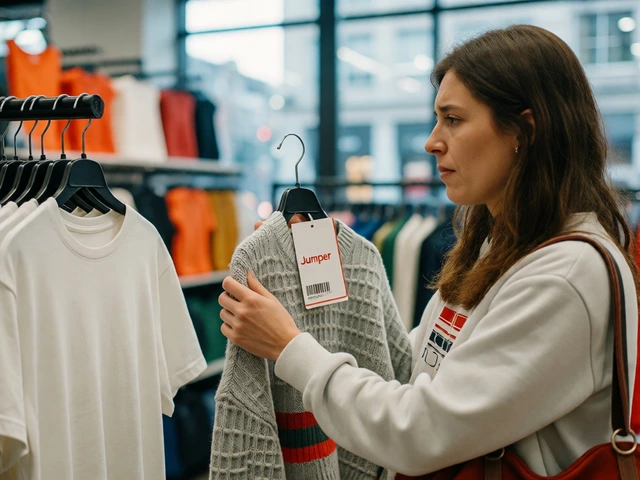
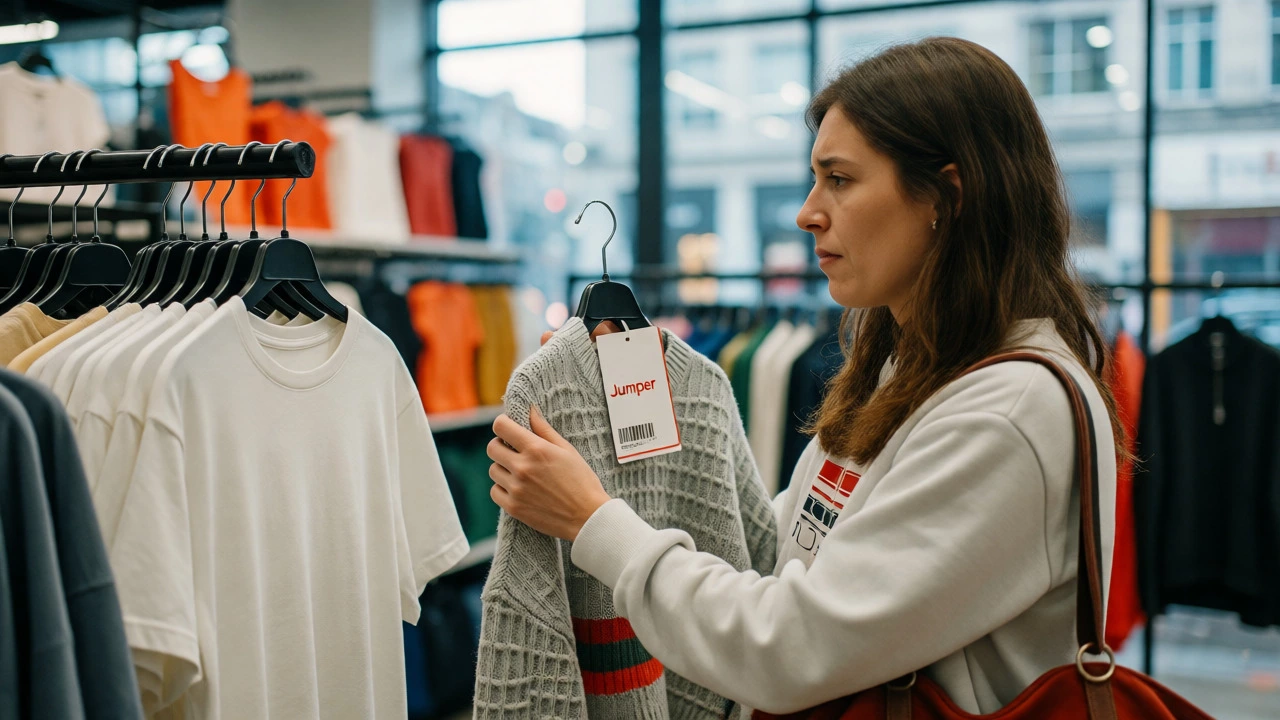
You’re standing in a Primark on O’Connell Street or browsing an online retailer based in Manchester, and you see it: "Jumper". Your brain does a quick double-take. In Ireland, we call that a sweater or a jersey. But what do Brits call T-shirts? If you’ve ever tried to order a plain white tee from a British website, you might have noticed they don’t always use the word "T-shirt." They often just say "tee," "top," or sometimes even "vest" (which means something completely different here). This linguistic mix-up is more than just a fun trivia fact; it affects how you shop, how you pack for a trip across the Irish Sea, and how you understand the subtle cultural codes of the UK.
For people living in Ireland, crossing over to buy clothes in Britain or ordering from UK-based brands like Next, ASOS, or Boohoo is common. The proximity makes it easy. But language barriers-even between two English-speaking nations-can cause real confusion. You might think you’re buying a tank top when you’re actually getting an undershirt, or you might be looking for a "jumper" when you really want a hoodie. Understanding these terms saves you money on returns and keeps you from wearing the wrong thing to a wedding in London versus one in Dublin.
The Short Answer: It’s Usually Just a Tee
Let’s cut to the chase. In the vast majority of cases, Brits call them T-shirts, too. There isn’t some secret, universal code where every shirt is called something else. However, the usage varies by region, age group, and context. If you walk into a high-street shop in Birmingham or Leeds, the signage will likely say "T-Shirts" or "Tees." But if you dig deeper into the vernacular, especially among younger crowds or in specific regions, things get murkier.
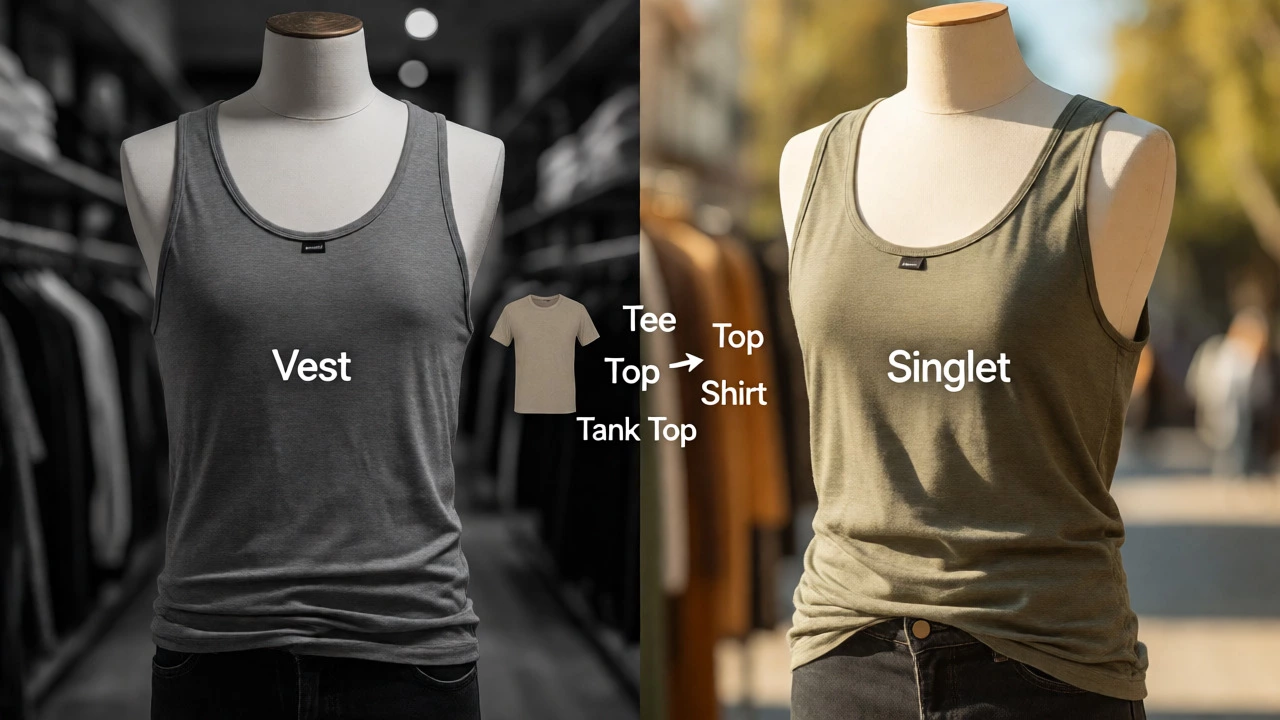
In parts of Northern England and Scotland, you might hear the term "vest" used loosely, but this is risky territory. In standard British English, a vest is what we in Ireland would call an undershirt or a singlet-a sleeveless garment worn under other clothes. If you ask a Brit for a "vest," they will hand you something meant to be hidden, not your main outfit piece. Conversely, if you ask for a "singlet" in Ireland, you mean a gym top or a tank top. In the UK, a singlet can also refer to a wrestling outfit or a specific type of athletic wear. The overlap is confusing because the words exist in both lexicons but map to different garments.
Regional Differences: From London to Liverpool
Language in the UK is as varied as its weather. What works in London might sound odd in Glasgow. Let’s break down the regional quirks that affect how shirts are named.
- London and the South East: Here, "T-shirt" and "tee" are the dominant terms. You’ll also hear "top" frequently, especially for women’s clothing. A "graphic top" is just a printed T-shirt. The class distinction is subtle but present; older generations might stick strictly to "T-shirt," while younger, trend-focused shoppers prefer "tee" or brand-specific names.
- The North West (Manchester/Liverpool): You might encounter the word "jersey" here, but it’s often reserved for knitted sweaters, not cotton tees. However, due to close ties with Ireland, many Northerners understand Irish usage perfectly. Still, don’t be surprised if someone refers to a heavy cotton long-sleeve as a "long-sleeve" rather than specifying it’s a T-shirt variant.
- Scotland: Scots have their own rich dialect. While "T-shirt" is understood, you might hear "shirt" used generically for any casual top. Context is king. If you’re in Edinburgh and ask for a "shirt," clarify if you mean a button-down or a casual tee. The risk of misunderstanding is higher here than in London.
It’s worth noting that the influence of American culture has standardized "T-shirt" globally, including in the UK. So, while traditional slang exists, modern retail language has largely converged. If you’re under 30, you’re likely using the same terms as your peers in Dublin. The divide is mostly generational and regional.
Shopping Online: Decoding UK Retail Descriptions
If you’re ordering from a UK site to Ireland, the product descriptions are your best friend-and your biggest trap. UK retailers use specific taxonomy that differs slightly from Irish or US sites. Here’s how to navigate it without getting stuck with customs fees on the wrong item.
| UK Term | Irish Equivalent | Description |
|---|---|---|
| Vest | Undershirt / Singlet | Sleeveless base layer, usually cotton or synthetic. |
| Jumper | Sweater / Jersey | Knitted pullover, typically wool or acrylic. |
| Trainers | Runners / Sneakers | Athletic shoes for running or casual wear. |
| Top | T-Shirt / Blouse | Generic term for any upper-body garment. |
| Waistcoat | Gilet / Vest | Sleeveless jacket, often padded or formal. |
Notice the term "Top." In UK e-commerce, this is the catch-all category. If you search for "white top," you’ll get blouses, tunics, and yes, T-shirts. To find exactly what you want, you need to filter by material (cotton) and style (crew neck, V-neck). Don’t rely on the name alone. Check the fabric composition. If it says 100% cotton and short sleeves, it’s effectively a T-shirt, regardless of whether the label says "Tee," "Shirt," or "Top."
Cultural Nuances: Why Words Matter More Than You Think
Fashion isn’t just about utility; it’s about identity. The way Brits talk about their clothes reflects social cues. For instance, calling a garment a "tee" can signal a relaxed, perhaps youthful attitude. Calling it a "T-shirt" is neutral. But there’s a stigma attached to certain types of tees. A "wifebeater" (the ribbed white tank top) carries heavy connotations in the UK, often associated with working-class masculinity or specific subcultures. In Ireland, we might just call it a vest or a singlet without the same loaded judgment, though that is changing.
Consider the phrase "going out top." In London nightlife, this doesn’t mean a T-shirt. It means a dressy blouse or a sequined number. If you show up to a club in Shoreditch in a plain band tee, you might feel underdressed compared to locals who interpret "top" as "fashion-forward upper garment." Meanwhile, in a pub in Cork, a T-shirt is perfectly acceptable evening wear. The boundary between casual and smart-casual is drawn differently across the water.
This extends to branding. British streetwear brands like Palace or Stone Island use minimal labeling. Their fans know what a "Stone Island tee" looks like without needing the word "T-shirt." In contrast, mass-market brands like M&S or John Lewis use clear, descriptive language to avoid confusion for older demographics. Knowing which brand you’re dealing with helps predict the terminology.
Practical Tips for Cross-Border Shopping
If you live near the border or travel frequently to Belfast or beyond, here’s how to handle the language gap without frustration.
- Use Visual Search: When unsure, take a photo of what you want and use image search tools on apps like ASOS or Amazon UK. This bypasses the text description entirely.
- Ask for "Cotton Crew Neck": Instead of saying "I want a T-shirt," describe the features. "Do you have this in a cotton crew neck?" eliminates ambiguity. No matter what they call it, you know what you’re getting.
- Beware of "Vests": If you’re shopping for summer gear in the UK, remember that a "men’s vest" is underwear. Look for "tank top" or "sleeveless tee" if you want outerwear. In Ireland, our "vests" are outerwear; theirs are innerwear.
- Check Sizing Charts: UK sizing is identical to Irish sizing, but fit preferences differ. Brits tend to favor slimmer cuts in tees. An "L" in London might fit tighter than an "L" in Dublin. Always check the model’s height and weight stats provided on the site.
Also, keep an eye on seasonal sales. The UK has massive discount periods like Black Friday and January sales that often start earlier than in Ireland. Ordering early means you can leverage the language knowledge you’ve gained to snag deals before stock runs out. And since Brexit, remember that shipping times and customs declarations apply. Getting the item right the first time avoids the hassle of international returns.
The Influence of Globalization on Local Slang
Is this linguistic difference fading away? Probably. With TikTok and Instagram algorithms serving the same fashion trends to users in Dublin and Manchester simultaneously, the vocabulary is homogenizing. Younger Brits increasingly use "tee" and "top" interchangeably, mirroring global internet slang. The distinct regional accents and vocabularies are softening around the edges.
However, older generations and specific industries retain traditional terms. In sports, for example, a football kit’s shirt is still just a "shirt." In rugby, the jersey is a "jersey." These contexts are stable. But for everyday casual wear, the lines are blurring. So, while you should know what a "jumper" is, you probably won’t face major hurdles asking for a "T-shirt" anywhere in the UK today. The key is listening to the context and adapting your request if you hit a blank stare.
Do Brits call tank tops vests?
Yes, in standard British English, a "vest" typically refers to a sleeveless undershirt worn beneath other clothes. What Americans and Irish people often call a "tank top" or "singlet" for outdoor wear is usually labeled as a "vest" in UK men's sections, which can lead to confusion. For women, the term "vest" is less common for outerwear, with "camisole" or "tank top" being preferred.
Is a jumper a T-shirt in the UK?
No. In the UK, a "jumper" is a knitted sweater or pullover, equivalent to what is called a "jersey" or "sweater" in Ireland. A T-shirt is made of lighter fabric, usually cotton, and is not referred to as a jumper. Confusing the two could result in buying a warm winter garment instead of a summer top.
Why do some Brits say "tee" instead of "T-shirt"?
"Tee" is a shortened, informal version of T-shirt. It is widely used in casual conversation, particularly among younger people and in fashion contexts. It sounds quicker and less formal. Using "tee" doesn't indicate a different type of shirt, just a more colloquial register of speech.
Can I use Irish slang when shopping in London?
Mostly, yes. Terms like "runners" for sneakers are generally understood, though "trainers" is the standard UK term. However, avoid using "jersey" for a T-shirt, as it will confuse staff. Stick to visual descriptions or standard English terms like "T-shirt," "top," or "tee" to ensure clarity.
What is a "waistcoat" in the UK?
A waistcoat is a sleeveless buttoned garment worn over a shirt, often part of a three-piece suit. In Ireland, we might call a similar padded outer layer a "gilet" or "body warmer." It is not related to T-shirts but is another common clothing term that differs between the countries.