7
How to Spot High-Quality Leather Shoes in Ireland
Irish Leather Shoe Quality Checker
Use this checklist before buying your next pair of shoes in Dublin, Cork, or Galway. Select the option that best describes the shoe you are inspecting.
Awaiting Input
Select options from the checklist to see your score.
You know the feeling. You buy a pair of leather shoes, walk out into the Dublin drizzle or navigate the cobblestones of Galway, and within three months, the sole is peeling and the upper looks like it’s been through a washing machine. It’s frustrating, especially when you’ve spent over €100 on something that should last years. The truth is, most people can’t tell the difference between full-grain leather and cheap bonded leather just by looking at the price tag. But if you’re shopping in Ireland, where wet weather is basically a permanent resident, knowing how to spot high-quality footwear isn’t just about style-it’s about survival for your feet and your wallet.
The Smell Test Is Your First Line of Defence
Forget the visual check for a second. Close your eyes and take a sniff. Genuine leather has a distinct, rich, earthy scent. It smells like a forest floor after rain, not like plastic or glue. If you’re standing in a shop on Grafton Street or browsing a market stall in Cork, and the shoes smell like a new car interior (that synthetic vinyl smell), put them back. That’s usually polyurethane or PVC trying to pass itself off as leather.
Real leather absorbs moisture and breathes. This matters massively here because our humidity levels are high. Cheap synthetic materials trap sweat against your foot, leading to blisters and odour. Quality leather regulates temperature. In winter, it keeps your feet warm without overheating; in summer, it allows air circulation. If you’re buying work boots for construction sites in Limerick or walking shoes for hiking the Wicklow Way, this breathability is non-negotiable.
Inspect the Grain: Full-Grain vs. Top-Grain vs. Corrected
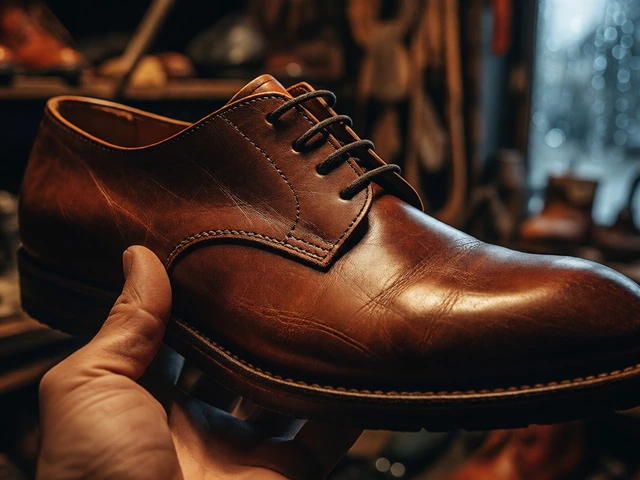
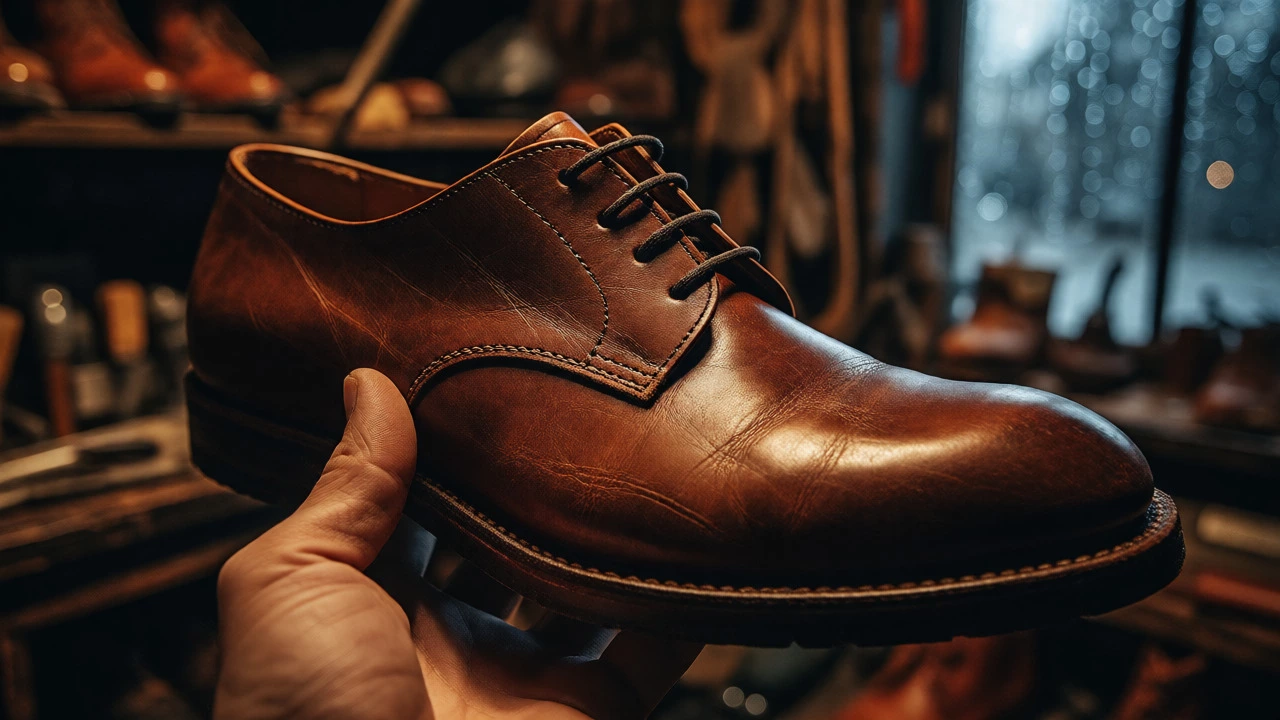
Not all leather is created equal. When you look closely at the surface, you want to see natural imperfections-scars, pores, and slight variations in texture. This is full-grain leather. It’s the top layer of the hide, untouched and sanded only minimally. It’s tough, water-resistant, and ages beautifully, developing a patina that tells the story of where you’ve walked.
Then there’s top-grain leather. It’s sanded down to remove blemishes and finished with a coating. It’s softer and more uniform but slightly less durable than full-grain. Still, it’s decent quality for everyday city wear.
Watch out for "corrected grain" or "bonded leather." Bonded leather is essentially leather dust glued together with polyurethane and stamped with an artificial grain. It cracks easily in cold Irish winters. If you press your thumb firmly into the shoe and the material doesn’t wrinkle naturally around the pressure point, it’s likely fake or low-grade. Real leather wrinkles; plastic stretches or stays rigid.
Check the Sole Construction: Goodyear Welt vs. Cemented
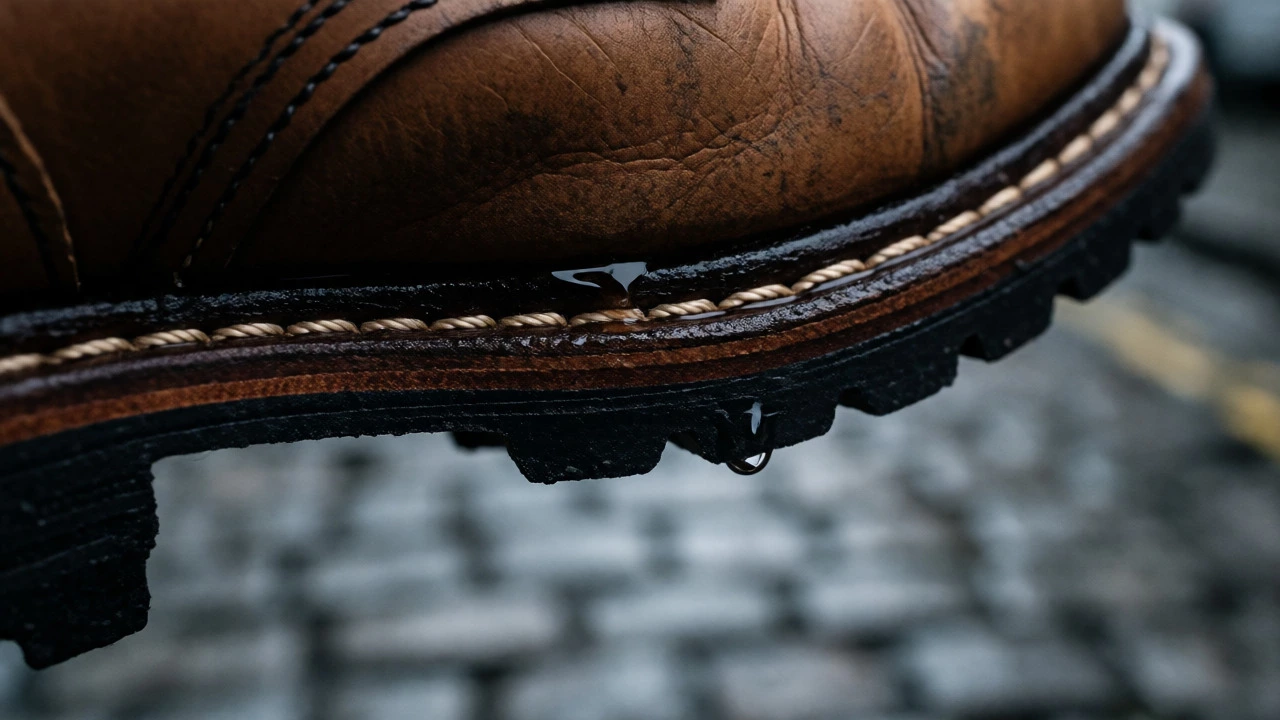
The upper might be real leather, but if the sole is glued on poorly, the whole shoe is doomed. In Ireland, we deal with puddles, mud, and grit daily. A glued sole (cemented construction) will eventually separate from the upper when exposed to constant moisture and flexing. You’ll hear that squelching sound before you even see the damage.
Look for Goodyear welt construction. This method stitches the upper, lining, and insole together, then attaches the outsole with another stitch. It’s labour-intensive, which is why it costs more, but it means the shoe can be resoled. Brands like Church’s or local Irish makers like Dunnes Stores’ premium lines often use this. If you can see a visible stitching line running around the edge of the sole, that’s a good sign. If the sole looks like it was melted onto the shoe, think twice.
Weight and Flexibility Matter More Than You Think
Pick up the shoe. Good leather shoes have heft. They shouldn’t feel light and flimsy. However, they also need flexibility. Try bending the toe box. It should bend at the ball of the foot, not in the middle of the arch. If the whole shoe twists like a wet towel, the structure is weak. If it’s completely rigid, it will cause blisters until it breaks in-which could take weeks of pain.
A simple test: squeeze the heel counter (the back part of the shoe). It should be firm enough to hold your ankle steady. Loose heels cause slipping, which leads to rubbing. In rainy conditions, a stable heel prevents your foot from sliding forward, keeping your toes dry inside the boot.
Local Context: Why Irish Weather Demands Specific Features
Shopping for shoes in Ireland requires a different checklist than buying them in sunny Spain. Our climate is mild but consistently damp. Rain falls sideways half the time. Therefore, water resistance is critical. Look for shoes treated with wax or oil finishes. These repel water better than standard polished leather.
Also, consider the tread. Smooth leather soles are slippery on wet pavement and public transport floors. Rubber soles with deep lugs provide grip. If you’re commuting in Belfast or Dublin, you don’t want to slip on a wet bus step. Some premium brands offer hybrid designs-leather uppers with rubber soles-that balance style and safety.
Where to Buy Authentic Quality in Ireland
Knowing what to look for is half the battle. Knowing where to find it is the other half. Avoid fast-fashion chains unless you’re checking labels obsessively. Many "leather" shoes in big-box retailers are actually split-leather or synthetic blends.
Instead, visit independent cobbler shops or heritage brands. Stores like Brown Thomas or Arnotts carry reputable European brands known for quality control. For a more local touch, check out artisans who source hides from Irish tanneries. Irish leather has a global reputation for durability, partly due to traditional tanning methods using bark extracts.
| Feature | High Quality Indicator | Low Quality Warning Sign |
|---|---|---|
| Smell | Rich, earthy, natural | Plastic, chemical, glue |
| Surface Texture | Natural pores, scars, variation | Perfectly uniform, printed pattern |
| Sole Attachment | Visible stitching (Welt/Stitch) | Glue residue, smooth edge |
| Flexibility | Bends at toe, stiff heel | Twists entirely or too rigid |
| Lining | Leather lining | Fabric or synthetic lining |
Care Tips to Make Them Last Through Irish Winters
Even the best shoes fail if neglected. Since we get rain almost every day, waterproofing is key. Apply a beeswax-based conditioner every few weeks. This nourishes the leather and creates a barrier against moisture. Don’t let your shoes dry near a radiator; heat cracks leather. Stuff them with newspaper to absorb dampness and maintain shape overnight.
Rotate your pairs. Never wear the same shoes two days in a row. Leather needs 24 hours to dry out fully. If you wear them wet one day and dry, then wet again the next, the fibres break down faster. Using cedar shoe trees helps maintain the form and absorbs odour, a small investment that saves expensive repairs later.
Is Italian leather always better than Irish leather?
Not necessarily. While Italy is famous for fashion-forward leather goods, Ireland has a strong tradition of producing durable, rugged leather suited for wet climates. Irish hides are often thicker and more robust, making them ideal for boots and outdoor wear, whereas some Italian leathers are thinner and designed for drier, warmer environments.
Can I fix a cracked sole on my favourite boots?
Yes, if the shoe has a Goodyear welt or similar stitched construction. Local cobblers in cities like Dublin, Cork, and Galway can replace the sole entirely. If the sole is glued on, repair is difficult and often not cost-effective compared to buying new shoes.
Why do my new leather shoes squeak?
Squeaking often comes from friction between the insole and the outer sole, or moisture trapped inside. Ensure your shoes are fully dry. Applying talcum powder under the insole can help reduce noise. If it persists, it may indicate poor bonding during manufacturing.
Are suede shoes practical for Ireland?
Suede is stylish but challenging in wet weather. It absorbs water easily and stains. If you live in a very rainy area like Westport or Killarney, treat suede with a strong water-repellent spray regularly. Otherwise, stick to smooth leather for daily commuting.
How much should I expect to pay for quality leather shoes in Ireland?
For entry-level genuine leather, expect to pay between €80 and €150. Mid-range quality with better construction ranges from €150 to €300. Premium handcrafted or Goodyear-welted shoes typically start at €300 and go up significantly. Remember, cheaper isn’t always better when considering long-term durability.