6
Fabrics to Avoid in Summer: A Guide for Irish Humidity

Irish Summer Fabric Checker
Check if your clothing fabric will keep you cool in the Irish humidity or leave you feeling sticky.
Result
RatingStanding on the banks of the Corrib in Galway, you know the specific type of summer discomfort we’re talking about. It’s not the dry, baking heat of Southern Europe; it’s a sticky, clinging humidity that makes synthetic clothes feel like a plastic bag wrapped around your skin. If you’ve ever tried to wear a heavy polyester dress during a warm spell in Dublin or Cork, you know exactly what I mean. The sweat doesn’t evaporate-it just sits there, turning your outfit into a swamp. Choosing the wrong fabric isn’t just about comfort; it’s about avoiding heat rash, body odor buildup, and that general feeling of misery when the temperature creeps past 20°C.
We need to talk about what not to wear. Yes, fashion trends push shiny synthetics and thick knits, but physics doesn’t care about Instagram aesthetics. In Ireland, where weather can swing from rain to sudden sunshine in an hour, your fabric choice determines whether you enjoy the day or spend it fanning yourself at a pub terrace. This guide breaks down the materials that will betray you in the Irish summer, why they fail, and what you should reach for instead.
The Synthetic Trap: Why Polyester Fails Us
Polyester is the villain of the modern wardrobe. It’s cheap, durable, and wrinkle-resistant, which is why fast-fashion giants love it. But here is the problem: polyester is essentially plastic. It has no breathability. When you wear a polyester blouse or dress, your body heat gets trapped against your skin. The moisture from your sweat cannot escape through the fibers. Instead, it condenses. You end up with that clammy, wet sensation that leads directly to chafing and fungal infections in skin folds.
In the context of the Irish market, this is especially problematic because our summers are often humid rather than hot. Dry heat allows sweat to evaporate quickly, even in synthetics. Humid air prevents evaporation. So, while a polyester shirt might be bearable in Spain, it is torture in Galway. Look at the label before you buy. If it says 100% polyester, put it back. If it’s a blend, ensure the synthetic content is low-under 20%-and mixed with a natural fiber like cotton or linen.
| Fabric Type | Breathability Rating | Moisture Wicking | Best For |
|---|---|---|---|
| Polyester | Low | None (Traps Heat) | Rain jackets (outer layer only) |
| Acrylic | Very Low | None | Cold winters, not summer |
| Nylon | Low-Medium | Low | Swimwear (quick dry) |
| Cotton | High | Absorbs (Stays Wet) | Light breezes, shade |
| Linen | Very High | Wicks & Dries Fast | Humid heat, direct sun |
Nylon and Acrylic: The Hidden Heat Traps
You might think nylon is safe because it’s used in swimwear. And yes, for swimming, it works because it dries quickly. But as a base layer or a dress fabric? It’s a disaster. Nylon is less breathable than polyester and tends to hold onto odors. Bacteria love the moist environment created by nylon against the skin. If you’re walking along the Salthill promenade on a muggy July evening, a nylon skirt will make you smell sooner than you’d like.
Then there is acrylic. Often found in cheaper knitwear or "lightweight" sweaters, acrylic is designed to mimic wool. But unlike wool, which regulates temperature beautifully, acrylic insulates regardless of the outside temp. It traps heat aggressively. Wearing an acrylic top in a mild Irish summer is like wearing a blanket indoors. It’s heavy, itchy when damp, and it offers zero relief from the humidity. Check those tags carefully; many "cotton-feel" knits are actually high-acrylic blends that look good on the hanger but feel terrible on the body.
Why Heavy Denim Doesn't Work in Warm Weather
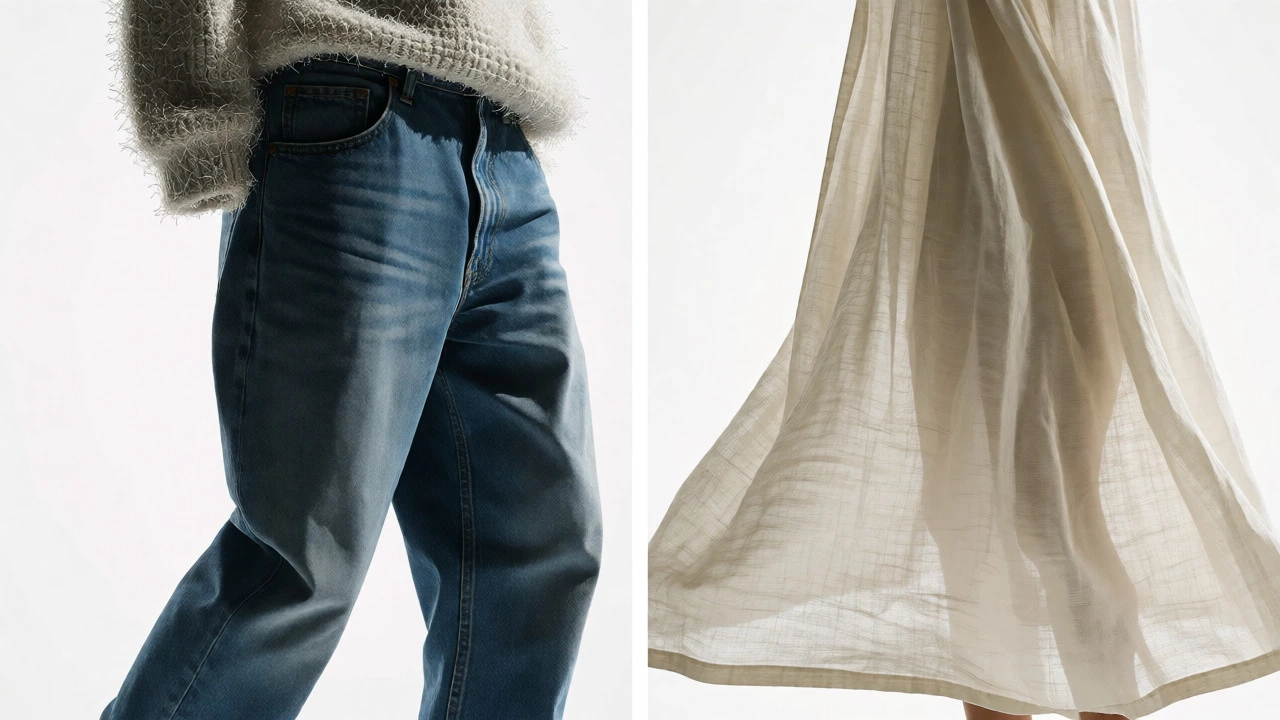
Denim is iconic. We all own jeans. But standard heavyweight denim (12oz+) is too thick for most Irish summer days. It restricts airflow completely. While you might get away with light-wash, thin denim shorts, full-length jeans made from rigid, heavy cotton twill will leave you sweating profusely after ten minutes of walking. The fabric doesn’t stretch enough to allow air circulation, and it takes forever to dry if you get caught in one of our sudden showers.
If you must wear denim, look for "summer weight" options, usually under 8oz, or blends that include elastane or lyocell for better airflow. But honestly, swapping jeans for a linen trouser or a lightweight cotton chino will change your life. Your legs will thank you when you’re trying to catch a bus in the city center without arriving at work looking like you ran a marathon.
The Wool Myth: Not All Wool Is Bad, But Be Careful
This is where people get confused. Wool is great for winter. Is it bad for summer? Not necessarily. Merino wool, specifically, is excellent for summer because it wicks moisture and resists odor. However, traditional coarse wools, tweeds, and heavy cashmere blends are absolute no-gos. They are too dense and retain too much heat.
Be wary of "wool blends" in summer dresses. Sometimes a small percentage of wool is added for texture, but if it’s more than 30%, it might still feel warm. Stick to merino if you want wool benefits, or avoid it entirely if you run hot. In Ireland, we have a strong tradition of wool production, so local shops are filled with these heavier fabrics. Always check the thickness and weave. An open-weave summer wool is fine; a tight-knit sweater is not.
Silk: Beautiful But Fragile in Humidity
Silk is luxurious, cool to the touch, and looks expensive. But in humid conditions, silk has a major flaw: water spots. If you sweat on silk, it leaves permanent dark stains. It also loses its shape when damp and can become clingy in an unflattering way. For a casual day out in Galway, where you might grab a coffee or walk near the river, silk is high-maintenance.
It’s best reserved for formal evening events where you’ll be indoors with air conditioning. For daytime wear, especially if you’re prone to sweating, skip the pure silk. Satin-finish synthetics try to copy silk but offer none of the breathability, making them worse. If you love the look, consider Tencel or Lyocell, which mimic silk’s drape but handle moisture far better.

What To Wear Instead: The Irish Summer Essentials
So, if polyester, nylon, and heavy denim are out, what’s in? The answer lies in natural, loose-weave fibers.
- Linen: The king of summer fabrics. Linen comes from the flax plant, which grows well in cooler climates. It has a hollow fiber structure that allows air to pass through easily. It absorbs moisture and dries faster than cotton. Yes, it wrinkles, but in Ireland, that’s part of the charm. A wrinkled linen dress looks intentional and relaxed. Brands like Gorman or local boutiques in Dublin’s Temple Bar stock plenty of linen options.
- Cotton: Specifically, lightweight cotton poplin or seersucker. Cotton absorbs sweat, which keeps you dry initially, though it stays wet longer than linen. Choose white or light colors to reflect sunlight. Organic cotton is softer and often treated with fewer chemicals, reducing skin irritation.
- Tencel/Lyocell: Made from wood pulp, this fabric is incredibly soft, drapes well, and is naturally antibacterial. It feels cool against the skin and manages moisture efficiently. It’s a great alternative for those who hate linen wrinkles but want breathability.
- Bamboo Viscose: Soft, silky, and thermoregulating. Bamboo fabric is highly absorbent and keeps you cool. Just ensure it’s bamboo viscose, not bamboo linen, which can be rougher.
Practical Tips for Shopping in Ireland
When shopping for summer clothes in Ireland, don’t rely on the store display lighting. Take the garment to the window or outside. Hold it up to the light. Can you see through it slightly? That’s a good sign of openness. Rub the fabric between your hands. Does it feel plastic-y? Put it back. Does it feel cool and matte? Good.
Also, consider the cut. Even the best fabric won’t help if the fit is tight. Loose silhouettes allow air to circulate between the fabric and your skin. A-line dresses, wide-leg trousers, and oversized shirts are your friends. Tight skinny jeans in polyester-spandex blend? Avoid at all costs.
Remember, the Irish summer is short. Don’t compromise your comfort for a trend that lasts one season. Invest in quality natural fibers that will last for years and keep you sane during those rare, glorious hot days.
Is polyester always bad for summer?
Not always. Micro-polyester or technical sportswear polyester is engineered with moisture-wicking properties that move sweat away from the skin. However, standard fashion polyester, especially in dresses and shirts, lacks this technology and traps heat. Always check for terms like 'moisture-wicking' or 'breathable' on sports gear, but assume regular fashion polyester is poor for humidity.
Can I wear black clothes in the Irish summer?
You can, but it depends on the fabric. Black cotton or linen is fine because the fabric breathes. Black polyester will absorb heat and trap it against your body, making you significantly hotter than someone in white linen. If you love black, choose loose cuts and natural fibers to mitigate the heat absorption.
Why does my linen dress wrinkle so much?
Linen fibers are stiff and lack elasticity, so they crease easily when bent. This is a natural characteristic, not a defect. In Ireland, the casual aesthetic means wrinkled linen is socially acceptable and often seen as stylish. To reduce wrinkles, hang the dress immediately after wearing, or choose linen-cotton blends which resist creasing slightly better.
Is rayon or viscose good for summer?
Rayon and viscose are semi-synthetic fabrics made from cellulose. They are breathable and drape well, making them decent summer choices. However, they lose strength when wet and can shrink if washed incorrectly. They are better than polyester but not as durable or easy-care as linen. Use them for special occasions rather than everyday wear.
How do I stop heat rash in summer?
Heat rash occurs when sweat ducts get blocked. Prevent it by wearing loose, breathable natural fibers like cotton and linen. Avoid tight synthetic clothing that traps sweat against the skin. Keep skin clean and dry, and use talcum powder or cornstarch-based powders in areas prone to friction, such as under the breasts or in the groin area.