22
The Best High Quality Leather for Shoes: A Guide for the Irish Climate
Leather Quality & Climate Matcher
Select your primary goal to find the perfect leather match for the Irish climate.
Extreme Durability
Hiking the Burren, rural work, or heavy rain.
Professional Polish
Office wear, weddings, or corporate events.
Lifetime Investment
Maximum water resistance and longevity.
Key Takeaways for Choosing Leather
- Full grain is the gold standard for durability and breathability.
- Top grain is a great middle-ground for a cleaner, more consistent look.
- Avoid "genuine leather" labels, as these are often low-grade split hides.
- Calfskin is ideal for formal dress shoes due to its tight grain and polish.
- Waterproofing is essential for the Irish climate, regardless of the leather grade.
The Hierarchy of Leather Quality
Not all leather is created equal. To understand what makes a shoe "high quality," you have to look at the layers of the hide. Imagine the skin of a cow as a cake with different layers; the top layer is the most resilient.
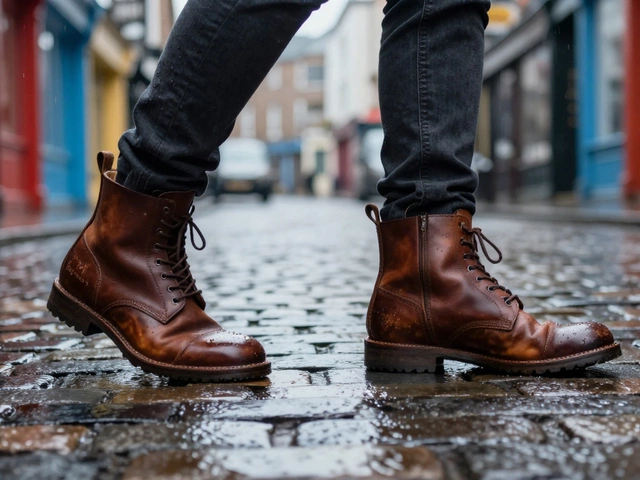
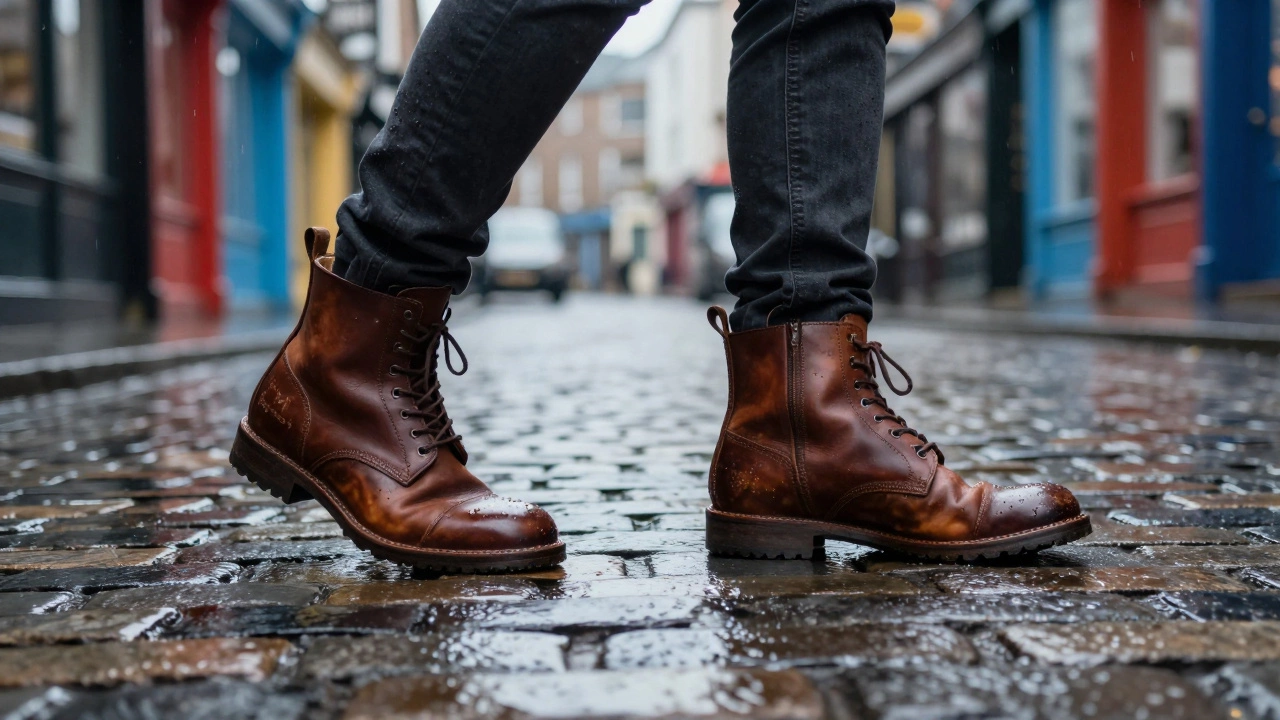
Full Grain Leather is the outermost layer of the hide, left completely intact without being sanded or buffed to remove natural imperfections. Because the fibers are tight and undisturbed, it is incredibly strong. If you are buying heavy-duty boots for walking through the Burren or working in a rural setting in Kerry, this is what you want. It develops a patina over time, meaning it looks better as it ages, absorbing the character of your environment.
Top Grain Leather is leather that has had the very top layer sanded off to remove scars or blemishes. It is more flexible than full grain and often treated with a finish or pigment. You will find this on many high-street shoes in Grafton Street. It looks sleek and consistent, but because the strongest fibers have been sanded away, it won't be quite as durable as full grain.
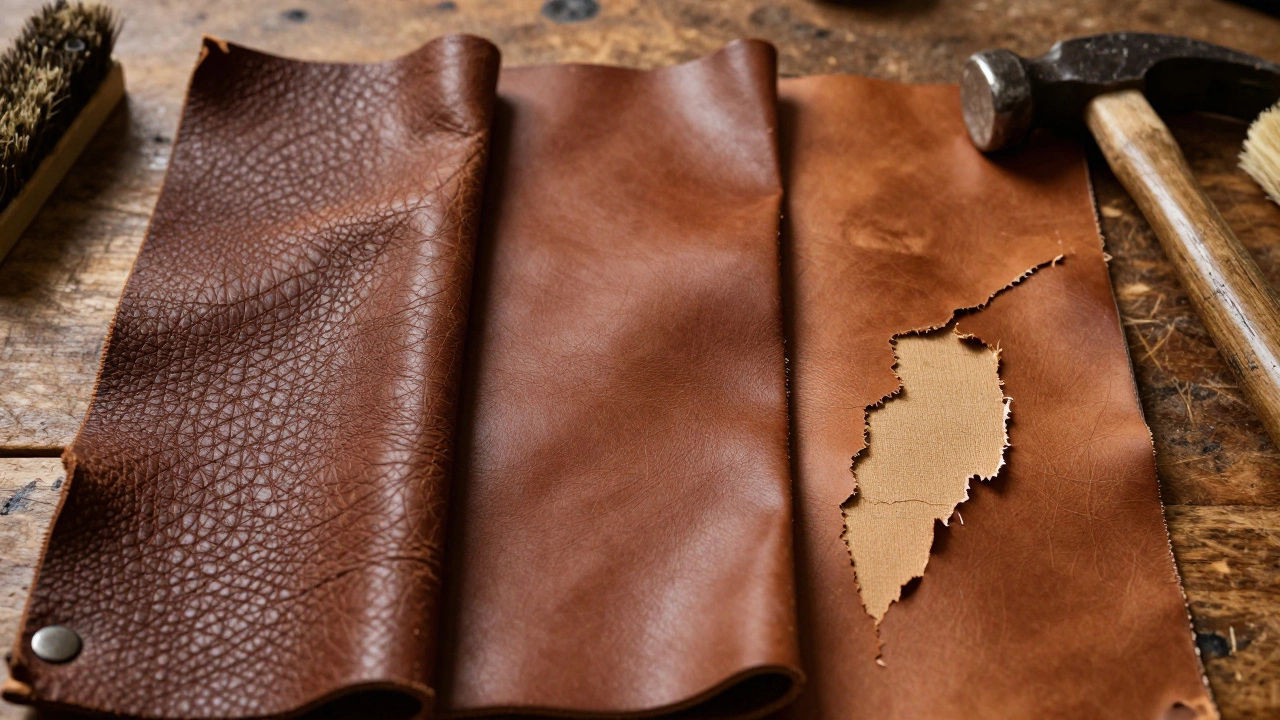
Then there is the trap: Genuine Leather. Contrary to what the name suggests, this is actually one of the lowest grades. It is made from the "splits"-the leftover bottom layers of the hide that are stamped with an artificial grain and painted to look like the real deal. In the wet Irish weather, genuine leather tends to crack and peel much faster because it lacks the natural fiber density to withstand constant moisture and drying cycles.
| Grade | Durability | Appearance | Best Use Case |
|---|---|---|---|
| Full Grain | Highest | Natural, develops patina | Work boots, heritage brogues |
| Top Grain | High | Uniform, smooth | Office wear, dress shoes |
| Genuine | Low | Artificial, plasticky | Budget fast-fashion |
The Specialist's Choice: Calfskin and Shell Cordovan
When you move into the realm of formal footwear, the terminology shifts. You'll often hear the term Calfskin. This is leather from younger animals, which results in a much finer grain and a smoother surface. It is the gold standard for Oxford shoes. Because the pores are smaller, it takes a shine much better than adult cowhide. If you are attending a wedding at a manor in Cork or a formal event in Dublin, calfskin provides that sharp, mirror-like finish while remaining supple enough to prevent blisters.
For those who want the absolute peak of luxury and water resistance, there is Shell Cordovan. This isn't actually skin, but a fibrous muscle (the shell) from the hindquarters of a horse. It is incredibly dense, almost waterproof, and nearly impossible to scuff. It is expensive and rare, but for someone living in a coastal town like Galway, where salt air can eat through standard leather, Cordovan is a lifetime investment. It doesn't crease the way calfskin does; instead, it ripples slightly, maintaining its shape for decades.
Why the Irish Climate Changes the Rules
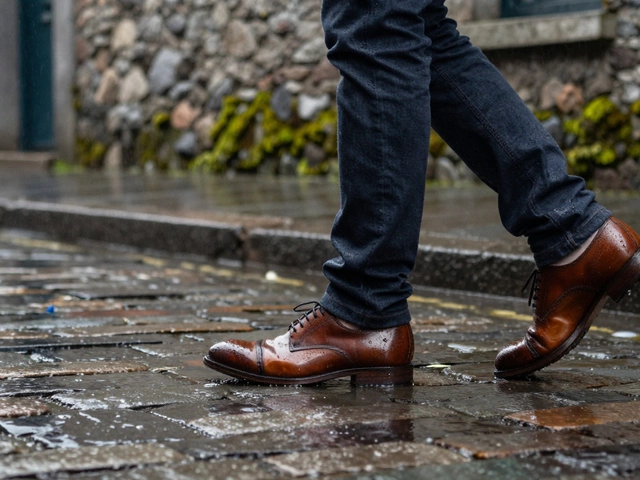
In a drier climate, you might get away with a thin top-grain leather. But in Ireland, our footwear faces a constant battle with moisture. High-quality leather is porous; it breathes, which is great for your feet but means water can seep in. This is why the tanning process matters just as much as the grade of the hide.
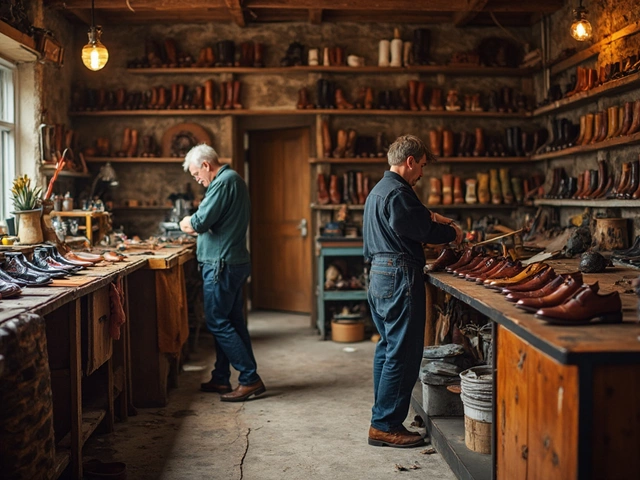
Vegetable-tanned leather, which uses natural tannins from bark and leaves, is traditional and sturdy. However, for our weather, chrome-tanned leather is often more practical as it is more resistant to water and heat. The real trick is combining a high-grade hide (like full grain) with a proper wax finish. If you visit a traditional cobbler in a town like Kilkenny, they will tell you that a "pull-up" leather-where oils are embedded into the hide-is the best defense against a sudden Atlantic downpour.
How to Spot High Quality in the Shop
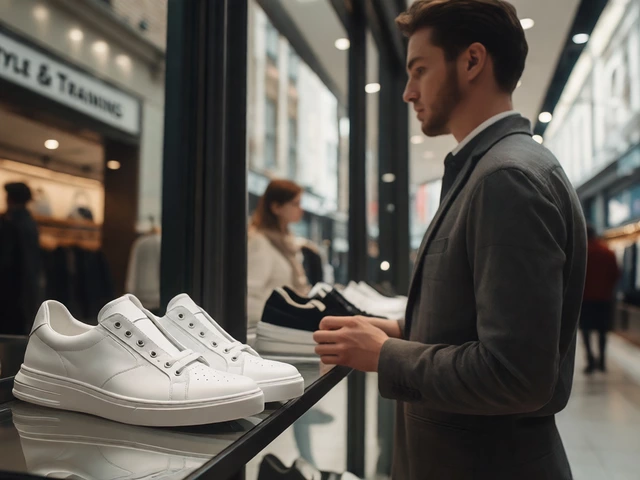
You don't need a degree in chemistry to tell if a shoe is high quality. You just need to use your senses. First, look at the edges of the leather. If you see a fuzzy, fabric-like layer underneath the surface, you are looking at a split leather (Genuine Leather). True full grain is consistent all the way through.
Next, do the "press test." Gently press your thumb into the leather. High-quality full grain will show small, tight wrinkles that vanish quickly when you let go. Low-quality leather often feels like there is a plastic film on top, and the wrinkles look unnatural or don't happen at all because the material is too stiff.
Finally, smell it. Real, high-quality leather has a rich, earthy scent. If it smells like chemicals or a new shower curtain, it has been heavily processed with synthetic glues and plastics, which means it will likely crack within a year of heavy use in the Irish rain.
Maintaining Your Investment in the Rain
Buying the best leather is only half the battle. If you treat a pair of £300 calfskin shoes like a pair of plastic sneakers, they will fail. The most common mistake people make in Ireland is drying their leather shoes next to a radiator after a rainy walk. This sucks the natural oils out of the hide, causing the leather to shrink and crack.
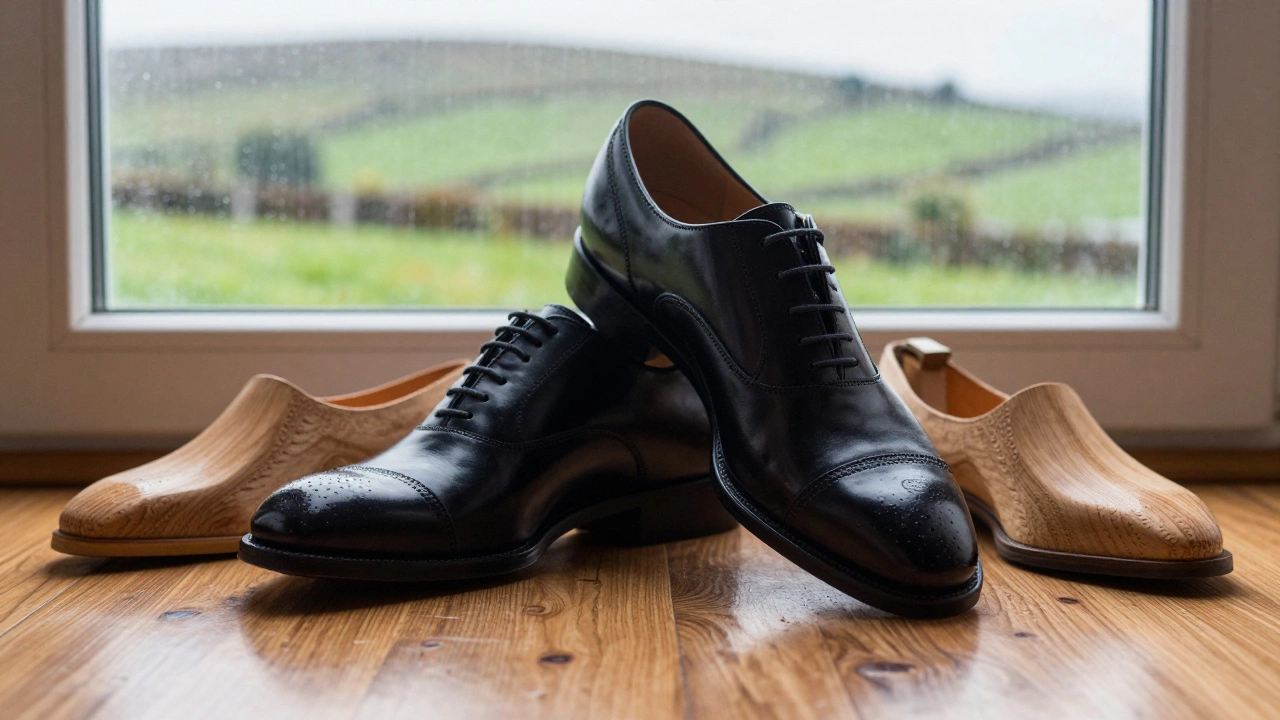
Instead, use cedar shoe trees. These absorb moisture from the inside and maintain the shape of the shoe. Pair this with a high-quality beeswax or mink oil. While a wax polish gives you a shine for a corporate job in the IFSC, a cream-based conditioner keeps the leather supple. In the winter months, applying a water-repellent spray specifically designed for leather can prevent the water from soaking into the grain and leaving those unsightly salt rings.
Is full grain leather waterproof?
Not naturally. While it is the most durable and water-resistant due to its density, it is still a porous material. To make it waterproof for the Irish weather, you need to apply a sealant, wax, or oil. Without treatment, water will eventually soak through.
Why is "genuine leather" considered low quality?
Because it is made from the leftover scraps (splits) of the hide. These layers lack the tight fiber structure of the top layers, making them weaker and less breathable. They are often coated in polyurethane to look like higher-grade leather, which leads to peeling over time.
What is the difference between calfskin and cowhide?
Calfskin comes from younger animals. It has a much finer grain, is thinner, and is more flexible than adult cowhide. This makes it ideal for dress shoes where a smooth finish and a high shine are required.
How often should I condition my leather shoes in Ireland?
Given the humidity and rain, you should condition your shoes every 4 to 6 weeks during autumn and winter. This replaces the oils lost to the environment and prevents the leather from drying out and cracking.
Does a higher price always mean higher quality leather?
Not necessarily. You often pay for the brand name or the design. Always check the leather type (Full Grain vs. Genuine) and the construction (like Goodyear welting) rather than relying on the price tag alone.
Next Steps for Your Footwear
If you are currently shopping for new shoes, start by checking the product descriptions for "Full Grain" or "Calfskin." If the description simply says "Leather" or "Genuine Leather," be wary. For those who already own high-quality shoes, spend a weekend treating them with a proper wax polish and investing in a set of cedar shoe trees. If your shoes have already suffered from the damp, a visit to a traditional local cobbler for a professional deep-clean and conditioning can often bring the leather back to life, saving you from having to buy a new pair.