20
Why Not to Wear Leather Shoes in Ireland?
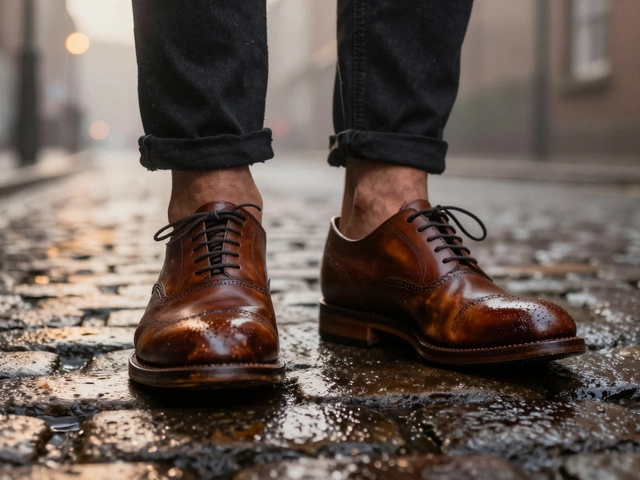
Wearing leather shoes in Ireland isn’t just a fashion choice-it’s a daily battle against the elements. If you’ve ever stepped out of a Galway café in the morning, only to find your soles soaked by noon, you know what we’re talking about. Ireland’s climate doesn’t care about your style. Rain falls an average of 200 days a year, and in places like Connemara, Sligo, or the Wild Atlantic Way, it’s not unusual to get hit with wind-driven downpours that soak through everything except a proper waterproof boot.
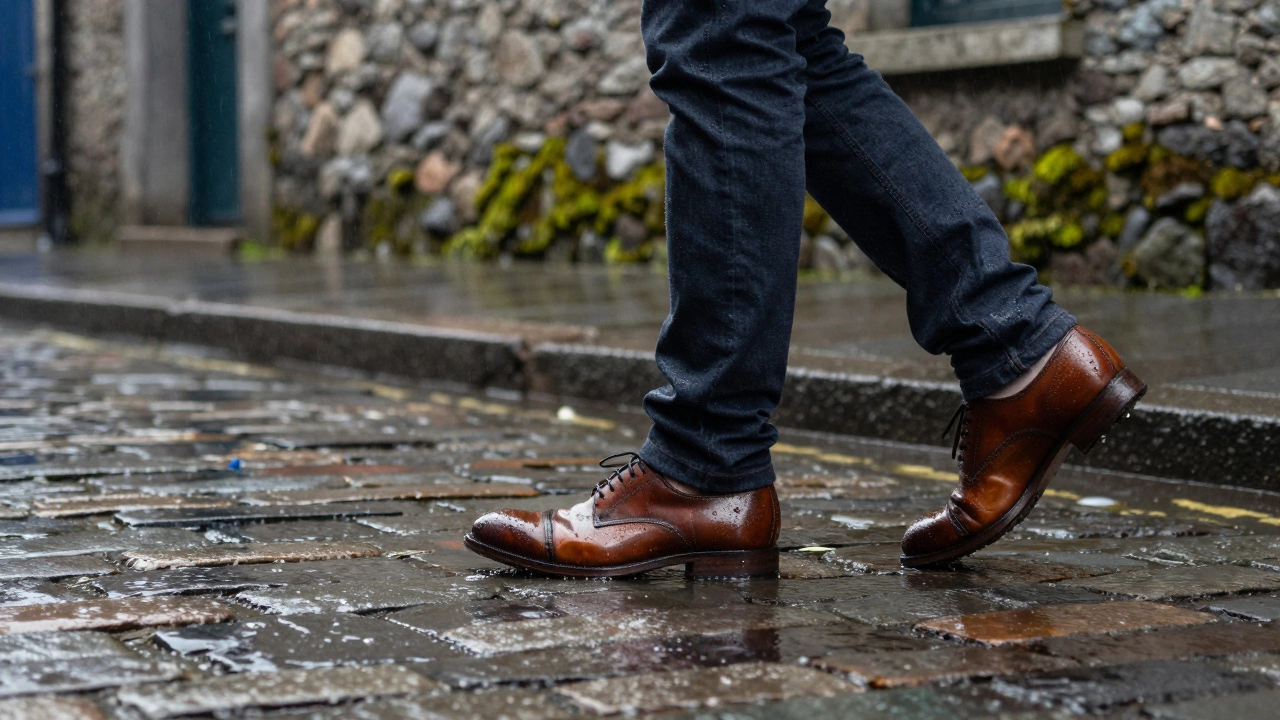
Leather shoes, no matter how polished or expensive, were never built for this. Unlike in cities with dry, predictable weather, here the ground stays wet for days. Puddles aren’t temporary-they’re permanent fixtures. A pair of Italian oxfords might look sharp at a Dublin business meeting, but by 3 p.m., when you’re rushing from Trinity College to the Luas, they’re heavy, cold, and smelling like a damp cellar. And don’t even think about walking the Cliffs of Moher in them. The salt spray, the wind, the uneven limestone paths-it’s a recipe for ruined leather and blistered feet.
Leather Absorbs Water Like a Sponge
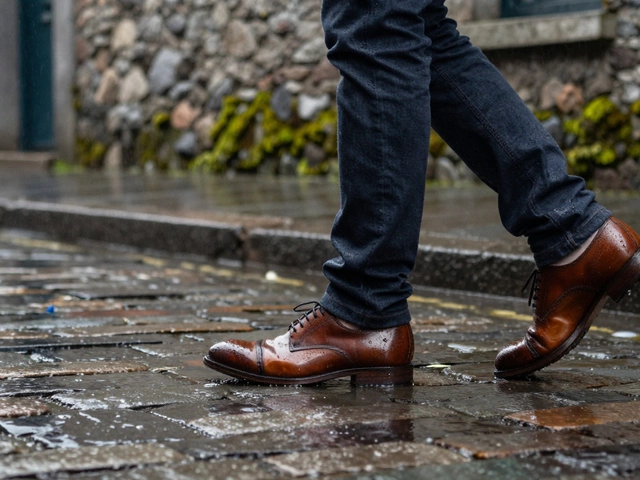
Real leather is porous. That’s why it breathes. But in Ireland, that breath becomes a liability. When rain hits, leather drinks it in. It swells. It stretches. It loses its shape. Within hours, the once-crisp lines of your brogues turn into floppy, misshapen lumps. And once it’s wet, it takes days to dry. If you’re wearing them Monday through Friday, you’re not letting them breathe-you’re just cycling them through dampness.
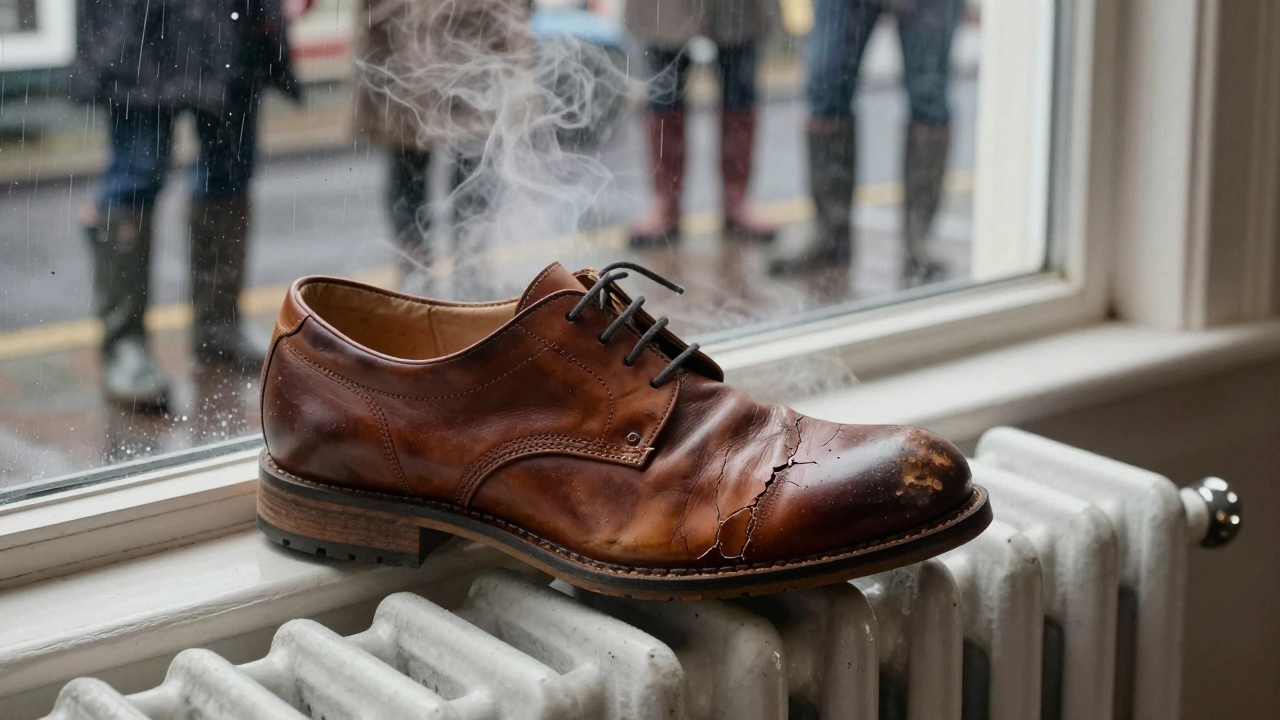
Try this: leave a pair of leather shoes by the radiator in your Cork apartment after a wet day. The next morning? They’re stiff, cracked, and warped. That’s because the heat dries the natural oils out of the leather. Over time, this leads to splitting. You don’t need a cobbler to tell you this-just look at the shoes of people who’ve been wearing leather daily in Ireland for more than a year. The cracks start at the toe box, then creep up the sides. It’s inevitable.
They Slip on Wet Pavements
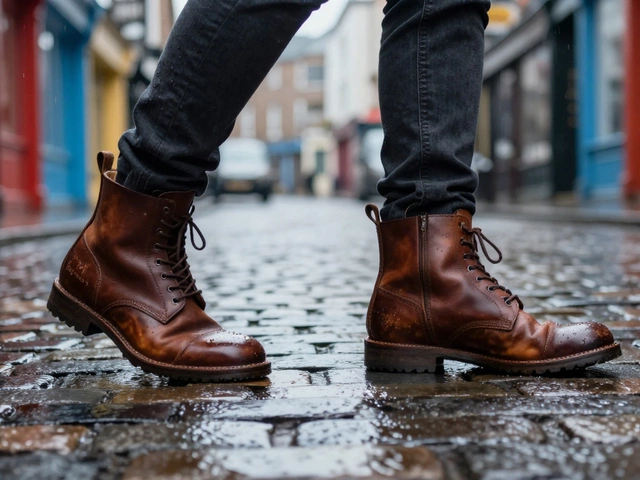
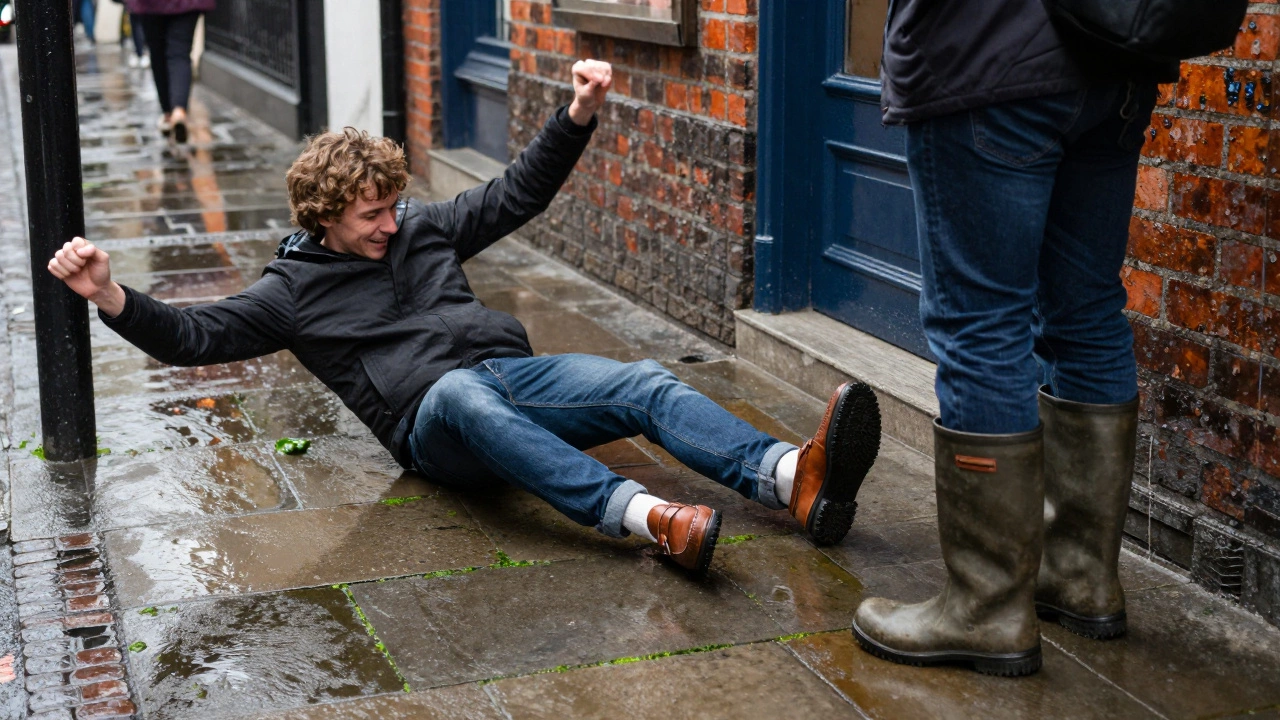
Irish pavements aren’t just wet-they’re slick. From Belfast to Limerick, the sidewalks are coated in algae, moss, and rain-slicked grime. In Dublin’s Temple Bar, you’ll see tourists in leather loafers sliding sideways like penguins. That’s because leather soles, even the best ones, offer almost no grip on wet stone, cobblestone, or painted concrete.
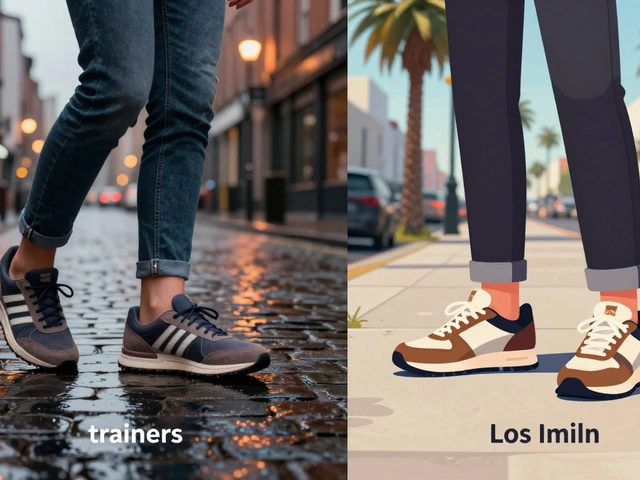
Compare that to a pair of Vibram-soled walking boots or even a decent rubber-soled sneaker. Brands like Clarks, Geox, or local Irish-made Blarney Stone Footwear use rubber outsoles with deep treads designed for Ireland’s terrain. They’re not glamorous, but they keep you upright. Leather soles? They’re basically polished glass on wet stone.
They Don’t Handle Mud or Salt
Winter in Ireland isn’t just cold-it’s muddy. Rural roads in Donegal, Kerry, or Wexford turn into slurry. Even city streets get salted in January. Leather absorbs salt like a sponge, and salt eats away at the fibers. Within weeks, you’ll notice the stitching loosening, the leather turning brittle. It’s not just about looks-it’s about safety. A cracked sole can snap mid-step on a slippery kerb.
And don’t think cleaning them helps. Leather cleaners? They’re useless against salt. A quick wipe with a damp cloth just spreads the damage. You need a specialized leather conditioner, and even then, you’re playing catch-up. Meanwhile, synthetic materials just rinse off under a tap.
They’re a Waste of Money
How much do you spend on a pair of quality leather shoes? €150? €250? In Ireland, you’re lucky if they last six months. Compare that to a good pair of waterproof boots from Clarks or Uggs (yes, even Uggs have decent waterproof models now), which cost the same but last two to three years. Or look at Irish-made brands like Shanahan’s or Blarney Stone-they design for the Irish climate, not for runway photos.
Every time you replace leather shoes here, you’re throwing money into a leaky bucket. You’re not investing-you’re replacing. And that’s before you factor in the cost of shoe polish, waterproofing sprays, and the occasional cobbler visit. None of it works long-term.
There Are Better Options
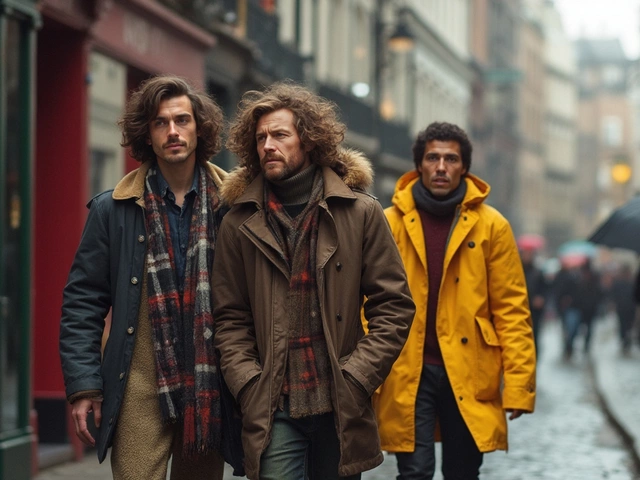
Forget the idea that leather equals professionalism. In Ireland, professionalism means showing up dry, warm, and steady. Look at the locals: farmers, teachers, nurses, and even bankers in Galway or Louth wear waterproof boots or rubber-soled shoes. You don’t need to look like a London banker to be taken seriously here.
Try these instead:
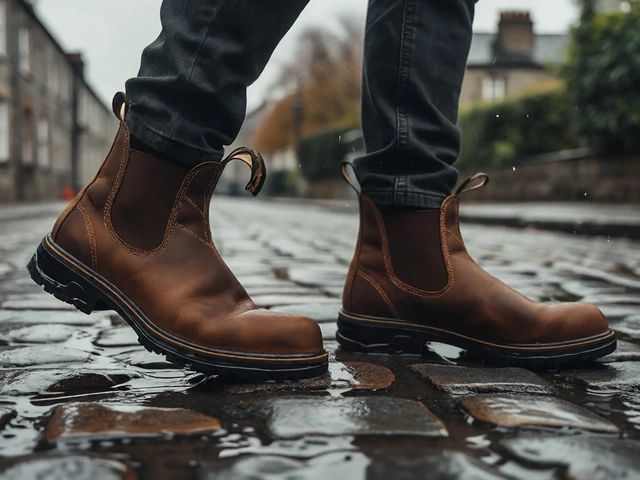
- Waterproof walking boots with Gore-Tex lining-perfect for the Burren or the Wicklow Way
- Leather-look synthetic shoes from Clarks or Dr. Martens-they have the look, but the sole is rubber and the upper is sealed
- Water-resistant loafers from Geox-they have breathable membranes that let sweat out but keep rain out
- Irish-made footwear like Blarney Stone or Shanahan’s-designed in Cork and tested in rainstorms since 1992
These aren’t compromises. They’re upgrades. And they’re what people actually wear when they’ve lived here longer than a year.
The Cultural Shift
There’s a quiet revolution happening in Irish fashion. It’s not about brands or logos. It’s about practicality. Young professionals in Dublin’s Silicon Docks wear waterproof sneakers to work. Artists in Doolin wear rubber boots to the pub. Even at Galway’s Galway Film Fleadh, you’ll see more waterproof boots than patent leather.
It’s not that leather shoes are banned. It’s that they’ve become a relic of a different climate. In a country where rain is the norm, not the exception, your footwear should reflect that. You wouldn’t wear flip-flops to a Connemara sheep farm. Don’t wear leather shoes to a Galway street in November.
What to Do With Your Old Leather Shoes?
If you’ve got a drawer full of ruined leather shoes, don’t throw them away. Take them to a local cobbler-many still operate in towns like Kilkenny, Sligo, or Waterford. Some will re-sole them with rubber, waterproof them, or turn them into garden shoes. Others take them to recycling centres like ShoeBank Ireland, which repurposes leather into insulation or playground surfaces.
Or better yet-don’t buy them again. Next time you need new shoes, ask yourself: Will this keep me dry? Not Does it look good? That’s the Irish standard now.
Are leather shoes ever acceptable in Ireland?
Only in very dry, indoor settings-like a formal wedding in a heated hotel ballroom, or a business meeting in a dry, climate-controlled office. Even then, most Irish professionals keep a pair of waterproof shoes in their car or desk drawer for the walk to the car or the train. Outside of those rare exceptions, leather shoes are a risk.
What’s the best waterproof shoe brand in Ireland?
Locally, Blarney Stone Footwear and Shanahan’s are top-rated for durability and fit. For wider availability, Clarks and Geox offer excellent waterproof models with breathable linings. Avoid cheap imports-many are labeled "water-resistant" but fail within weeks of Irish rain.
Can I waterproof my leather shoes myself?
Yes, but it’s temporary. Wax-based waterproofers like Obenauf’s or Apple Brand can help for a few weeks. But in Ireland, rain comes back. Every week. So you’re constantly reapplying. It’s cheaper and more reliable to just switch to a shoe built for the weather.
Do Irish people still wear brogues?
Yes-but not the leather-soled kind. Modern Irish brogues now come with rubber soles and waterproof uppers. Brands like Clarks and Blarney Stone have updated the classic design for the Irish climate. The look is the same; the function is better.
What should I look for when buying shoes in Ireland?
Look for: rubber or Vibram soles, waterproof membranes (Gore-Tex or similar), sealed seams, and breathable materials. Avoid anything labeled "full-grain leather" unless it’s paired with a rubber sole. And always test them on wet pavement before buying-many stores in Dublin and Cork have small puddles near the entrance for exactly this reason.
If you want to stay dry, warm, and safe in Ireland, your shoes need to work harder than your suit. Leather doesn’t cut it anymore. The country’s weather has changed the rules-and smart people have already adapted.