31
Do Leather Shoes Age Well in Ireland? The Truth About Durability, Care, and Irish Weather
Leather Shoe Care Calculator for Ireland
Personalized Shoe Maintenance Plan
Calculate your ideal maintenance schedule for leather shoes in Ireland's unique climate. Input your shoe type, wear frequency, and care habits to get tailored recommendations.
Results
Enter your information above to see your personalized maintenance schedule.
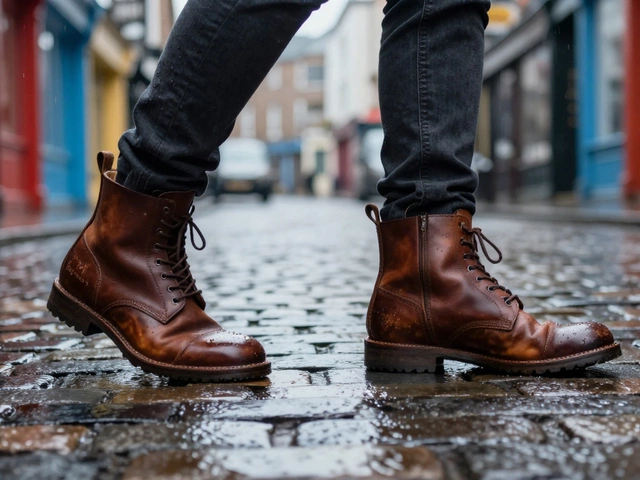
When you step out in Dublin on a misty January morning, your leather shoes don’t just walk on pavement-they walk through puddles, damp cobblestones, and the kind of rain that doesn’t fall, it hangs in the air like a wet blanket. If you’ve ever owned a pair of quality leather shoes in Ireland, you’ve probably asked yourself: do leather shoes age well here? The answer isn’t yes or no. It’s more like, how well you treat them determines whether they become family heirlooms or soggy disappointments by spring.
Why Irish Weather Is Tough on Leather
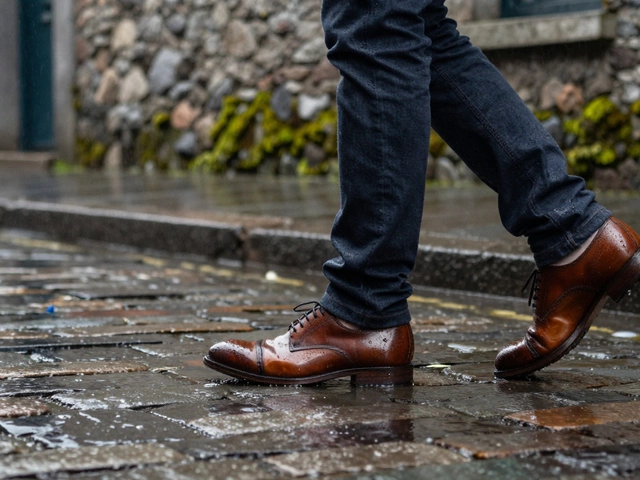
Ireland’s climate isn’t just rainy-it’s consistently damp. The west coast, from Galway to Dingle, gets over 1,500mm of rain a year. Even in summer, dew lingers until mid-morning. Humidity stays above 80% for much of the year. That’s not a bad day-it’s the norm. Leather isn’t waterproof. It breathes, yes, but it also absorbs. Water seeps into the pores, swells the fibers, and when it dries, it leaves behind salt and grime from city streets and country roads. Over time, without care, that leads to cracking, stiffening, and discoloration. You’ll see it on the shoes of people who’ve lived here 20 years: the once-shiny Oxfords from Clery’s or the brogues bought in Cork’s Shoe Palace now look dull, brittle, and tired. But here’s the twist: leather that’s properly maintained doesn’t just survive in Ireland-it improves. It develops a patina. That’s not a flaw. It’s character. Think of the worn leather on the benches in Trinity College’s library or the straps on a vintage Aran sweater bag. Time adds depth. Leather does the same-if you let it.What Aging Leather Shoes Look Like in Ireland
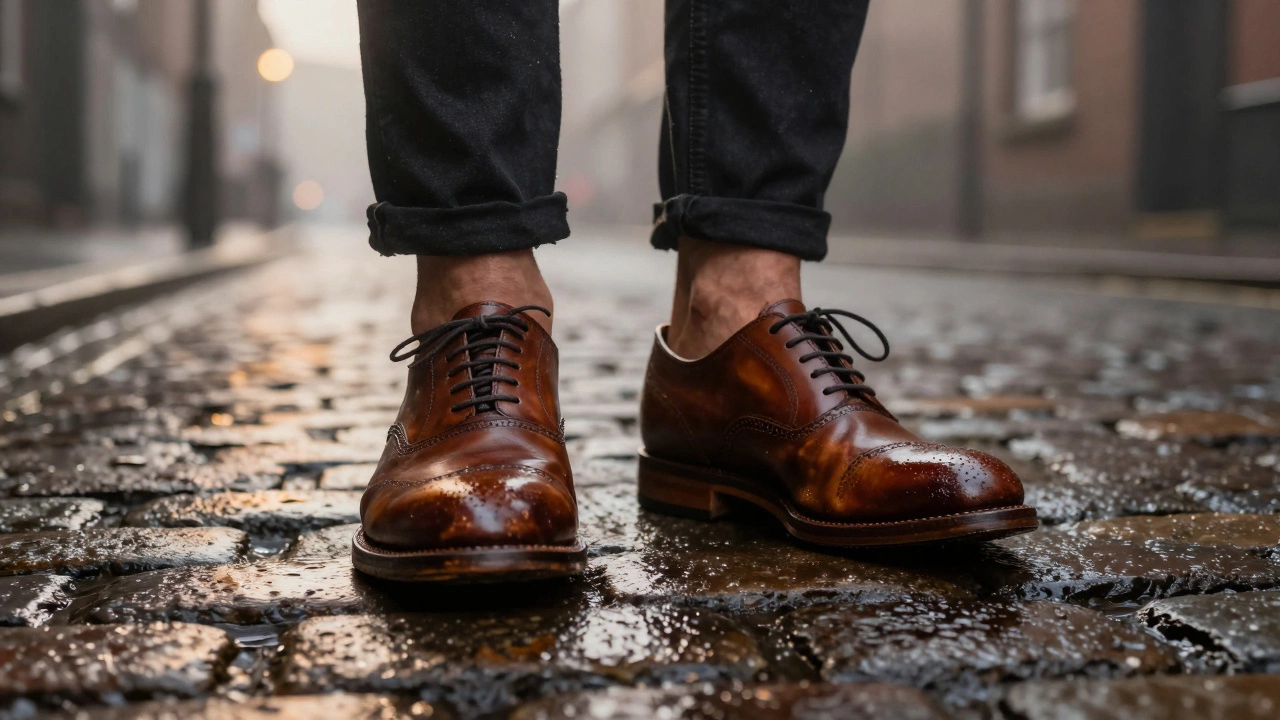
Good leather ages gracefully. Bad leather just falls apart. Here’s what to watch for:- Patina, not stains: A rich, even darkening over time-especially around the toe cap and heel-is a sign of healthy aging. You’ll see this on the shoes of Dublin architects, Cork lawyers, or even farmers who walk the fields in Clonmel with their Allen Edmonds or Tricker’s.
- Crazing: Fine cracks that look like spiderwebs? That’s dryness. It happens when shoes sit unused in a damp hallway or are cleaned with harsh chemicals.
- Water rings: If you notice white, chalky rings after rain, that’s salt residue. It’s common in Galway or Limerick after winter storms. It’s fixable, but ignored, it eats at the leather.
- Stiff soles: If the sole feels like cardboard instead of flexible rubber or leather, the shoe’s structure is breaking down. That’s not aging-it’s neglect.
One man I met in Kilkenny, Seán, had a pair of George Cleverley brogues he’d worn for 17 years. He’d had them resoled three times, re-pegged once, and cleaned with saddle soap every two weeks. They looked like they’d been dipped in whiskey and kissed by the sea. No one would call them new. But everyone who saw them asked where he bought them.
How to Make Leather Shoes Last in Ireland
There’s no magic trick. But there are five simple habits that make all the difference:- Use a shoe tree every night. Cedar shoe trees from Shoe Care Ireland in Dublin or Leather & Sole in Galway pull moisture out and hold the shape. Don’t just shove newspaper in there-it traps damp.
- Wipe them down after rain. A dry microfiber cloth after every wet walk removes surface grime. No need for polish yet-just dry. Let them air out away from radiators.
- Condition every 6-8 weeks. Use a natural cream like Saphir Médaille d’Or or Lexol. Don’t use wax polish in winter-it seals the leather and stops it from breathing. Creams feed it. Wax is for show.
- Resole before the sole wears through. If you can see the stitching on the outsole, it’s time. In Ireland, good cobblers are rare but worth finding. Shoe Doctor in Limerick, Shoe Spa in Belfast, and Irish Shoe Repair in Cork all do excellent work. Expect to pay €60-€90, but your shoes will last another 5-10 years.
- Rotate your shoes. Never wear the same pair two days in a row. Let them dry out fully. In a place like Ireland, where rain comes in waves, giving your shoes 24-48 hours to recover is non-negotiable.
The Best Leather Shoes for Irish Conditions
Not all leather is equal. Some types handle moisture better. Here’s what works:| Leather Type | Water Resistance | Durability | Best For | Irish Brands/Stockists |
|---|---|---|---|---|
| Full-Grain | High (with care) | Excellent | Everyday wear, walking tours | Tricker’s (imported), Irish Leather Co. (Cork) |
| Chromexcel | Very High | Excellent | City wear, business | Allen Edmonds (available at Clery’s and Brown Thomas) |
| Grained (Suede/Nubuck) | Poor | Moderate | Summer only, dry days | Claddagh Shoes (Galway) |
| Oil-Tanned | Excellent | Very High | Farmers, hikers, outdoor work | Wolky (available at Shoe City, Limerick) |
For everyday Irish life, go for full-grain or Chromexcel. Avoid suede unless you live in a dry part of the country-and even then, carry a waterproofing spray. Brands like Tricker’s and Allen Edmonds are imported but sold in Dublin, Cork, and Belfast. Local Irish brands like Irish Leather Co. in Cork make hand-stitched brogues using hides from County Tipperary cattle. They’re pricier, but they’re built for the climate.
When to Say Goodbye to Your Leather Shoes
Even the best shoes don’t last forever. Here’s when to retire them:- The sole is separating from the upper-no amount of glue fixes that.
- The heel is worn down unevenly and causes you to limp. That’s not just worn leather-it’s bad for your knees.
- The leather feels brittle and snaps when bent. No conditioner can bring that back.
- You’ve had them resoled twice and they still feel uncomfortable. Time to upgrade.
Don’t feel guilty about replacing them. But do recycle them. Shoe Recycling Ireland in Dublin takes old leather shoes and turns them into playground surfaces or insulation. Some cobblers even take them apart for parts. Your shoes don’t have to end up in a landfill.
What Makes Leather Shoes Special in Irish Culture
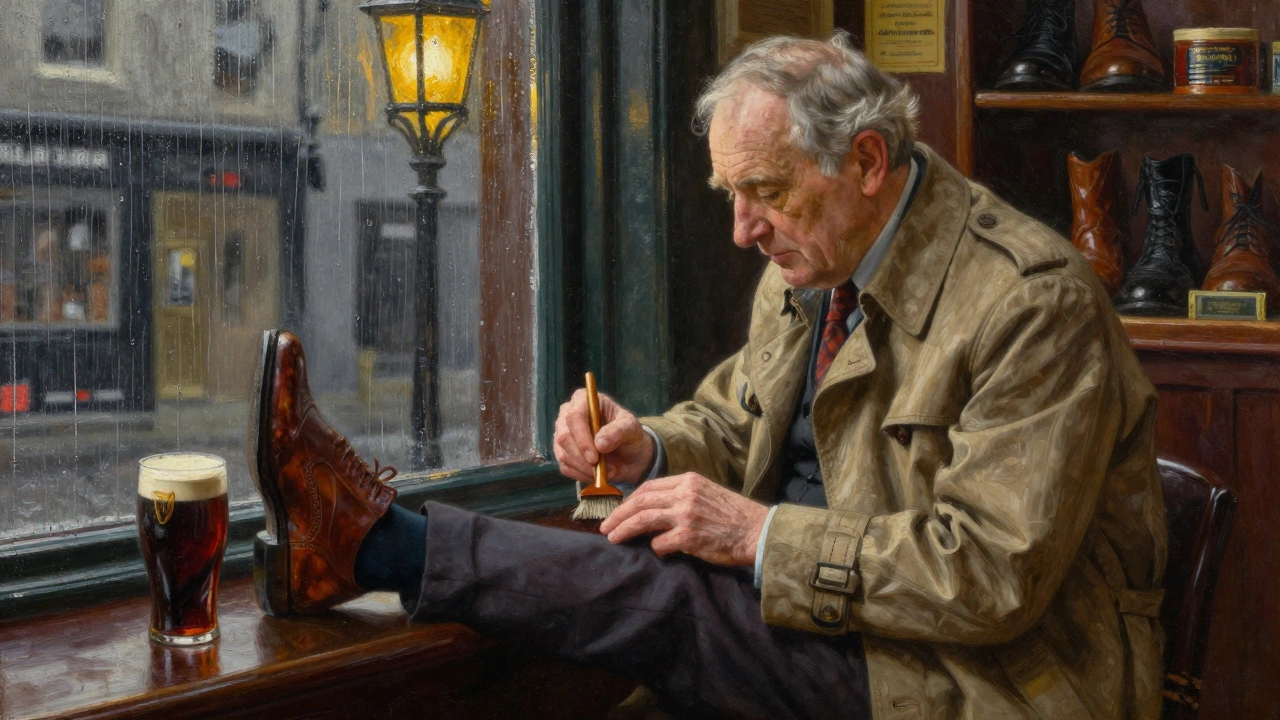
In Ireland, footwear isn’t just practical-it’s personal. A good pair of brogues is passed down like a wedding ring. My grandfather wore his Tricker’s to his wedding in 1958. They’re still in the family, now worn by my cousin for St. Patrick’s Day parades in Wexford. You’ll see it in pubs too. The man in the corner with the slightly scuffed but beautifully polished shoes? He’s the one who’s been coming to the same pub for 40 years. He doesn’t need to say much. His shoes say it for him. Leather shoes in Ireland aren’t fashion. They’re legacy. They carry the weight of wet streets, dry winters, and quiet pride. They’re not meant to be trendy. They’re meant to last.Final Thought: They Age Like Irish Whiskey
Leather shoes in Ireland don’t just survive the weather-they absorb it. They take on the damp, the mud, the rain from the Atlantic, the cobblestones of Galway, the salt air of Kinsale. And if you treat them right, they get better with time. Not flashy. Not new. But deeply, quietly, beautifully worn-in.So yes-do leather shoes age well in Ireland? They do. But only if you give them the same respect you’d give a good pint of Guinness: slow, steady, and with care.
Can I wear leather shoes in the rain in Ireland?
Yes, but only if you care for them. Wipe them dry after walking in rain, use a shoe tree, and condition them regularly. Avoid suede and nubuck in wet weather-they’ll soak up water and stain permanently.
How often should I resole my leather shoes in Ireland?
Every 2-4 years, depending on how often you wear them. In Ireland’s damp conditions, soles wear faster than in drier climates. If you walk 5+ days a week, get them resoled before the stitching shows. Good cobblers in Cork, Limerick, and Dublin can do it for €60-€90.
What’s the best leather shoe brand for Irish weather?
For durability and moisture resistance, go for full-grain or Chromexcel leather. Brands like Tricker’s and Allen Edmonds are widely available in Ireland and built for tough conditions. For local support, try Irish Leather Co. in Cork-they use Irish hides and hand-stitch every pair.
Can I use wax polish on leather shoes in Ireland?
Avoid wax polish in winter or wet months. It seals the leather and stops it from breathing, which traps moisture inside and causes cracking. Use cream conditioners instead. Save wax polish for summer or special occasions when you want shine, not protection.
Where can I get my leather shoes repaired in Ireland?
Try Shoe Doctor in Limerick, Shoe Spa in Belfast, or Irish Shoe Repair in Cork. In Dublin, Leather & Sole in Galway has a branch on Grafton Street. These places specialize in traditional shoe repair and use quality materials. Don’t use chain stores-they often glue soles instead of stitching them.