2
What Boots Are in Style for Fall Winter 2024 in Ireland?
Irish Winter Boot Calculator
Calculate Your Perfect Irish Winter Boot
Get personalized boot recommendations based on your daily activities, temperature needs, and terrain. This tool uses Ireland's unique weather conditions to help you choose boots that actually work.
Your Perfect Boot Recommendation
Irish winters don’t wait for you to be ready - your boots should
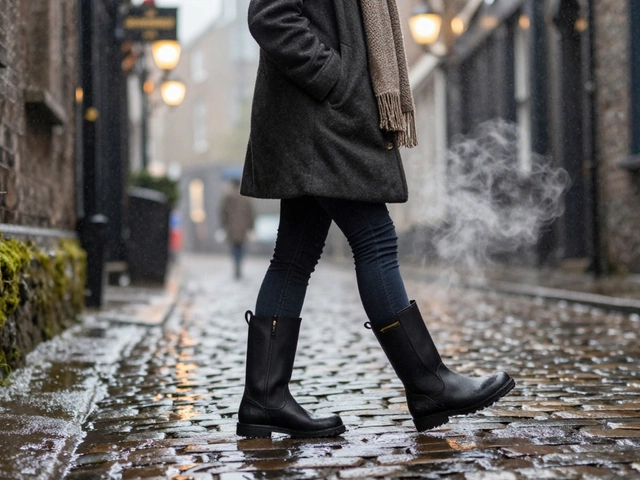
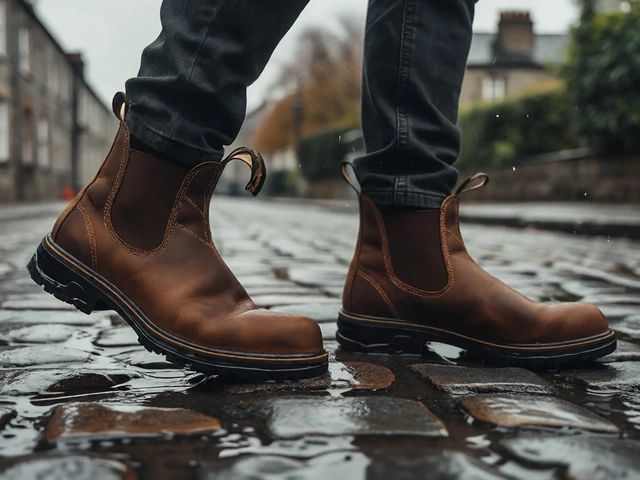
If you’ve ever stepped out in Dublin on a November morning and felt your socks turn to slush within ten minutes, you know this: Irish winter boots aren’t a fashion choice. They’re survival gear. The rain doesn’t announce itself - it just shows up, steady and unapologetic, from Galway to Cork, from the Burren to the Wicklow Mountains. This fall-winter 2024, the boots that win aren’t the ones with the flashiest heel or the most Instagram likes. They’re the ones that keep your feet dry, warm, and steady on slick cobbles and muddy lanes.
Forget the thin leather ankle boots you wore in Barcelona. In Ireland, those will disintegrate by mid-October. The market has shifted, and the brands that are thriving here aren’t the ones selling runway looks - they’re the ones making boots that can handle the Atlantic weather. Think less Parisian chic, more Donegal practical.
The top 5 boot styles dominating Ireland this season
- Waterproof ankle boots with grip soles - These are the new default. Brands like Clarks and Geox have updated their Irish-specific lines with rubber outsoles designed for wet cobblestones and grassy field edges. Look for models with a 1cm heel - enough to keep your foot from sliding forward in puddles, but low enough to walk confidently up the steps of a Dublin pub or into a Kilkenny antique shop.
- Mid-calf riding boots with elastic panels - Still a favorite among women in Galway and Limerick who commute by bike or walk the coastal paths. The elastic side panels make them easy to pull on after a long day in the rain, and the leather is treated to resist salt spray from the Atlantic. Blundstone’s 500 series, now available in matte black and moss green, is selling out in every Irish town with a decent shoe store.
- Chunky lug-sole combat boots - Not just for festivals anymore. The Dr. Martens 1460 has been reimagined with a vegan leather option and a deeper tread pattern. You’ll see them on students at Trinity College, on farmers’ wives in Tipperary, and on artists in Dingle. They’re durable, easy to clean, and look just as good with a wool skirt as they do with jeans.
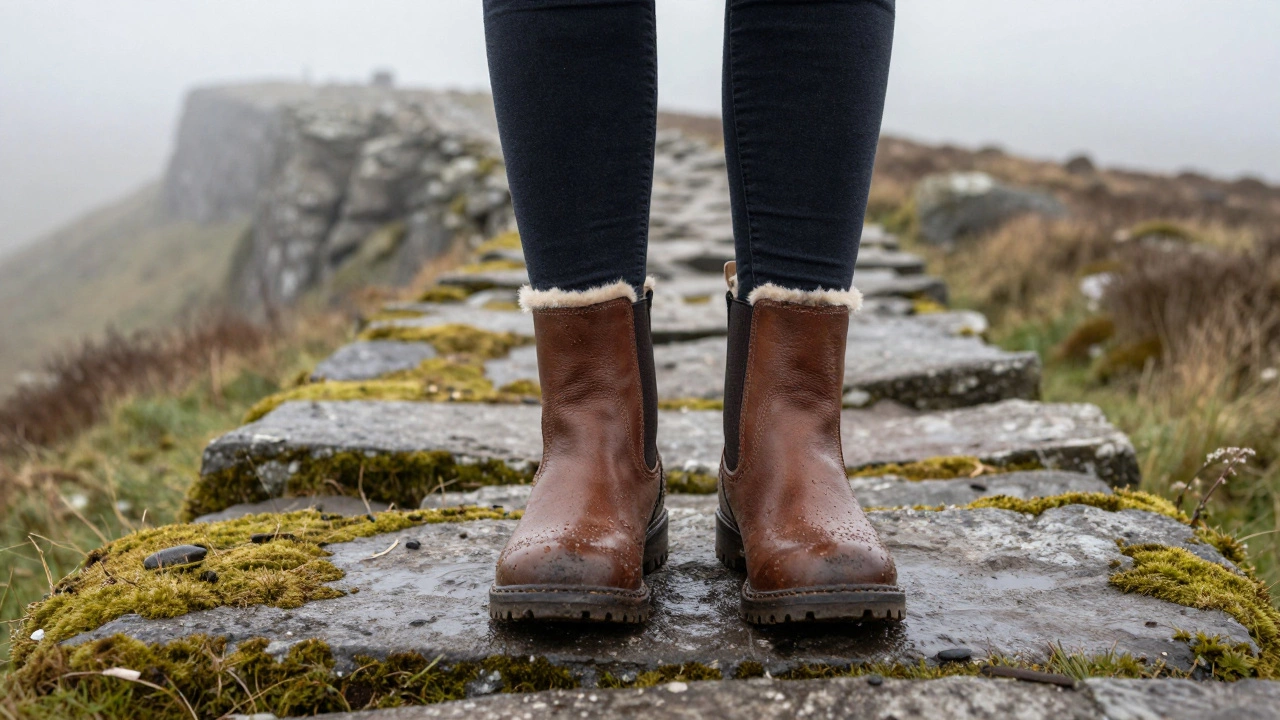
- Sheepskin-lined Chelsea boots - For days when the rain stops but the chill doesn’t. Brands like Irish Setter and Clarks Desert Boot (yes, they’ve upgraded their lining) now offer versions with genuine Irish sheepskin inside. These aren’t for hiking - they’re for walking from the bus stop to the supermarket in Bray, or from the train station to your flat in Cork City. They breathe, they warm, and they don’t smell like wet dog after three days of rain.
- Short, square-toe knee-high boots - The quiet trend that’s quietly everywhere. Designers like Boots.ie and McKenna’s (a small Cork-based label) are making these in water-resistant suede with a hidden waterproof membrane. The square toe gives a modern edge, and the knee-high cut keeps rain from soaking your tights. They’re the go-to for women who work in offices in Limerick or teach in primary schools in Sligo - stylish enough for a Friday night out, tough enough for a Monday morning in the rain.
Why ‘waterproof’ isn’t enough - you need grip, insulation, and breathability
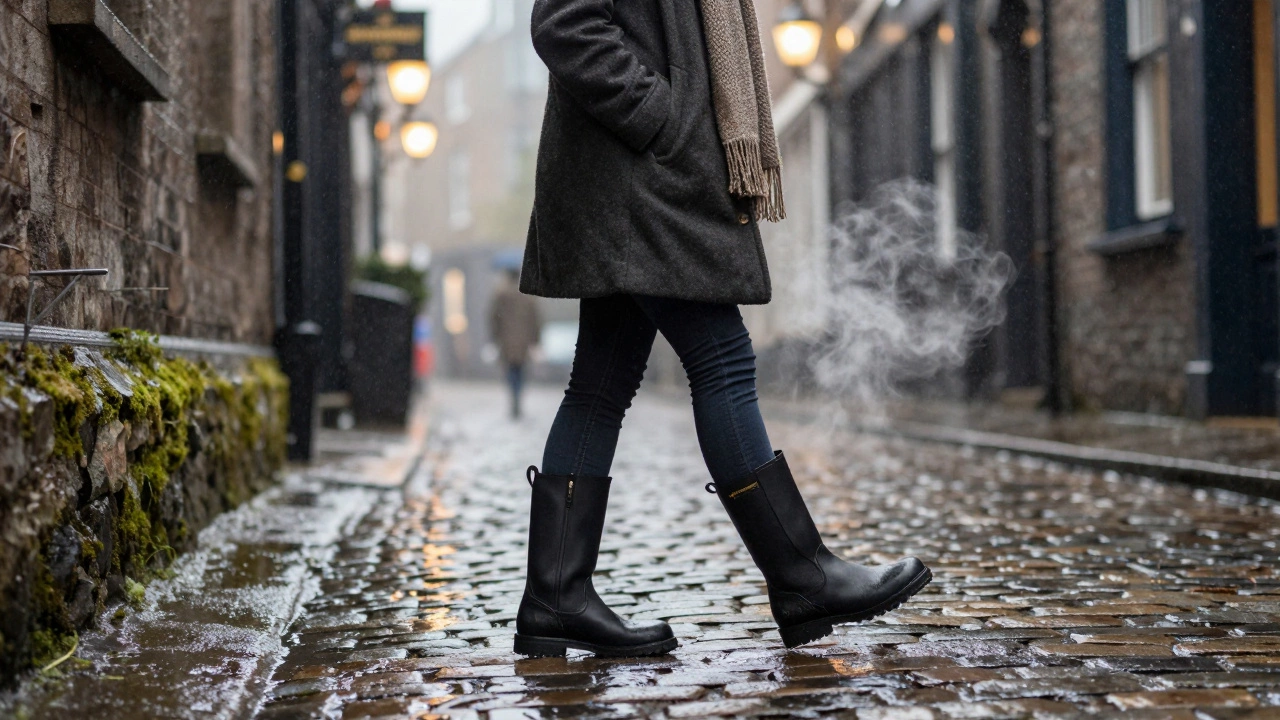
Many people think if a boot says ‘waterproof,’ it’s good to go. In Ireland, that’s a dangerous assumption. A boot can be waterproof and still trap sweat, turn your feet into steam rooms, and make you slip on wet stone. Look for three things:
- Grip - Boots with Vibram soles or similar rubber compounds with deep lugs (at least 4mm) are essential. The ground here isn’t just wet - it’s covered in moss, algae, and centuries-old paving stones that have been polished by rain and hooves. Walk into any hardware store in Kildare, and you’ll see women asking for ‘boots with grip for the back lanes.’
- Insulation - Not just thick lining. Look for boots with 200g Thinsulate or equivalent. A wool sock won’t save you if the boot itself is a cold sink. Brands like Keen and Merrell now have Irish-specific models tested in temperatures down to -5°C - which, trust me, happens more often than you think, especially in the Midlands.
- Breathability - This is where most boots fail. If your feet sweat and the moisture can’t escape, you’ll get blisters, fungal infections, or just pure misery. GORE-TEX isn’t magic - it needs to be paired with a breathable upper. Avoid boots made entirely of synthetic rubber. Leather with a membrane? Better. Suede with a waterproof spray? Acceptable, if you reapply it every three weeks.
Where to buy in Ireland - skip the tourist traps
You don’t need to go to Dundrum Town Centre to get good boots. In fact, some of the best options are tucked away in small towns where the staff actually know what ‘Irish weather’ means.
- Boots.ie (online, but based in Galway) - They test every pair on the Connemara trails before selling. Their customer service will ask you where you live and what terrain you walk on. No joke.
- Shoe World (multiple locations, including Limerick and Waterford) - They carry a full range of Irish-tested brands. Ask for the ‘Winter Warrior’ section - it’s not on the website, but it’s in-store.
- McKenna’s (Cork City, Oliver Plunkett Street) - A family-run shop since 1982. They make custom-fit ankle boots with Irish sheepskin lining. No online store. You go, you try, you wait two weeks. Worth it.
- Second-hand markets in Dublin - If you’re on a budget, head to the Temple Bar flea market on Saturdays. You’ll find well-loved Blundstones and Dr. Martens for €40-€60. Ask if they’ve been re-soled - many have been, and they’ll last another three winters.
What to avoid - the boots that look good on a model, not on a Dublin sidewalk
Steer clear of:
- Thin suede boots with no waterproofing - they’ll stain, shrink, and fall apart after one heavy downpour.
- High stiletto heels - even if they’re labeled ‘weather-resistant.’ The ground here isn’t flat. You’ll twist your ankle on a raised curb or a loose paving stone.
- Boots with plastic soles - they’re slick as ice on wet stone. Seen it too many times.
- Overly branded ‘fashion’ boots from fast-fashion chains - the stitching gives out by January. You’ll be back in February, broke and soggy.
Real people, real boots - what Irish women are wearing
Ask any woman in County Mayo what she’s wearing this winter, and you’ll get the same answer: ‘My Blundstones.’
Siobhán, a primary school teacher from Ballina, wears her Blundstone 585 every day. ‘I walk 12,000 steps a day - through the yard, across the field to the bus stop, down the wet path to the shop. I’ve had these for three winters. They’ve seen rain, sleet, and one very muddy pig farm visit. Still good.’
Or take Aisling, a freelance photographer in Galway. She wears her McKenna’s Chelsea boots with wool tights and a long coat. ‘I’m out at dawn in the Burren, chasing light. If my feet are cold, I can’t focus. These boots keep me warm even when the wind cuts through the cliffs.’
These aren’t fashion influencers. These are women who live here. Their boots are chosen by experience, not trends.
How to care for your boots in an Irish winter
Boots don’t last if you ignore them. Here’s the Irish way:
- After every wet walk, wipe them down with a damp cloth. Don’t leave mud to dry - it cracks leather.
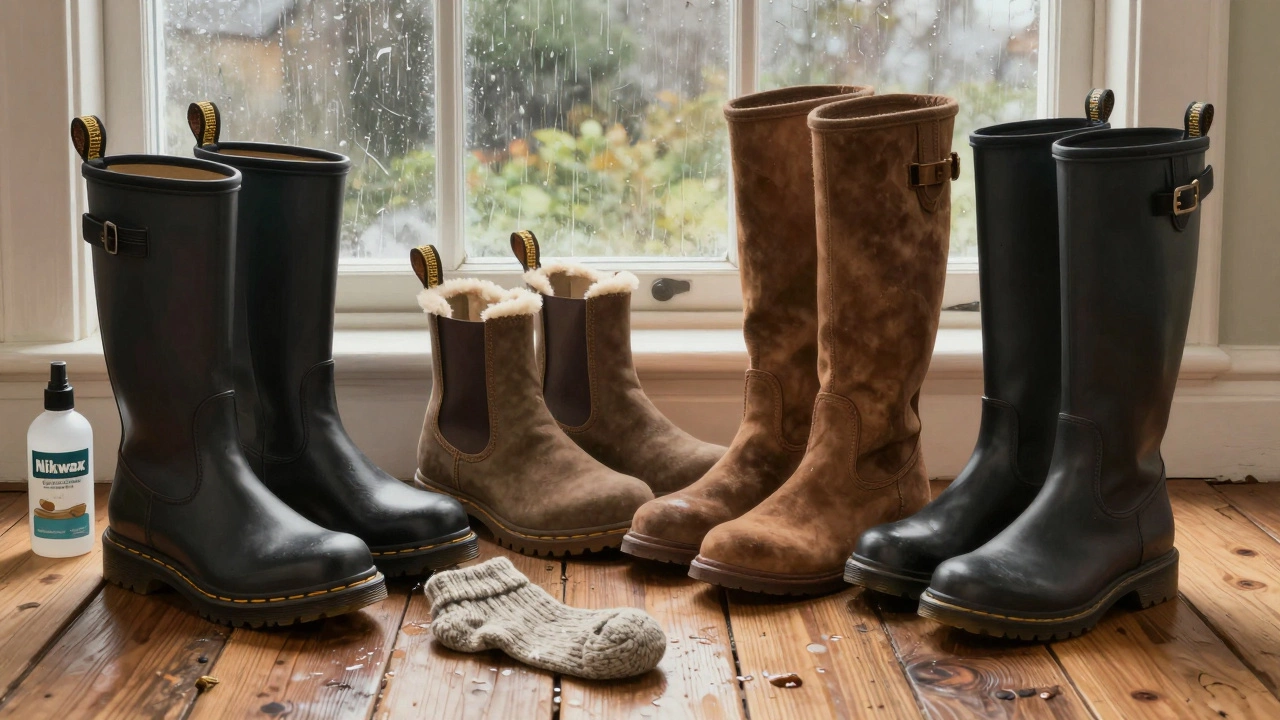
- Use a waterproofing spray (like Nikwax) every three weeks. Don’t wait until they’re soaked.
- Store them with cedar shoe trees or rolled-up newspapers to keep their shape. Avoid plastic bags - they trap moisture.
- If they get soaked, dry them slowly at room temperature. Never put them near a radiator. Leather cracks. Suede turns stiff.
- Get them re-soled. Many cobblers in Ireland offer this service for €40-€60. It’s cheaper than buying new.
Final thought: Your boots are your armor
In Ireland, your boots are more than footwear. They’re your defense against the weather, your silent partner in daily survival. This fall-winter 2024, don’t buy boots because they’re trendy. Buy them because they’ll still be standing when the snow melts in March. The best boots here aren’t the loudest. They’re the ones that let you walk through rain, wind, and stone - and still show up tomorrow, dry, warm, and ready.
Are waterproof boots really necessary in Ireland?
Yes - absolutely. Ireland gets an average of 200 rainy days a year, and many areas see over 1,500mm of rainfall annually. Waterproof boots aren’t optional; they’re essential for daily life. Even in cities like Dublin or Cork, pavements are slick with moss and algae, and sudden downpours are common. Non-waterproof boots will soak through within minutes, leading to cold feet, blisters, and even fungal infections.
What’s the best brand for Irish winters?
Blundstone and Clarks lead the market in Ireland because they offer boots with proven grip, insulation, and durability tested in local conditions. Blundstone’s 500 and 585 series are especially popular for their rugged soles and comfort. Clarks has updated their Irish line with Thinsulate lining and water-resistant suede. For those who want local craftsmanship, McKenna’s in Cork makes custom sheepskin-lined boots designed for Irish weather.
Can I wear ankle boots in the Irish winter?
Yes - but only if they’re waterproof, insulated, and have a deep tread sole. Ankle boots are popular in Ireland because they’re easy to slip on and pair with dresses or jeans. Just avoid thin leather or suede without a membrane. Look for models with GORE-TEX lining or treated leather. Pair them with wool socks and you’ll be fine even in freezing rain.
Where can I get boots repaired in Ireland?
Most towns have a cobbler who can re-sole or re-heel boots. In Dublin, try Cobblers on Grafton Street. In Galway, visit O’Connell’s Shoe Repair. In Cork, the shop on Oliver Plunkett Street has been fixing boots since the 1970s. Re-soling costs €40-€60 and can extend a boot’s life by 2-3 years. It’s far cheaper than buying new - and more sustainable.
Should I buy boots online or in-store in Ireland?
If you’re buying for the first time, go in-store. Irish weather is too specific to guess from a website. Try on boots after walking around the store - stand on a hard floor, push your foot forward, check for heel slippage. Brands like Boots.ie offer free returns, but you’ll still waste time and money if the fit is wrong. Once you know your size and preferred style, online shopping works fine - especially for replacements.