31
What Does 'B' Mean in Boots? Width Guide for Irish Women
Women's Boot Width Finder
Enter your foot measurements below to find your recommended US width code. Remember to measure in the evening when feet are largest!
Standing in a fitting room in Grafton Street or browsing online from your living room in Cork, you’ve probably seen the letter B next to a size number on a pair of women’s boots and wondered what it actually signifies. It’s not a brand code, nor is it a secret discount tier. In the world of footwear, specifically within the US sizing system which dominates many international brands sold here, B stands for Medium width. But before you click "add to cart" assuming that means it will fit your foot perfectly, you need to understand how this letter interacts with your actual anatomy, especially if you live in a place like Ireland where damp weather and cobblestones demand specific comfort standards.
The Hidden Language of Shoe Sizes
Most people focus entirely on length when buying shoes. You measure your foot in centimeters, convert it to a UK or EU size, and hope for the best. But length is only half the equation. The other half is width, and that’s where letters come in. The standard width scale for women’s shoes typically runs from AAA (Extra Narrow) to EEE (Extra Wide). Here is the breakdown you need to know:
- A or AA: Narrow width. Often found in dress shoes or Italian-made leather goods.
- B: Medium or Standard width. This is the default setting for most mass-market women’s boots.
- C or D: Wide width. Commonly required by women with broader forefeet or bunions.
- E or EE: Extra wide. Essential for those who experience swelling during long walks or have high insteps.
If a boot doesn’t explicitly state a width letter, it is almost always a B. Manufacturers assume the average consumer has a medium-width foot, so they don’t bother labeling it. If you see "D," however, that’s a deliberate signal that the shoe is built wider than the norm. Understanding this distinction saves you from the common mistake of buying a shoe that is long enough but painfully tight across the ball of your foot.
Why Width Matters More Than Length in Wet Weather
Living in Ireland means dealing with rain. A lot of it. When your feet get wet, they swell. If you are wearing a B-width boot that fits snugly when dry, that same boot can become a torture device once moisture sets in. Leather stretches slightly, but synthetic materials often do not. If you plan on walking through Galway’s city center or hiking the Wicklow Mountains, relying solely on length measurements is risky.
Consider the biomechanics. Your foot spreads out when you bear weight. A B-width boot is designed for a foot that stays relatively compact under load. If you have flat arches-a common trait among many populations-your foot flattens and widens more significantly when you stand. Wearing a B-width boot in this scenario forces your metatarsals into a cramped space, leading to plantar fasciitis or neuromas. For Irish residents, who often walk considerable distances due to limited parking in urban centers like Dublin or Belfast, this pressure accumulates quickly.
Regional Fit Differences: UK vs. US vs. EU Standards
Here is where it gets tricky. The letter "B" is part of the American sizing system. However, many brands sold in Ireland use European (EU) or British (UK) sizing. How do these translate?
| US Width Code | Description | Typical UK Equivalent | Common Availability in Ireland |
|---|---|---|---|
| AAA / AA | Narrow | N/A (Rare) | Specialist boutiques only |
| B | Medium (Standard) | Fitted / Regular | High street chains (Zara, H&M, Clarks) |
| D | Wide | Wide | Comfort brands (Clarks, Ecco, Geox) |
| EE / EEE | Extra Wide | Extra Wide | Orthopedic specialists, online retailers |
Notice that UK sizing rarely uses letters for width in mainstream retail. Instead, they might label shoes as "Fitted," "Regular," or "Wide." If you are shopping at a store like Penneys or Brown Thomas, you won’t see "B" listed. You’ll just try them on. However, if you are ordering from US-based sites like Nordstrom or Amazon US shipping to Ireland, the "B" designation becomes critical because returns are costly and slow. Always check if the site offers a width filter. If they don’t, assume it’s a B and proceed with caution.
How to Measure Your Foot Width Accurately
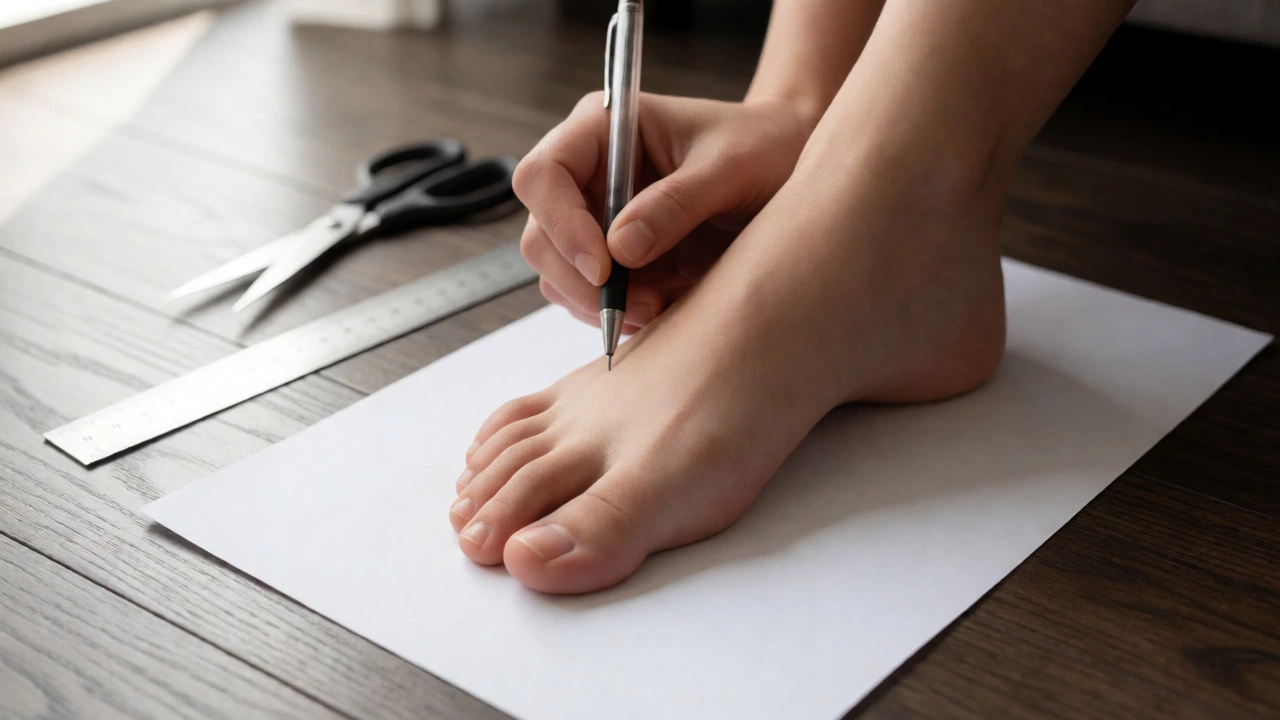
You cannot guess your width. You must measure it. Grab a piece of paper, a pen, and a ruler. Do this in the evening, after you’ve been on your feet all day, because your feet are at their largest then. Place the paper on a hard floor, stand on it with your heel against a wall, and mark the widest part of your foot (usually just below the toes).
Measure the distance between the two marks. Then, compare that measurement to a standard chart. For example, if your foot is 8.5 inches long, a B width corresponds to a ball girth of approximately 3.4 inches. If your measurement is closer to 3.6 inches, you likely need a D width, even if your length is correct. Many Irish women overlook this step because they are used to UK sizes, which obscure width data. Taking ten minutes to measure can save you €100 on a pair of boots that end up sitting unworn in the back of your wardrobe.
Material Matters: Leather vs. Synthetic in the Irish Climate
The material of your boot changes how the "B" width feels. Full-grain leather, commonly sourced from tanneries in Italy or Spain and sold in Irish stores, has natural give. Over time, it molds to your foot shape. A B-width leather boot might feel tight initially but loosen up after a week of wear. This is why breaking in new boots is essential.
Synthetic materials, like polyurethane or faux leather, do not stretch. They retain their original shape. If you buy a synthetic B-width boot and your foot is borderline wide, it will stay uncomfortable forever. Given Ireland’s frequent rain, waterproofing is also a factor. Gore-Tex lined boots, popular among commuters in Dublin, often add bulk inside the shoe. This internal lining reduces the effective volume of the boot. So, a Gore-Tex B-width boot might fit tighter than a non-lined B-width boot of the same size. If you rely on waterproof gear for your daily commute, consider sizing up in width rather than length.

Brand-Specific Quirks in the Irish Market
Not all B widths are created equal. Some brands run narrow, others run true to size. Here is what you need to know about popular brands available in Ireland:
- Clarks: A staple in Irish towns. Their "Unstructured" line tends to run true to B width, but their formal lines can be narrower. Look for their "Wide" range if you have bunions.
- Ecco: Danish design known for comfort. Their B width is generous compared to Italian brands. Many Irish nurses and teachers swear by Ecco because the insoles support wider feet without needing a D width.
- Zara & Mango: Fast fashion giants. Their sizing is inconsistent. A B in Zara might feel like an A in another brand. Always try these on in-store. They prioritize style over ergonomic width distribution.
- Rieker: German brand widely available in Irish department stores. Known for soft uppers. Their B width is forgiving, making them a safe choice for those unsure about their exact width.
If you are shopping online from Irish retailers like Littlewoods Ireland or ASOS, read reviews specifically mentioning "tightness" or "width." Real user feedback is often more accurate than the manufacturer’s description.
Troubleshooting: What to Do If Your B-Width Boots Hurt
So, you bought the boots. They are labeled B. They fit your length. But your pinky toe is numb, or you have blisters on the outer edge. What now?
- Check your socks: Thick wool socks take up significant volume. Switch to thin merino wool or technical synthetics. This alone can relieve pressure in a B-width boot.
- Use a shoe stretcher: If the boots are leather, a spray-on stretching solution combined with a wooden stretcher can widen the toe box by half a size. This works well for minor tightness.
- Add orthotic inserts: Paradoxically, adding a thin insole can make a boot feel tighter. If you already have custom orthotics, ensure they aren’t raising your foot too high, causing your toes to press against the top of the boot.
- Accept the return: If the pain persists after three wears, the boot is likely too narrow. Don’t force it. Chronic discomfort leads to permanent foot issues. Exchange for a D width or a different brand.
Remember, comfort is not negotiable, especially when navigating uneven pavements or historic streets in cities like Kilkenny or Limerick. A poorly fitted boot turns every step into a chore.
Final Thoughts on Navigating Boot Sizing
Understanding what "B" means empowers you to shop smarter. It shifts the conversation from "Is this my size?" to "Does this accommodate my foot shape?" For Irish women, dealing with variable weather and active lifestyles, width is often the deciding factor between a pair of boots you love and a pair you hate. Take the time to measure, know your brand tendencies, and don’t hesitate to seek out wide-fit options if your feet tell you they need more room. Your future self, walking comfortably through a rainy Tuesday in Dublin, will thank you.
Is B width considered narrow?
No, B is considered Medium or Standard width for women. Narrow is typically A or AA. However, some brands run narrow overall, so a B in one brand may feel like an A in another. Always try them on if possible.
Can I stretch B width boots to fit wider feet?
Leather boots can be stretched slightly using professional stretching services or home kits. Synthetic materials rarely stretch effectively. If you are significantly wider than B, stretching may not provide enough relief, and you should look for D width options instead.
Do Irish shoe sizes differ from US sizes regarding width?
Irish stores generally follow UK or EU sizing conventions, which often do not explicitly label width with letters like B or D. Instead, they may offer separate "Wide" ranges. When converting from US B width, look for UK "Regular" or "Fitted" labels, but verify fit physically as standards vary by manufacturer.
What happens if I wear B width boots with wide feet?
Wearing too-narrow boots can cause bunions, corns, ingrown toenails, and nerve damage such as Morton’s neuroma. It also alters your gait, potentially leading to knee, hip, or back pain. Comfort should always take precedence over aesthetics.
Are there specific brands in Ireland that offer good width options?
Yes, brands like Clarks, Ecco, Rieker, and Geox are widely available in Ireland and offer dedicated wide-fit ranges. Online retailers like ASOS and John Lewis also allow filtering by width, which is helpful for finding D or EE options that might not be stocked locally.