15
What Are the Requirements for Work Shoes in Ireland?
Work Shoe Compliance Checker
Check what type of work shoes are required for your job in Ireland. Based on Irish Health and Safety Authority (HSA) regulations and the EN ISO 20345 standard.
Compliance Results
Select your industry and conditions to see the required shoe type.
When you’re walking the muddy lanes of County Clare after a November rain, standing all day on wet concrete in a Galway seafood kitchen, or climbing scaffolding on a Dublin construction site, your shoes aren’t just about comfort-they’re your first line of defense. In Ireland, where rain is a daily companion and workplaces range from dairy farms in Tipperary to offshore wind farms off the coast of Wexford, the requirements for work shoes are strict, practical, and non-negotiable. This isn’t about fashion. It’s about survival, safety, and staying on the job.
Legal Requirements Under Irish Health and Safety Law
In Ireland, the Safety, Health and Welfare at Work (General Application) Regulations 2007 make it clear: employers must provide appropriate personal protective equipment (PPE), including footwear, when there’s a risk of injury. This isn’t optional. If you’re working in construction, warehousing, agriculture, or even food processing, your employer is legally required to supply or pay for suitable work shoes. You can’t be expected to buy your own unless the footwear is purely for comfort and not safety-critical.
The Health and Safety Authority (HSA) enforces these rules. A 2023 audit found that over 18% of workplace inspections in the construction sector in Munster and Leinster identified workers without compliant footwear. That’s not just risky-it’s a fineable offense for the employer. So if your boots are worn thin, cracked, or lack a steel toe, your company is breaking the law.
What Makes a Shoe ‘Compliant’ in Ireland?
Not all boots labeled ‘work shoes’ are created equal. In Ireland, compliant work footwear must meet the EN ISO 20345 standard. Look for the logo on the shoe-it’s a small rectangle with a ‘S’ inside, followed by numbers that tell you what protection it offers.
- S1P: This is the most common rating for indoor and light outdoor work. It includes a steel toe cap, anti-slip sole, and penetration-resistant midsole. Ideal for warehouse staff in Limerick or mechanics in Cork.
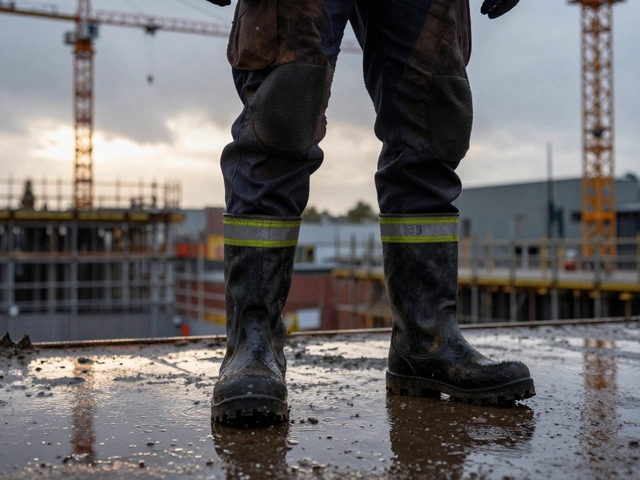
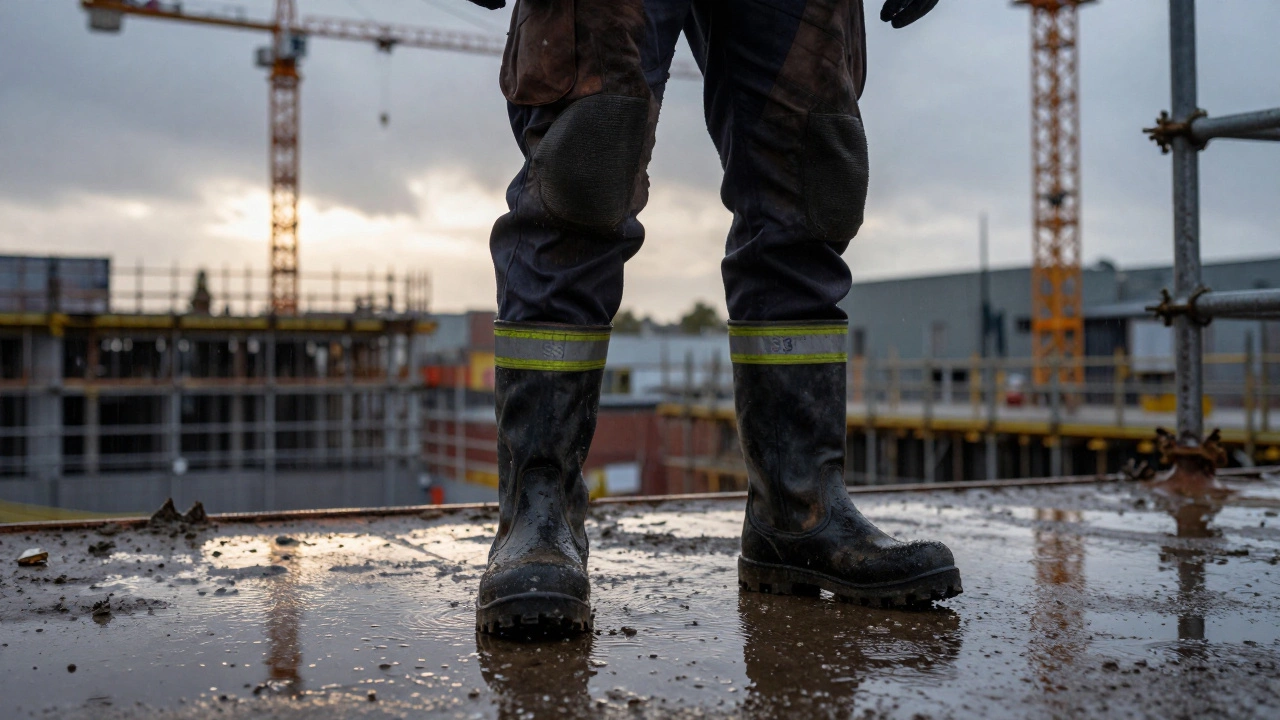
- S3: For wet, muddy, or outdoor environments. This adds water resistance and a cleated sole. Essential for farmers in Mayo, landscapers in Wicklow, or anyone working on a building site in Belfast (which follows UK standards but aligns closely with Irish ones).
- Antistatic (A): Required in electronics or chemical handling roles. Common in pharmaceutical plants in Athlone or Dundalk.
- Heat resistant (HRO): Needed for foundries or boiler rooms. Rare, but mandatory in places like the old steelworks in Dublin’s Ringsend.
Remember: a rubber sole might look tough, but if it doesn’t carry the EN ISO 20345 mark, it’s not certified. Don’t be fooled by brands that say ‘industrial grade’-only the official label counts under Irish law.
Climate-Specific Needs for Irish Conditions
Ireland’s weather doesn’t care about your schedule. Rain falls an average of 225 days a year. That means your work shoes must handle wet ground, flooded yards, and damp interiors all year round. Water-resistant isn’t enough-you need waterproof.
Brands like Blundstone and Dr. Martens are popular, but they’re not always compliant. Check the label. For true Irish conditions, look at local suppliers like Workwear Direct in Dublin or ProGuard Safety in Limerick. They stock boots with GORE-TEX liners, insulated linings for winter, and Vibram soles designed for slick Irish cobblestones and grassy farm tracks.
Also, consider the ground. In rural areas, you’re often walking on uneven, root-filled earth or slurry-covered fields. A deep lug sole with aggressive tread-like those on Red Wing or Grindrod boots-isn’t a luxury. It’s what keeps you from twisting an ankle on a wet ditch edge near Kilkenny.
Industry-Specific Examples Across Ireland
Work shoe needs vary wildly depending on your job-and where you are.
- Construction sites (Dublin, Cork, Galway): S3 boots with steel toe and ankle support. Many contractors now require hi-vis strips for visibility in low-light winter days.
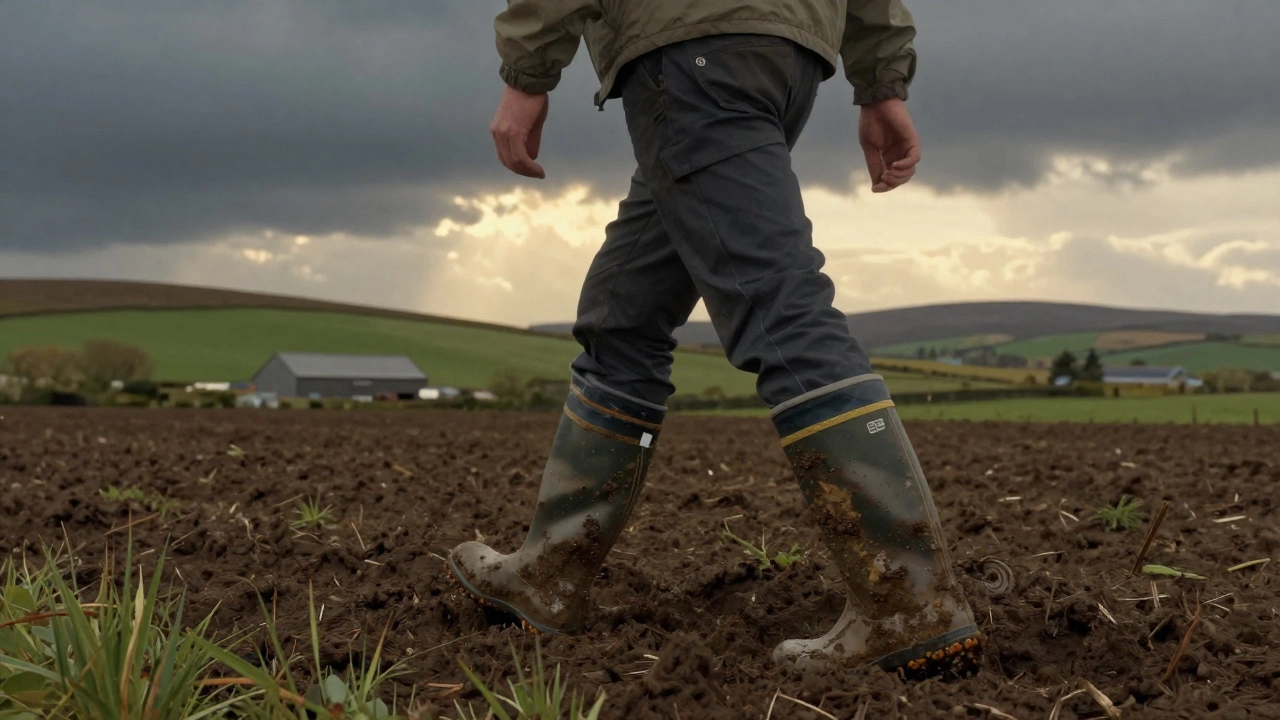
- Farming (Clare, Donegal, Kerry): Waterproof S3 boots with puncture-resistant soles. Farmers often wear them for hours on end, so comfort matters. Brands like Chippewa and Irish-made Ballymore are gaining traction for their durability and fit.
- Hospitality (Dublin city centre, Galway pubs, Killarney hotels): Slip-resistant soles are mandatory. Many kitchens use non-marking rubber soles to protect polished floors. The HSA has issued multiple warnings to restaurants in Belfast and Cork after slip-and-fall incidents.
- Healthcare (HSE clinics, private hospitals): Antistatic, easy-to-clean, closed-toe shoes. Nurses in Waterford or Louth often wear clogs with antimicrobial linings to handle spills and disinfectants.
- Manufacturing (Drogheda, Limerick, Shannon): Combination of steel toe, heat resistance, and chemical resistance. Factories here handle everything from dairy processing to pharmaceuticals.
What Happens If You Ignore the Rules?
It’s not just about getting hurt. In 2024, the HSA fined a Galway-based roofing company €12,000 after a worker slipped on a wet roof and broke his ankle. He was wearing regular trainers because he ‘didn’t want to look uncool.’ The court ruled it was gross negligence. That’s the reality.
Workers who refuse to wear compliant footwear can be sent home without pay. Employers who don’t supply it risk prosecution. The message is clear: in Ireland, your shoes are part of your job description.

Where to Buy Compliant Work Shoes in Ireland
You don’t need to order from overseas. Ireland has a solid network of local suppliers who understand our conditions.
- Workwear Direct (Dublin, Cork, Limerick): Offers free delivery and same-day pickup. They have a ‘Try Before You Buy’ program for boots.
- ProGuard Safety (Limerick): Specializes in Irish farm and construction footwear. Their staff know the difference between a muddy field and a wet factory floor.
- Harvey Norman and Decathlon: Stock some compliant options, but always check the label. Many are just ‘fashion work boots’ with no real safety rating.
- Local agricultural suppliers in rural towns like Ennis, Sligo, or Derry often carry trusted brands like Irish-made Ballymore or Claddagh Workwear.
Some employers even offer a €50 annual footwear allowance. Ask your HR department. If they say no, remind them it’s the law.
When to Replace Your Work Shoes
Work shoes don’t last forever. In Ireland’s damp climate, they wear out faster.
- Replace if the sole is worn down to the midsole or shows cracks.
- Replace if the toe cap is dented or visible through the material.
- Replace if the waterproof lining fails-your socks stay wet after an hour.
- Replace if you feel pain or pressure points after a shift. Comfort isn’t optional.
Most quality work boots last 6-12 months with daily use. If yours are still going after 18 months, you’re lucky. Don’t push it.
Final Thought: Your Feet Are Your Foundation
In Ireland, whether you’re hauling nets off the coast of Galway, stacking pallets in a Belfast warehouse, or cleaning out a dairy shed in Roscommon, your feet carry you through the day. The right work shoes aren’t an expense-they’re an investment in your ability to keep working, keep earning, and keep coming home safe.
Don’t wait for an accident to remind you. Check your boots today. If they don’t have the EN ISO 20345 mark, they don’t belong on your feet in Ireland.
Are work shoes required by law in Ireland?
Yes. Under the Safety, Health and Welfare at Work (General Application) Regulations 2007, employers must provide compliant safety footwear if there’s a risk of foot injury. This applies to construction, agriculture, manufacturing, healthcare, and hospitality. Workers can’t be asked to pay for it unless the footwear is purely for comfort and not safety-related.
What does S3 mean on work boots?
S3 is a European safety rating under EN ISO 20345. It means the boot has a steel toe cap, anti-slip sole, penetration-resistant midsole, and is water-resistant. It’s the standard for outdoor work in Ireland-ideal for farming, construction, and warehouse roles where wet or muddy conditions are common.
Can I use regular boots for work in Ireland?
Only if your job doesn’t involve hazards like falling objects, slippery floors, or sharp materials. For construction, farming, kitchens, or factories, regular boots are not compliant. Even if they look sturdy, without the EN ISO 20345 label, they don’t meet Irish safety standards and could void your insurance if you’re injured.
Do I need to buy my own work shoes?
No. Your employer must provide or pay for compliant work shoes if they’re required for safety. If they ask you to buy them, ask for a written policy. Many employers offer an annual allowance-€50 is common. If they refuse, contact the HSA anonymously for advice.
Where can I find Irish-made work boots?
Brands like Ballymore and Claddagh Workwear are designed and manufactured in Ireland. They’re available through local safety suppliers in Limerick, Galway, and Cork. These boots are built for Irish weather-waterproof, durable, and fitted for wider feet common in the population. Many farmers and tradespeople prefer them over imported brands.