29
Is It Unprofessional to Wear Sandals to Work in Ireland?
Irish Workplace Footwear Checker
Is Your Footwear Appropriate?
Assess whether sandals are suitable for your Irish workplace based on your specific situation.
Analysis Result
Select your workplace context to see if your footwear is appropriate.
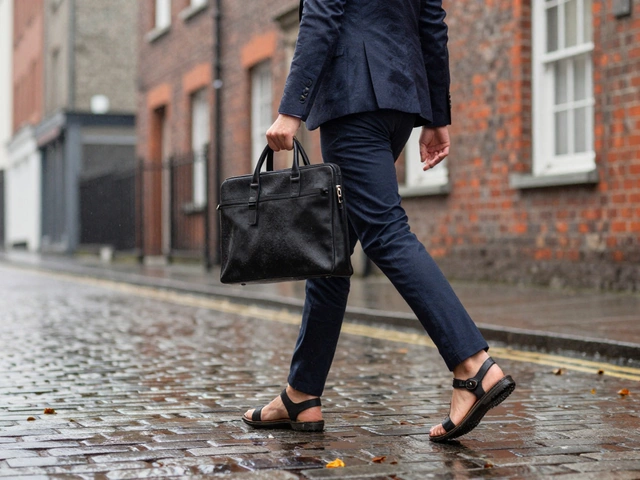
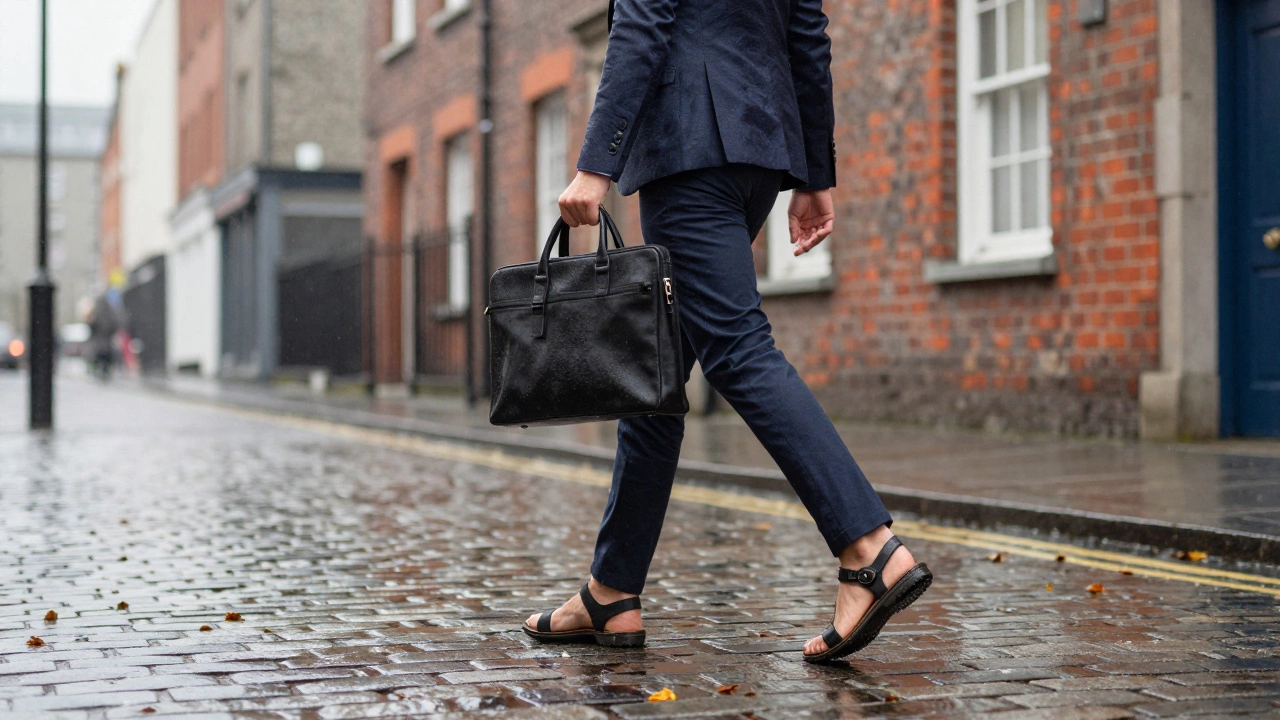
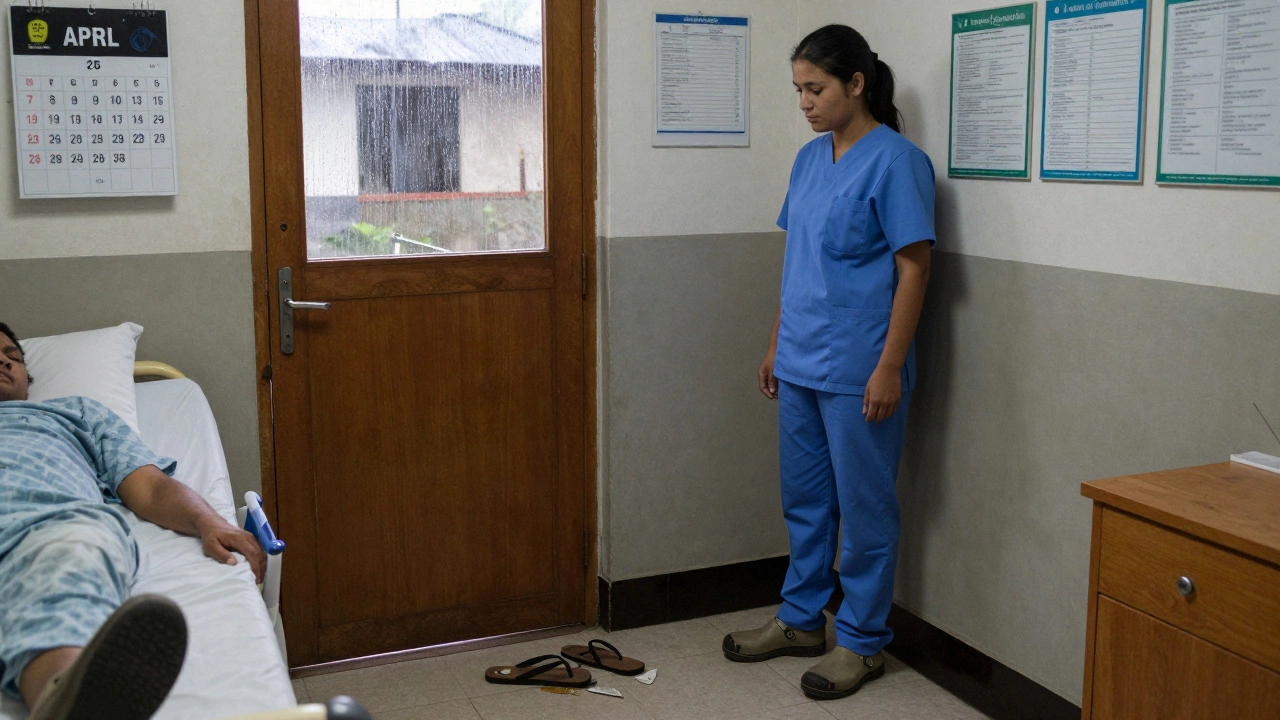
In Ireland, where the weather shifts from drizzle to sunshine in under an hour and office buildings still have damp patches near the entrance in April, the question of whether sandals are unprofessional at work isn’t just about style-it’s about survival. You might see someone in Galway’s Merchants Quay wearing leather thong sandals with a tailored blazer, or a Dublin accountant in a Dún Laoghaire firm stepping out in minimalist slides after a long meeting. But does that mean it’s acceptable? The answer isn’t black and white. It depends on your workplace, your role, and whether your boss has ever had to wipe water off their desk after you walked in.
What Does ‘Professional’ Even Mean in an Irish Office?
Irish workplaces don’t have rigid national dress codes. Unlike London or New York, where suits still dominate finance floors, Ireland’s professional norms are shaped more by pragmatism than protocol. A bank in Cork might expect closed-toe shoes, while a tech startup in Temple Bar might treat flip-flops like a seasonal perk. The truth? Many Irish employers care more about results than whether your toes are visible. But that doesn’t mean you can just throw on a pair of Havaianas and call it a day.
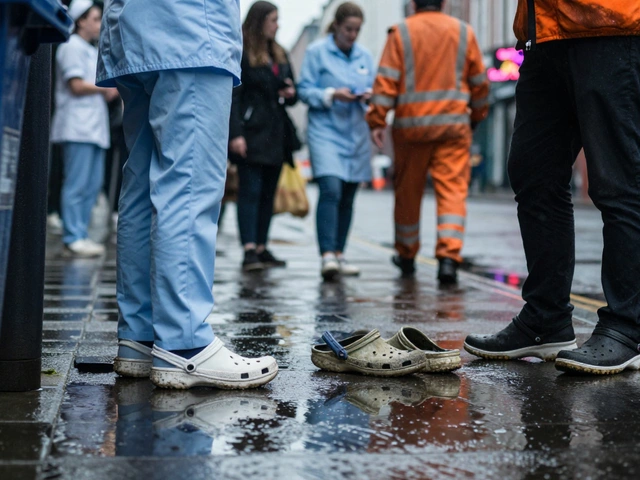
Look around. In the public sector-like a local council office in Limerick or a health service hub in Sligo-closed shoes are still the norm. You’ll see people in Clarks, Ecco, or even local brands like Irish Leather or Blarney Stone Footwear. These aren’t just brands; they’re trusted for durability in wet conditions. Sandals? Rarely. Why? Because the average Irish worker doesn’t just walk to the office-they walk through puddles, over cobblestones, and across icy paths after a sudden downpour. A pair of open sandals won’t cut it when the forecast says ‘light rain, 12°C, and wind from the Atlantic’.
When Sandals Might Fly-And When They Won’t
There are exceptions. Creative industries in Dublin, like design studios in the Digital Hub or agencies in Smithfield, often have relaxed policies. I’ve seen graphic designers in Dundrum wearing Birkenstocks with socks-yes, socks-with their jeans and oversized shirts. No one blinked. Why? Because their work isn’t client-facing in formal settings. But walk into a law firm on Dame Street or a financial advisor’s office in Ballsbridge, and you’ll get looks faster than a tourist asking for directions to the Guinness Storehouse.
Client-facing roles are the real test. If you’re meeting a bank manager in Kilkenny, presenting to a school board in Waterford, or even just walking into a GP’s office in Galway, closed footwear signals competence. It’s not about being stuffy-it’s about signaling that you take the situation seriously. In Ireland, where understatement is cultural currency, looking like you’ve made an effort matters more than you think.
And then there’s the weather. Even in July, the Irish summer rarely feels like Mediterranean heat. A ‘warm’ day is 18°C, and humidity clings to everything. Sandals might feel nice for five minutes-but then your feet get damp, your socks get soggy, and you’re stuck in a puddle of your own making. That’s why most Irish professionals who wear sandals stick to closed-strap styles: leather sandals with ankle support, like those from Clarks or Geox, which are sold in every SuperValu and Dunnes Stores across the country.
The Sandals That Actually Work in Ireland
If you’re determined to wear sandals, don’t reach for the flimsy ones from the tourist stall in Kinsale. Instead, look for models designed for wet climates. Brands like Ecco and Clarks have Irish-specific lines with water-resistant uppers and grippy soles-exactly what you need when walking from Busáras to a meeting in O’Connell Street. The Ecco Soft 7 sandal, for example, has a cushioned footbed and a sole that grips wet pavement. It’s not glamorous, but it’s practical. And in Ireland, practical wins.
Even Birkenstocks have found a quiet niche here-not the classic Arizona, but the Birkenstock Boston with its closed heel. It’s not a sandal by strict definition, but it’s open-toed and breathable. You’ll spot them in university admin offices in Cork, or among teachers in Galway’s primary schools. They’re the compromise: professional enough for paperwork, casual enough for the 10-minute walk from the bus stop.
What the Irish HR Managers Really Think
Most HR departments in Ireland don’t have a written policy on sandals. That’s not an oversight-it’s intentional. They leave it to common sense. One HR manager in Louth told me: “We don’t ban sandals. But if someone turns up in flip-flops with their toenails painted neon green and they’re supposed to be meeting a client from Belfast, we have a chat.”
There’s a cultural rhythm here. Irish workplaces value modesty, humility, and not standing out for the wrong reasons. Wearing sandals might seem harmless, but in a country where people still say “good morning” to strangers on the street, how you present yourself matters. It’s not about being fancy. It’s about being respectful.
Real-Life Scenarios in Irish Workplaces
Let’s say you work in a rural clinic in Mayo. Your job involves walking between wards, checking on patients, and sometimes helping elderly residents outside. Sandals? Not a chance. You need closed, non-slip shoes-preferably ones with arch support, because you’re on your feet all day. The same goes for nurses in Tallaght Hospital or receptionists in a county council office in Donegal.
Now imagine you’re a freelance writer working from a co-working space in Ennis. You’ve got no clients coming in, no meetings scheduled, and your only ‘dress code’ is not showing up in pajamas. Here, sandals are fine. But even then, most people opt for loafers or mules. Why? Because you never know when you’ll get a last-minute Zoom call with a client in London or a call from a publisher in Dublin.
Even in remote roles, the expectation lingers: if you look like you’re ready for the beach, people assume you’re not ready for work.
What to Wear Instead
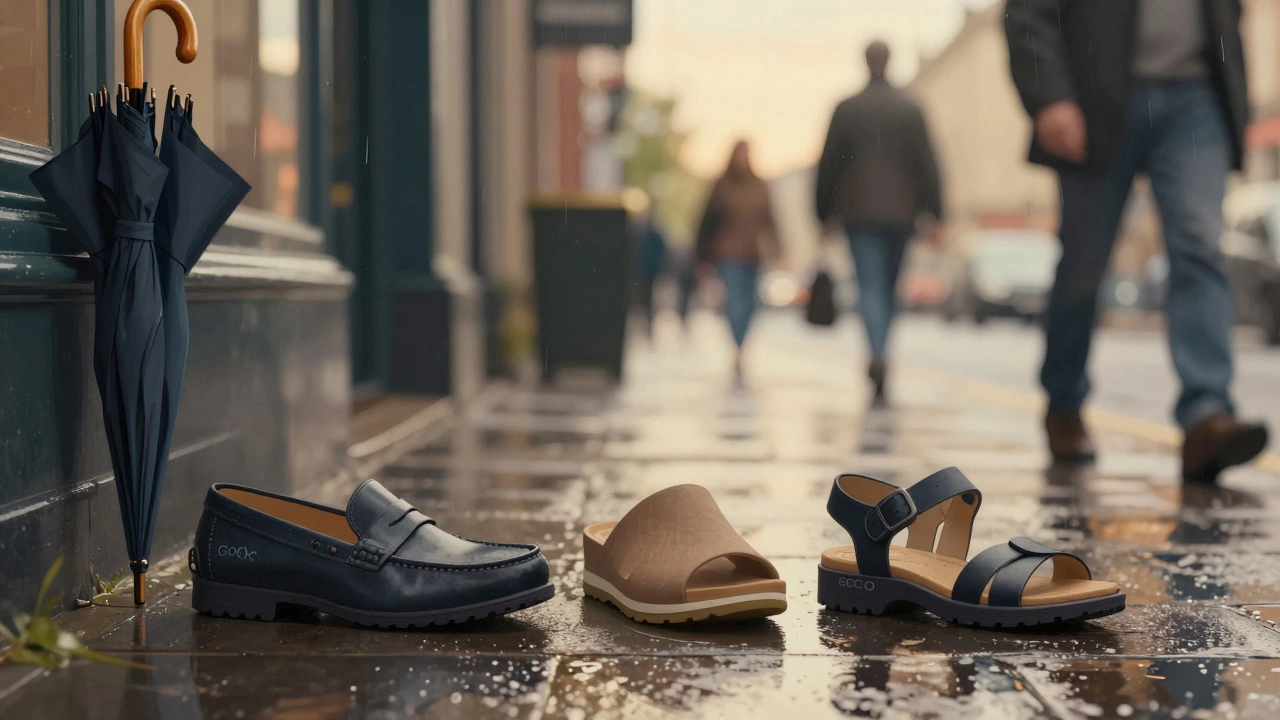
If sandals feel too risky, here are Irish-approved alternatives:
- Loafers-the quiet hero of Irish offices. Brands like Clarks and Geox make them in breathable leather.
- Mules-easy to slip on, closed at the back, often with a low heel. Perfect for Dublin’s rainy commutes.
- Hybrid shoes-like the Ecco Soft 7 or Clarks Unstructured line. They look like shoes but feel like sandals.
- Waterproof sneakers-yes, even in offices. Brands like Merrell and Keen are common in tech hubs.
These options give you breathability without the risk. And in a country where 150 days of rain a year are the norm, that’s not a compromise-it’s smart.
Final Verdict: Sandals in Ireland? Proceed With Caution
Is it unprofessional to wear sandals to work in Ireland? Sometimes. But it’s rarely about the sandals themselves-it’s about context. In a creative agency in Galway? Maybe. In a bank in Limerick? No. In a remote role with no client contact? Possibly. But even then, most Irish workers choose footwear that says: “I’m here to work, not to vacation.”
Don’t mistake casual for careless. Ireland doesn’t demand suits. But it does demand respect-for the job, for the people you work with, and for the weather that never gives you a break. If you want to wear sandals, pick ones that can handle a puddle, a cobblestone, and a 10-minute walk in the drizzle. And if you’re still unsure? Ask your manager. Most will appreciate you asking.
After all, in Ireland, the best dress code isn’t written down. It’s understood.
Can I wear sandals to work in a Dublin office?
It depends. In creative industries like design, media, or startups, sandals are often tolerated-especially if they’re closed-strap and clean. But in finance, law, healthcare, or client-facing roles, closed shoes are still the norm. When in doubt, match what senior staff wear.
Are flip-flops ever acceptable in Irish workplaces?
Almost never. Flip-flops are seen as too casual, even in relaxed environments. They’re associated with beach days, not boardrooms. If you’re wearing them, you’re likely to be asked to change-even in a remote role.
What footwear brands are popular in Irish offices?
Clarks, Ecco, and Geox dominate Irish workplaces because they’re durable, waterproof-friendly, and comfortable for long days. Local brands like Irish Leather and Blarney Stone Footwear are also trusted, especially in rural areas. You’ll find them in Dunnes Stores, SuperValu, and independent shoe shops across Galway, Cork, and Limerick.
Do Irish companies have formal dress codes?
Most don’t. Irish workplaces rely on unwritten norms rather than written policies. You won’t find a handbook that says “no sandals,” but you’ll quickly learn what’s acceptable by watching others. The culture values subtlety-so dressing slightly more formally than you feel you need to is usually the safe bet.
Is it okay to wear sandals in winter?
No. Winter in Ireland means rain, wind, and temperatures hovering just above freezing. Sandals in December aren’t just unprofessional-they’re unsafe. Even the most relaxed employers expect closed, waterproof footwear from October through March.