17
Should You Keep a Suit in a Bag? The Irish Guide to Storing Suits

Suit Storage Health Checker
Select your current storage habits below to see if you are risking damage to your suits.
Storage Score
Picture this: you’ve just picked up a sharp new navy suit from a tailor on Grafton Street or perhaps browsed the racks at Brown Thomas. It looks impeccable. But then comes the question that plagues every wardrobe owner in Dublin, Cork, and Galway alike-should you keep that suit in its plastic dry-cleaning bag, or should it breathe freely in your closet?
In Ireland, where our weather swings from drizzly mist to bright sunshine within the hour, keeping your clothes in top condition isn't just about looking good for a wedding in County Kerry; it’s about protecting an investment against dampness and mold. If you are wondering whether to leave that suit in the bag or take it out, the short answer is no. You should almost never store a suit in a plastic bag long-term.
The Problem with Plastic Dry-Cleaning Bags
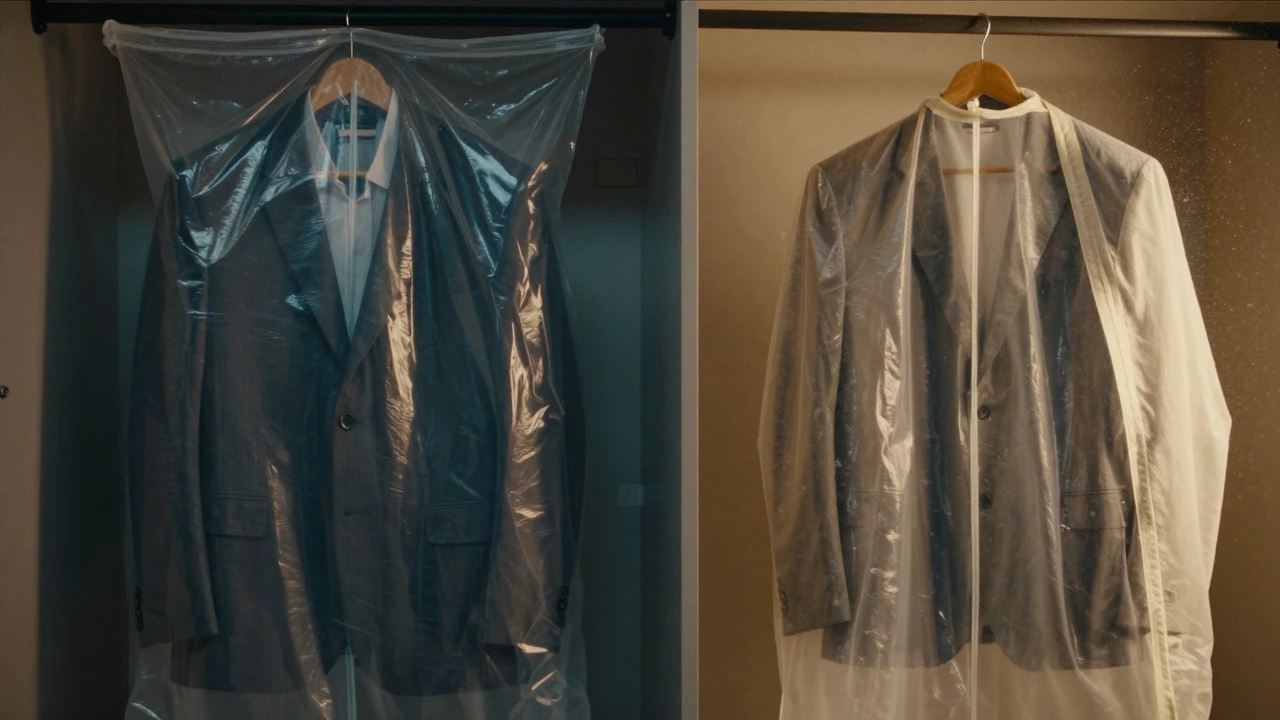
When you drop off a suit at your local dry cleaner in town, they return it wrapped in a thin, crinkly plastic bag. This bag serves one purpose: protection during transport. It keeps the suit clean while it sits in the back of a delivery van navigating the traffic on the M50 or getting rained on outside a shop in Limerick. Once you get home, that bag becomes your enemy.
Plastic garment bags are non-breathable covers that trap moisture and prevent fabrics from airing out. They create a greenhouse effect inside your wardrobe. In our humid climate, especially during those heavy Atlantic storms we see all too often, any residual moisture from cleaning gets trapped against the fabric. Over time, this can lead to mildew, which smells terrible and ruins the fibers permanently.Think of it like leaving wet gym gear in a locker. Eventually, it starts to smell. The same principle applies to wool and cotton blends common in Irish menswear. Furthermore, static electricity builds up inside plastic, attracting dust and lint from your room. Before you know it, your crisp suit is covered in fuzz before you’ve even worn it once.
Why Fabric Needs to Breathe
Suits, particularly those made from natural fibers like wool, linen, or cashmere, need air circulation. Wool is a hygroscopic material, meaning it absorbs and releases moisture from the air naturally. When you lock it away in plastic, you stop this process. The fabric stiffens, loses its natural drape, and can develop permanent creases where it was folded or hung awkwardly in the bag.
If you live in a coastal area like Galway or Westport, the salt air adds another layer of complexity. Salt particles can settle on the fabric if it’s exposed, but more importantly, the high humidity levels mean that trapped moisture stays trapped longer. Allowing your suit to hang openly in a well-ventilated closet helps regulate the microclimate around the garment, keeping it fresh and ready to wear.
The Right Way to Store Your Suit
So, if not in a plastic bag, what do you use? The gold standard for suit storage is a proper wooden hanger combined with a breathable cover. Here is how you set it up correctly:
- Use Wide Wooden Hangers: Thin wire hangers distort the shoulders of your jacket. Invest in wide, contoured wooden hangers that mimic the shape of human shoulders. These support the structure of the suit without creating bumps or indentations.
- Trousers Should Hang Too: Don’t fold your trousers over the bar unless necessary. Use a trouser hanger with clips or bars designed for pants. This prevents deep creases across the thighs and knees. If you must fold them, ensure the break line is consistent each time.
- Avoid Overcrowding: Give each suit enough space in your wardrobe. Clothes pressed tightly together don’t circulate air properly and are more likely to transfer odors or colors to one another.
When Breathable Covers Make Sense
While plastic is bad, total exposure isn’t always ideal either, especially if you’re storing seasonal items. If you have a summer linen suit you only wear for weddings in June and July, you might want to protect it from dust during the rest of the year. In this case, opt for a cotton garment bag or a canvas cover. These materials allow air to pass through while shielding the suit from dust bunnies and accidental spills.
You can find these breathable covers at stores like Marks & Spencer or specialized haberdasheries across Ireland. Look for bags made from natural fibers. Avoid anything labeled "polyester" or "vinyl" unless it’s strictly for travel purposes.
Traveling with Your Suit in Ireland
Let’s face it: traveling by train from Dublin Heuston to Cork Kent or flying from Shannon Airport requires some strategy. You can’t exactly walk through the terminal carrying a wooden hanger. For short trips, a dedicated garment bag is essential-but choose wisely.
Many travelers make the mistake of using cheap, flimsy plastic bags that tear easily. Instead, invest in a sturdy, water-resistant garment bag with padding. These are available at luggage specialists like Travelbag or online retailers shipping to Ireland. When packing, button the jacket to maintain its shape, and fold the trousers neatly along their natural crease lines. Place the bag in the overhead compartment rather than checking it in, if possible, to avoid rough handling.
If you’re driving, say heading down to a festival in Waterford, lay the suit flat in the trunk or back seat. Avoid piling other luggage on top of it. A quick steam upon arrival will remove any minor wrinkles caused by transit.

Maintaining Your Suit Between Wears
Storage is only part of the equation. How you treat your suit between wears affects its longevity. After wearing your suit, don’t just throw it back in the closet. Brush it gently with a clothes brush to remove surface dirt and dust. Then, let it hang in a well-ventilated area for at least 24 hours before wearing it again. This allows any sweat or moisture absorbed by the lining to evaporate.
Dry cleaning is harsh on fabrics. Unless there’s a visible stain or odor, limit dry cleaning to once or twice a year. Frequent cleaning breaks down the fibers and fades the color. Spot cleaning with a damp cloth is often sufficient for minor spills.
| Method | Breathability | Dust Protection | Best For |
|---|---|---|---|
| Plastic Dry-Cleaning Bag | Poor | High | Transport only |
| No Cover (Open Closet) | Excellent | Low | Daily wear suits |
| Cotton Garment Bag | Good | Medium | Seasonal storage |
| Vacuum Sealed Bag | None | High | Long-term archival (rare) |
Common Mistakes to Avoid
Even well-intentioned owners ruin their suits through simple errors. One major blunder is folding the jacket and placing it in a drawer. Jackets are structured garments meant to hang. Folding compresses the shoulders and lapels, leading to permanent deformation. Another mistake is storing suits in attics or basements. These areas experience extreme temperature fluctuations and higher humidity levels, both detrimental to fabric health. Stick to a climate-controlled bedroom closet.
Also, be wary of mothballs. While traditional, they leave a strong chemical odor that lingers for months. Instead, use cedar blocks or lavender sachets. Cedar repels moths naturally and adds a pleasant scent, while lavender provides a subtle fragrance that doesn’t overpower the fabric. You can pick up cedar products at most hardware stores or garden centers across Ireland.
Conclusion: Prioritize Airflow
Keeping your suit in a plastic bag might seem convenient, but it’s a recipe for disaster in the long run. By removing the bag immediately after cleaning, using proper hangers, and ensuring adequate ventilation, you extend the life of your suit significantly. Whether you’re dressing for a business meeting in Dublin’s financial district or a casual pub night in Kilkenny, your suit should look as sharp as the day you bought it. Treat it with respect, and it will serve you well for years to come.
How long can I leave a suit in a dry-cleaning bag?
Ideally, no longer than a few days. Remove the plastic bag as soon as you bring the suit home. Prolonged storage in plastic traps moisture and leads to mildew, especially in Ireland’s humid climate.
Is it better to fold or hang a suit?
Always hang your suit. Folding creates permanent creases and distorts the shoulders. Use a wide wooden hanger to maintain the jacket’s shape and a trouser hanger for the pants.
Can I use vacuum-sealed bags for long-term storage?
Generally, no. Vacuum sealing compresses the fabric fibers, causing permanent damage and loss of elasticity. Only consider this for archival purposes under professional guidance, not for regular wardrobes.
What should I do if my suit smells musty?
Hang the suit in a well-ventilated area, preferably near an open window on a sunny day. Sunlight helps kill bacteria and remove odors. Avoid dry cleaning immediately, as it may set the odor into the fabric.
Do I need a garment bag for traveling in Ireland?
Yes, a sturdy, water-resistant garment bag is recommended for travel. It protects against rain and dust while allowing some airflow. Choose one with padding to prevent crushing in overhead compartments.