25
Should Employers Pay for Work Shoes in Ireland? Your Rights Explained
Work Shoe Cost Calculator: Who Pays?
Select your job sector and the specific hazards you face to find out who is responsible for paying for your footwear under Irish law.
You’ve just started a new job at a construction site in Dublin or perhaps you’re working the floor at a busy pub in Cork. The manager hands you your uniform but says nothing about footwear. You look down at your worn-out trainers and wonder: do I have to buy my own safety boots? It’s a question that causes friction in workplaces across Ireland every single day. The short answer is yes, but only if those shoes are classified as Personal Protective Equipment (PPE). If they are standard dress code items, like black leather shoes for an office role, the rules change completely.
Understanding this distinction is vital for your wallet and your safety. In Ireland, the legal framework surrounding work footwear isn’t always clear-cut for employees, leading many to pay out of pocket unnecessarily. Let’s break down exactly when your boss must fork out for your gear and when you might be on the hook.
The Golden Rule: Is It PPE?
The entire debate hinges on one concept: Personal Protective Equipment (PPE). Under the European Union Regulations 1998, which were transposed into Irish law via the Safety, Health and Welfare at Work Act 2005, employers have a strict duty of care. This legislation mandates that any equipment required by the employer to protect an employee from health or safety risks must be provided free of charge.
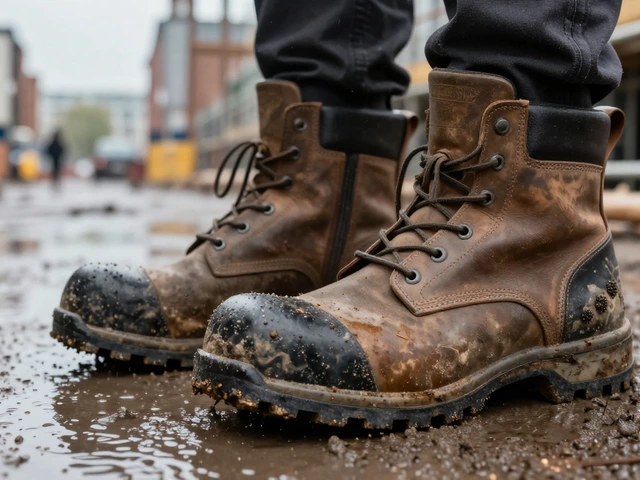
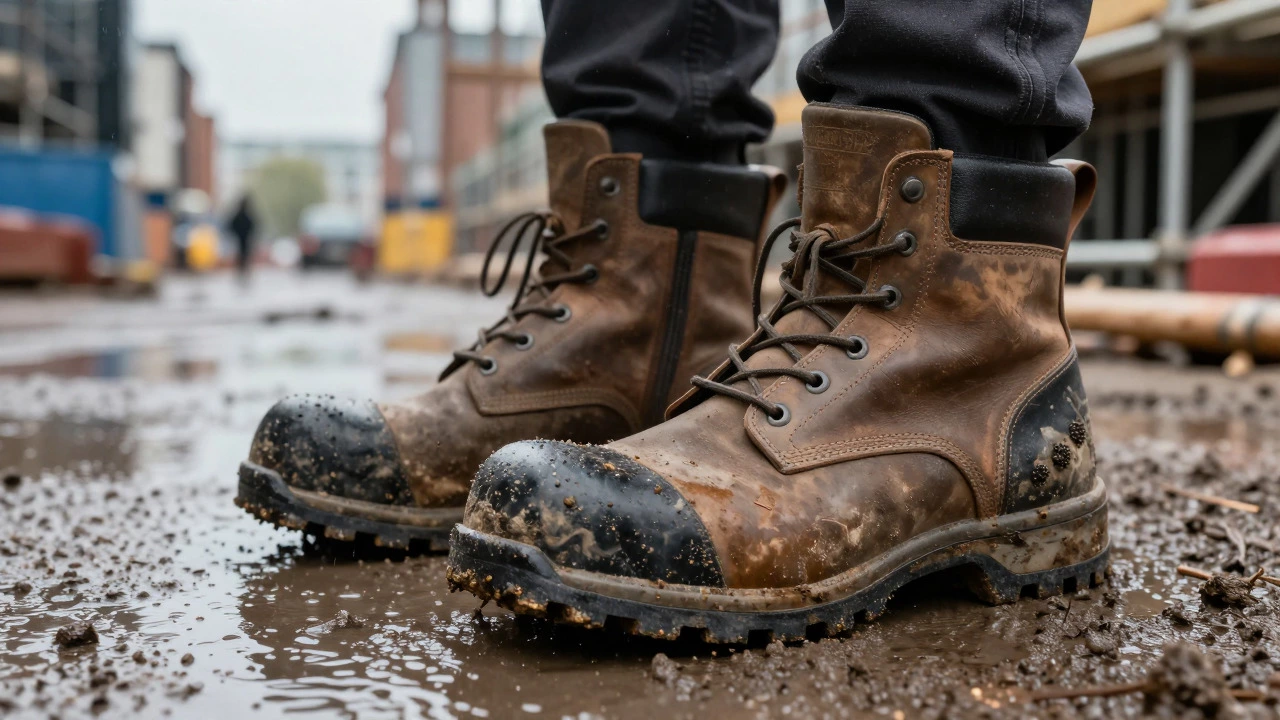
If your job requires steel-toe caps, anti-slip soles for wet kitchens, or electrical insulation because you’re working with live wires, those shoes are PPE. Your employer cannot legally make you pay for them. They must provide them, maintain them, and replace them when they wear out. This applies whether you are digging trenches in Galway, serving food in a restaurant in Limerick, or driving a delivery van through the rain in Belfast.
However, if the shoes are merely part of a "smart casual" policy-like loafers for a retail assistant in Dundrum Town Centre-they are not considered PPE. In this scenario, the employer has no legal obligation to pay. They can ask you to wear specific footwear, but they don’t have to buy it for you.
When Does the Employer Pay?
Let’s look at concrete examples where the employer is legally bound to cover the cost. These situations involve inherent risks that ordinary street shoes cannot mitigate.
- Construction and Manual Labor: If you are working on a site managed by a company like CRH or Kier Group, you need S3 safety boots. These protect against crushing injuries and punctures. The employer provides these.
- Healthcare: Nurses and orderlies in hospitals like Beaumont or St. James’s often face slip hazards and fluid exposure. Anti-microbial, slip-resistant shoes are usually provided as PPE.
- Hospitality (Back of House): Chefs and kitchen staff in pubs or restaurants face hot grease and slippery floors. While some small family-run cafes might expect you to bring your own non-slip shoes, larger establishments with proper safety audits should provide them under PPE regulations.
- Retail (Heavy Stock): If you are stacking heavy pallets in a supermarket like Tesco or Aldi, steel-toed shoes may be required. These are PPE.
In all these cases, the employer must also ensure the equipment fits correctly. A poorly fitting safety boot is a hazard in itself. They should offer a choice of sizes and styles where possible, within reason.
When Do You Pay?
On the flip side, there are roles where the expectation is that you provide your own footwear. This typically falls under "uniform" rather than "protection."
- Office Workers: If you work in a tech startup in Silicon Docks and the dress code is business casual, your black pumps or brogues are your responsibility.
- Front-of-House Hospitality: Waiters and bartenders often need smart black shoes. Unless the workplace is exceptionally hazardous (which is rare for front-of-house), these are considered personal attire. Many pubs in Ireland still expect staff to bring their own comfortable, smart shoes.
- Sales Assistants: Working in a clothing store like Brown Thomas or Penneys usually requires plain black shoes. These are rarely classified as PPE unless you are handling heavy stock regularly.
Some generous employers may offer a "uniform allowance" or reimburse you for a pair of shoes once a year. This is a perk, not a legal requirement. Always check your contract or ask HR before buying expensive footwear.

The Grey Area: Uniform Allowances and Reimbursements
Here in Ireland, some companies try to blur the lines. They might say, "We’ll give you €50 towards your shoes," even though the shoes are technically PPE. Be careful here. If the shoes are mandatory for safety, the employer should provide them entirely free. An allowance implies you are paying the difference, which shifts the burden onto you.
Conversely, some employers offer a tax-free uniform allowance for roles where specific clothing is needed for identification or protection. According to Revenue guidelines, certain allowances can be exempt from income tax and PRSI if the clothing is exclusively for work use. For example, a chef’s white jacket might qualify, but your everyday jeans do not. Footwear allowances are less common but exist in some sectors. Check with your payroll department to see if any reimbursement is tax-free.
| Job Role | Footwear Type | Classification | Who Pays? |
|---|---|---|---|
| Construction Worker | Steel-toe Boots | PPE | Employer |
| Chef / Kitchen Staff | Anti-Slip Shoes | PPE (usually) | Employer |
| Office Administrator | Smart Leather Shoes | Uniform/Dress Code | Employee |
| Waiter / Bartender | Black Comfortable Shoes | Uniform/Dress Code | Employee |
| Nurse | Slip-Resistant Clogs | PPE | Employer |
| Supermarket Cashier | Plain Black Shoes | Uniform/Dress Code | Employee |
What If Your Employer Refuses?
If you believe your shoes are PPE and your employer is making you pay, you have options. First, raise the issue internally. Speak to your line manager or HR representative. Point out the Safety, Health and Welfare at Work Act 2005. Often, managers are simply unaware of the specific legalities or assume everyone brings their own gear.
If internal discussions fail, you can contact the Health and Safety Authority (HSA). The HSA enforces workplace safety laws in Ireland. You can report a concern anonymously. They will investigate whether the risk assessment was done correctly and if appropriate PPE was provided.
Additionally, if you feel you are being unfairly treated compared to colleagues, you might have a case for constructive dismissal or breach of contract, though this is more complex. For most people, a polite but firm reminder of the law is enough to resolve the issue.
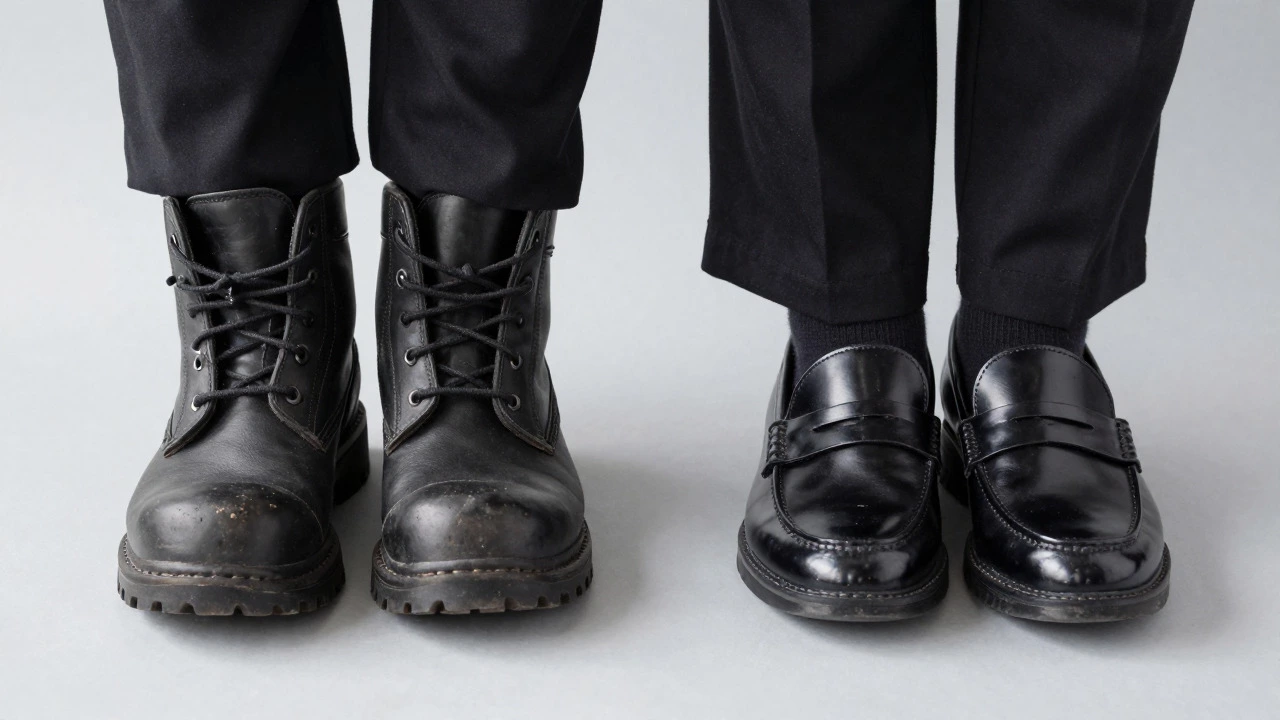
Tips for Buying Your Own Work Shoes
If you fall into the category where you must pay for your own shoes, invest wisely. Irish weather is notoriously wet and cold, and standing on hard floors all day takes a toll. Here are some practical tips:
- Look for Quality Brands: Don’t buy the cheapest option from a fast-fashion store. Brands like Dr. Martens, Clarks, or specialized workwear shops like Pro-Tec or BHS Workwear offer durable options. In Ireland, stores like Dunnes Stores often have affordable, decent-quality black shoes suitable for hospitality.
- Check for Slip Resistance: Even if not strictly PPE, if you work in a cafe or shop, get shoes with good grip. Wet pavements in Dublin or oil spills in a kitchen are real hazards. Look for rubber soles with deep treads.
- Comfort is Key: You’ll be wearing these for 8-10 hours a day. Look for cushioned insoles. Brands like Skechers or New Balance offer models that look professional but feel like sneakers. Your feet will thank you after a shift in a busy pub on O’Connell Street.
- Maintain Them: Polish leather shoes regularly to keep them water-resistant. Replace insoles every few months to maintain support. Good maintenance extends the life of the shoe significantly.
The Future of Workwear in Ireland
There is a growing conversation in Ireland about modernizing workwear policies. With the rise of remote work and hybrid models, traditional uniforms are becoming less relevant. However, for frontline workers in healthcare, construction, and hospitality, the need for proper PPE remains critical. As awareness of mental and physical health grows, more employers are recognizing that providing high-quality, comfortable footwear is an investment in employee well-being, not just a legal checkbox.
Unions like SIPTU and IMPACT also play a role in negotiating better conditions, including workwear provisions, for their members. If you are unionized, check your collective agreement. It might explicitly state who pays for what.
Does my employer have to pay for safety boots in Ireland?
Yes, if the safety boots are required for protection against workplace hazards (classified as PPE), your employer must provide them free of charge under the Safety, Health and Welfare at Work Act 2005.
Do I have to buy my own black shoes for a restaurant job?
Usually, yes. For front-of-house roles like waiting tables, black shoes are considered part of the uniform or dress code, not PPE. However, if you are working in the kitchen where slip hazards are high, anti-slip shoes may be provided as PPE.
Can my employer deduct the cost of work shoes from my salary?
Only if the shoes are not PPE and you agreed to the deduction in writing. Deducting for PPE is illegal. For non-PPE uniform items, deductions must be reasonable and agreed upon, often capped by labor laws regarding minimum wage.
What should I do if my employer refuses to provide PPE?
First, discuss it with your manager or HR. If unresolved, you can report the issue to the Health and Safety Authority (HSA) in Ireland. You can also consult your union representative if you are a member.
Are work shoe allowances tax-free in Ireland?
It depends. Revenue allows certain uniform allowances to be tax-free if the clothing is exclusively for work use and clearly identifiable. However, general footwear allowances are often taxable. Check with your payroll provider for specifics.