28
OSHA Violations and Open-Toed Shoes in Irish Workplaces

Irish Workplace Footwear Compliance Checker
Select your work environment to check if open-toed shoes are typically allowed under Irish Health and Safety Authority (HSA) guidelines.
Results will appear here after you select a sector and click "Check Compliance".
You might think OSHA (Occupational Safety and Health Administration) is a strictly American concept, but if you’re working in a multinational company with US headquarters or dealing with imported safety standards, the question of whether open-toed shoes are a violation often pops up. Here’s the twist: OSHA doesn’t actually exist in Ireland. We don’t have an agency called OSHA here. Instead, we have the Health and Safety Authority (HSA), which enforces the Safety, Health and Welfare at Work Act 2005. So, when someone asks, "Is it an OSHA violation to wear open-toed shoes?" they are usually asking about general workplace safety compliance. In Ireland, the answer isn't a simple yes or no; it depends entirely on your specific job role and the hazards present in your environment.
The Myth of Universal Shoe Bans
Let’s clear up the confusion right away. There is no blanket law in Ireland that says everyone must wear closed-toe shoes. If you walk into a tech startup in Dublin’s Silicon Docks wearing sandals, you won’t get fined by the HSA. However, if you step onto a construction site in Cork or into a manufacturing plant in Limerick without proper footwear, you could be breaking the law. The key lies in the term "risk assessment." Under Irish law, employers are required to assess risks. If the risk assessment identifies foot injuries as a potential hazard, then appropriate footwear becomes mandatory. This means the decision rests on the nature of the work, not just the employer's personal preference for how their staff looks.
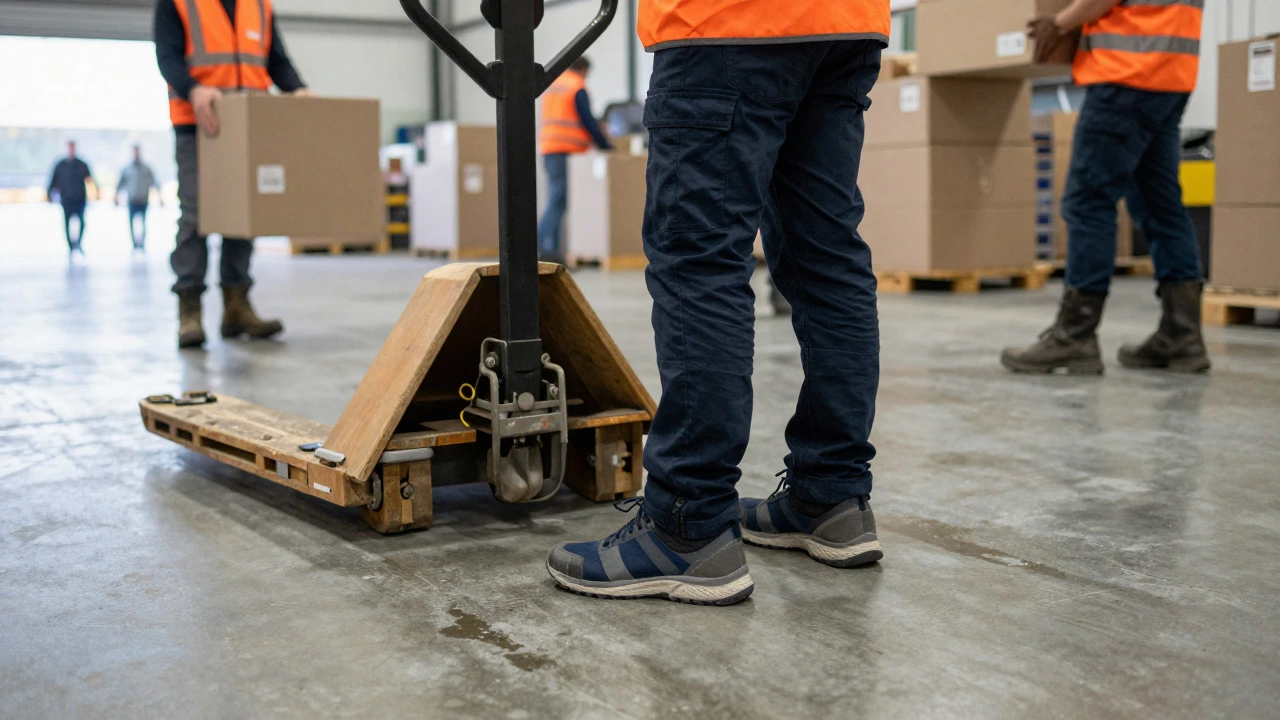
Think about the difference between an office worker in Galway and a warehouse operative in Shannon. The office worker faces minimal physical hazards. Their feet are safe from falling objects or sharp debris. The warehouse worker, however, deals with pallet trucks, heavy boxes, and slippery floors. For them, open-toed shoes aren’t just a fashion faux pas; they are a genuine danger. The HSA guidelines emphasize that Personal Protective Equipment (PPE), including footwear, must be provided free of charge if it’s necessary for health and safety. You can’t be asked to buy your own steel-toe caps unless there’s a specific contractual agreement, and even then, it’s rare for standard safety gear.
When Are Open-Toed Shoes Actually Allowed?
So, where do you have flexibility? Generally, low-risk environments allow for more choice. Retail stores, administrative offices, libraries, and many service industry jobs often permit open-toed shoes, provided they are clean and professional. But "professional" is doing a lot of heavy lifting here. Some companies have dress codes that ban flip-flops or backless sandals because they pose a tripping hazard, even if there are no falling bricks involved. It’s less about regulatory violation and more about internal policy.
| Sector | Typical Hazard | Required Footwear Type | Open-Toed Allowed? |
|---|---|---|---|
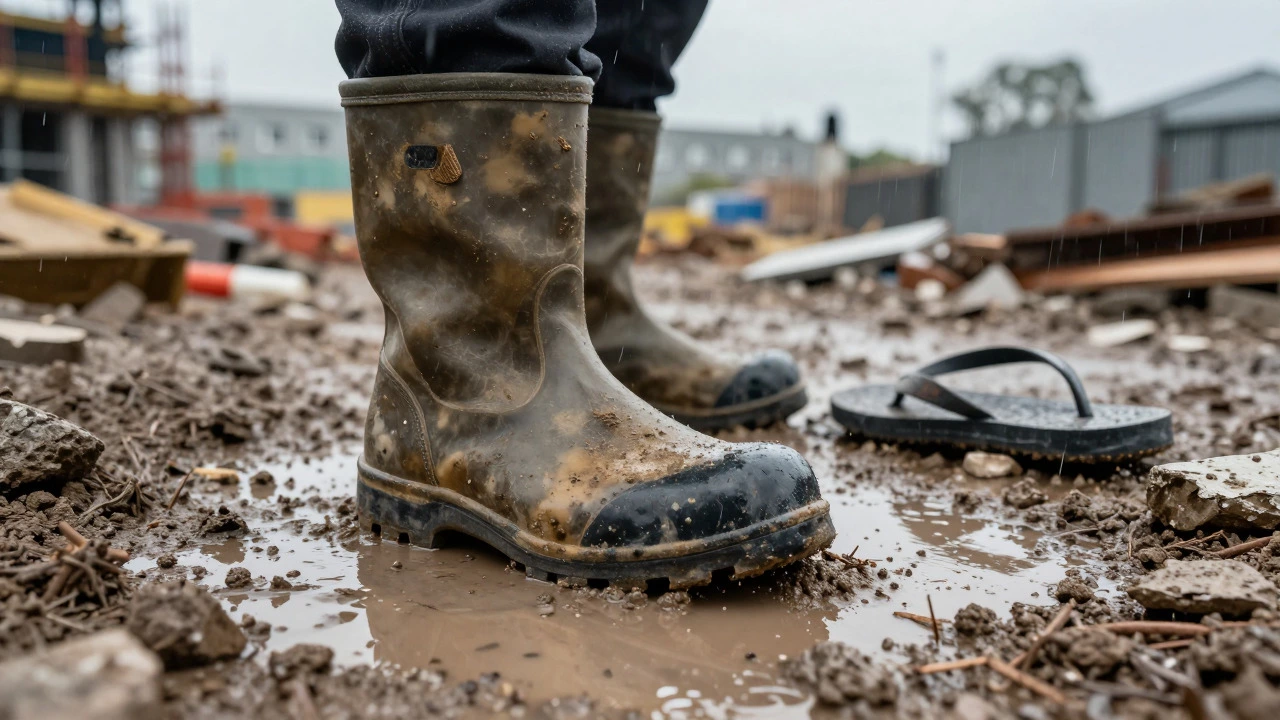
| Construction & Building | Falling objects, nails, wet cement | Steel-toe safety boots (EN ISO 20345) | No |
| Warehousing & Logistics | Crunched toes, slips, trips | Safety trainers or boots | No |
| Hospitality (Kitchen) | Hot oil spills, water, grease | Non-slip, closed-back clogs | Rarely (hygiene/safety) |
| Office / Admin | Slips on polished floors | Standard business shoes | Yes (usually) |
| Manufacturing | Machinery, chemicals, heat | Specialized protective boots | No |
In hospitality, specifically kitchens, the rules are stricter than you might think. While you might see some front-of-house staff in smart sandals during summer, kitchen staff almost always need non-slip, closed footwear. Why? Because hot oil splashes and wet floors are common in busy restaurants in cities like Belfast or Dublin. An open toe offers zero protection against a splash of boiling water. Plus, hygiene regulations often discourage loose footwear that can shed skin cells or hair into food prep areas.
Ireland’s Specific Climate and Footwear Challenges
We all know what Irish weather is like. It rains. A lot. And it’s rarely warm enough to justify going barefoot outside, let alone inside a drafty warehouse. Wearing open-toed shoes in an Irish workplace can actually increase certain risks. Wet socks lead to blisters, and cold feet reduce dexterity and alertness. If you’re working outdoors in agriculture-a massive sector in counties like Tipperary and Clare-open-toed shoes are practically unheard of. Mud, livestock hooves, and uneven terrain make sturdy boots essential. The HSA provides specific guidance for agricultural workers, emphasizing the need for ankle support and waterproofing, which sandals simply cannot provide.
Moreover, consider the commute. Many people in Ireland drive to work or take public transport. Slipping out of a sandal while stepping off a bus in a puddle is a recipe for disaster. Employers are increasingly aware that employee comfort impacts productivity. If your feet are cold or wet because you chose inappropriate footwear for the season, your focus drops. This isn’t a legal violation, but it’s a practical one. Companies like Aer Lingus or large retail chains often provide allowances for winter boots or specialized footwear because they understand the local context.
Understanding the Legal Framework: The Safety, Health and Welfare at Work Act
To really understand if you’re in trouble, you need to look at Section 13 of the Safety, Health and Welfare at Work Act 2005. This section places duties on employees. You are required to take reasonable care of your own safety and cooperate with your employer. If your employer has clearly stated that safety boots are required due to a risk assessment, and you show up in sandals, you are failing to comply. This isn’t just about getting told off; it can affect insurance claims if you get injured. If you ignore a clear safety instruction, your employer might argue that you contributed to your own injury.
Conversely, if your employer forces you to wear expensive safety boots but hasn’t conducted a proper risk assessment proving they are needed, you have grounds to question this. You can raise concerns through your safety representative or union. In Ireland, unions like SIPTU or IMPACT are active in workplaces and can help mediate disputes over PPE. Remember, the goal of these laws isn’t to ruin your style; it’s to prevent crushed toes and chemical burns. The HSA conducts inspections regularly, and while they won’t fine you for wearing sandals in an accounting firm, they will scrutinize factories and construction sites heavily.
Practical Tips for Choosing Safe and Compliant Footwear
If you’re unsure what to wear, start by checking your employment contract and any employee handbook. Most Irish companies outline dress codes clearly. If it’s silent, ask your manager directly. Don’t guess. It’s better to ask, "Do I need steel-toe caps for this role?" than to assume. When buying work shoes, look for the CE marking and the relevant EN standard. For example, EN ISO 20345 indicates safety footwear with impact resistance. This ensures the shoe meets European standards, which apply in Ireland post-Brexit as well.
- Check the sole: Ensure it’s slip-resistant. Look for "SRC" rating, which tests for both ceramic tile and steel plate surfaces.
- Consider breathability: Irish summers can be surprisingly warm. Leather boots can get sweaty. Look for breathable linings to prevent fungal infections.
- Fit matters: Ill-fitting safety boots cause more problems than wrong-style shoes. Get professionally fitted if possible.
- Rotation: If you’re on your feet all day, having two pairs of safety boots allows them to dry out and maintain shape.
Also, think about the long-term cost. Cheap open-toed shoes might save money now, but if you’re banned from wearing them later, you’ll end up buying compliant boots anyway. Investing in quality work footwear early saves hassle. Brands available in Ireland, from high-street options to specialized suppliers like Arco (which operates widely across the UK and Ireland), offer a range of styles that meet safety standards while looking decent enough for casual Fridays.
What Happens If You Ignore the Rules?
If you violate a footwear rule in a high-risk zone, the consequences vary. Initially, you’ll likely receive a verbal warning. Repeated offenses could lead to disciplinary action. In serious cases, especially on construction sites under CDM (Construction (Design and Management)) regulations, you could be removed from the site immediately. This affects your pay and reputation. Contractors rely on compliance to keep their licenses valid. If an inspector from the HSA visits and sees workers in flip-flops near heavy machinery, the company gets flagged. That creates pressure on management to enforce rules strictly, meaning individual employees bear the brunt of the scrutiny.
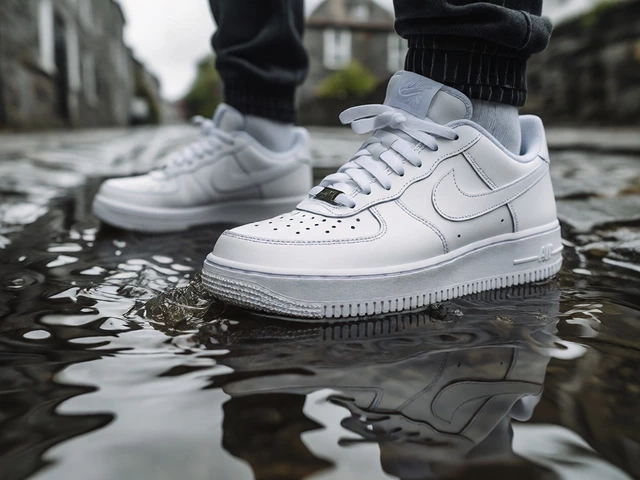
It’s also worth noting that cultural attitudes are shifting. The old stereotype of the rugged Irish worker in heavy leather boots is evolving. Younger workers prefer lighter, athletic-style safety shoes. Manufacturers have responded by making "safety trainers" that look like Nikes or Adidas but have composite toes instead of steel. These are popular in logistics hubs around Dublin Port. They offer the same protection but feel much more comfortable. This trend shows that safety and style aren’t mutually exclusive, provided the underlying protection meets the legal requirements.
Frequently Asked Questions
Does OSHA apply in Ireland?
No, OSHA is a United States federal agency. In Ireland, workplace safety is regulated by the Health and Safety Authority (HSA) under the Safety, Health and Welfare at Work Act 2005. While OSHA rules don't directly apply, many multinational companies adopt similar global standards.
Can my employer force me to wear safety boots?
Yes, if a risk assessment identifies foot hazards such as falling objects or sharp materials, your employer is legally required to provide appropriate PPE, including safety boots, free of charge. You are legally required to use this equipment properly.
Are open-toed shoes allowed in hospitals in Ireland?
Generally, no. Most Irish hospitals require closed-toe, non-slip shoes for clinical staff to protect against needle sticks, spills, and dropped instruments. Hygiene policies also typically prohibit open footwear in patient care areas.
What does EN ISO 20345 mean on a shoe?
EN ISO 20345 is the European standard for safety footwear. It certifies that the shoe has a protective toe cap capable of resisting impact energy of 200 joules and compression load of 15 kilonewtons. This is the minimum standard for most industrial work in Ireland.
Who pays for work shoes in Ireland?
If the footwear is classified as Personal Protective Equipment (PPE) required by law, the employer must pay for it. If it is considered ordinary clothing or part of a general uniform policy without specific safety mandates, the cost may fall to the employee, depending on the contract.