23
Is My Boot Size the Same as My Shoe Size? A Guide for Irish Women

Irish Boot Sizing Estimator
Not sure if you need to size up? Use this tool to estimate your ideal boot size considering the specific challenges of Irish footwear shopping.
Your Recommendation
You’re standing in a fitting room in Grafton Street or browsing online from your kitchen table in Galway, holding a pair of gorgeous leather ankle boots. They look perfect. But when you slide your foot in, something feels off. Too tight across the instep? Too loose at the heel? You check the tag: it says UK 6. Your everyday sneakers are also UK 6. So why do these boots feel like they were made for someone else?
This is one of the most common frustrations for women shopping for footwear in Ireland. We assume our size is static. It isn’t. The short answer to "is my boot size the same as my shoe size?" is: often, no. And if you’re buying winter boots to survive an Irish February, getting this wrong can mean blisters, cold feet, or a return trip to the post office.
Why Boots Fit Differently Than Sneakers
Let’s break down the mechanics. Your standard sneaker-say, a pair of white trainers you wear for walking along the Salthill promenade-is designed for flexibility. It has a soft upper, usually mesh or canvas, that stretches slightly over time. It’s meant to hug the foot but allow movement.
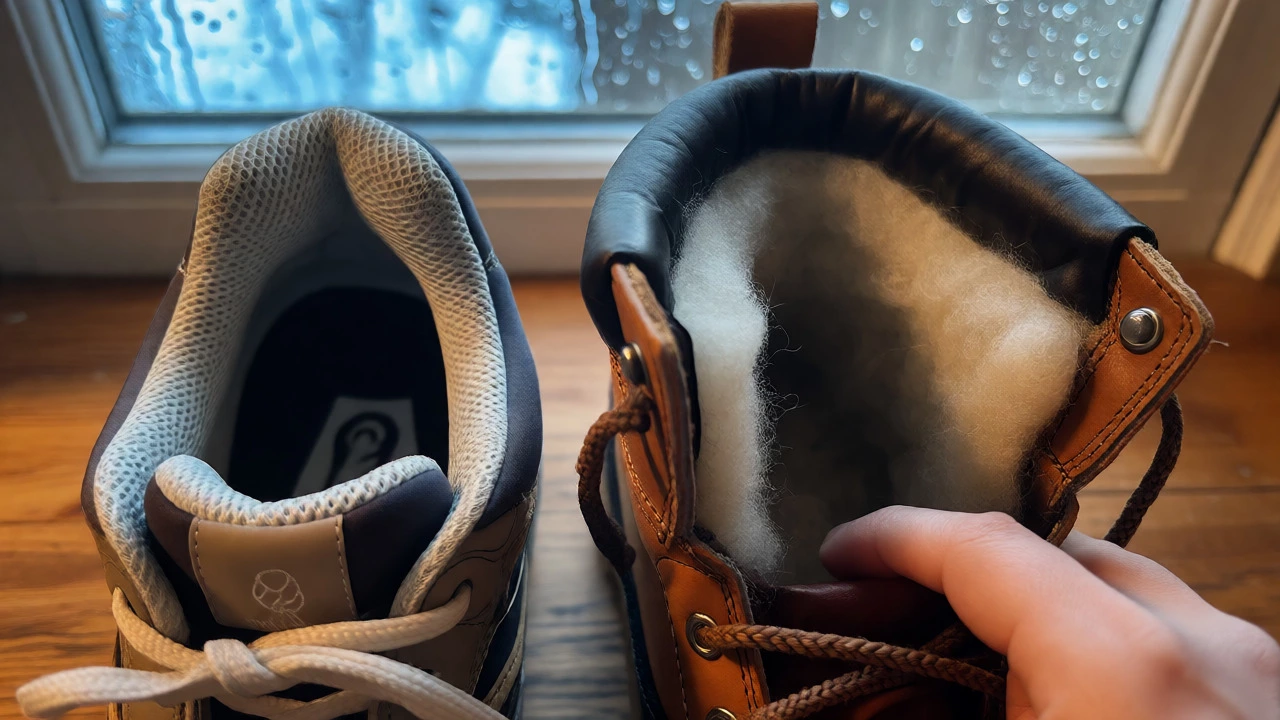
Boots, especially those made for the Irish market, are structurally different. They have rigid components: shanks, toe boxes, and thicker linings. A winter boot might contain wool lining or synthetic insulation that takes up internal volume. If you buy the same numerical size as your sneaker, that extra material eats into the space your toes need. Suddenly, your UK 6 sneaker fits, but your UK 6 boot pinches.
Think about the purpose. Sneakers are for low-profile activities. Boots are for protection against rain, mud, and wind-common enemies here in Ireland. To provide that protection, manufacturers add layers. Those layers change the fit equation entirely.
The Role of Width and Volume
Most people focus on length (the number on the box). But width matters more with boots. Many Irish women have wider feet due to genetics or lifestyle factors like years of walking on uneven terrain. Standard shoes often come in a 'B' width (medium). Boots frequently run narrower in the toe box to prevent slippage inside the shaft.
If you’ve ever tried on a pair of knee-high boots and felt them squeeze your calf, that’s not just height-it’s circumference. In Ireland, where we often wear thicker socks during autumn and winter, this becomes critical. A size that feels snug in July will cut off circulation in November when you’re wearing thermal wool socks bought from a local knitwear shop in Aran.
Here’s a rule of thumb: if you plan to wear thick socks, go up half a size. If you’re wearing thin dress socks, stick to your usual size or even go down half a size for a tighter fit around the ankle.
Material Matters: Leather vs. Synthetic
Not all boots behave the same way after purchase. This is where knowing your materials saves money.
| Material Type | Initial Fit Feel | Long-Term Behavior | Sizing Advice |
|---|---|---|---|
| Full-Grain Leather | Tight/Stiff | Stretches significantly (up to 1/2 size) | Buy true to size or slightly snug; expect break-in period. |
| Suede/Nubuck | Soft/Forgiving | Minimal stretch; maintains shape | Buy exact fit; won't loosen much over time. |
| Synthetic/Vegan Leather | Rigid/Unforgiving | No stretch; may crack if too tight | Go up half a size if between sizes. |
| Rubber (Wellingtons) | Loose/Open | No change | Size based on sock thickness; usually larger than sneaker size. |
In Ireland, we love our leather boots. Brands like Clarks or independent makers in Dublin use high-quality hides. Real leather stretches. It molds to your foot. If you buy a stiff leather boot that feels painful on day one, it might become comfortable by week two. But if it hurts your little toe joint immediately, it’s likely too small, regardless of the label.
The Irish Climate Factor
You cannot ignore the weather when sizing boots here. Our climate is temperate maritime. That means dampness, mild winters, and unpredictable rain. Most women own Wellington boots (wellies) alongside fashion boots.
Wellingtons are a special case. They don’t have laces or zips to adjust the fit. They rely on volume. If you try on wellies in summer with bare feet, they’ll feel huge. Buy them with the socks you intend to wear in winter. Many Irish women find their welly size is one full size larger than their sneaker size because of the lack of structure and the need for air circulation to prevent sweat buildup.
For fashion boots, consider the season. A suede Chelsea boot worn in May needs a different fit than a lined hiking boot worn in December. Always try boots on in the afternoon. Feet swell throughout the day due to gravity and activity. If you try them on first thing in the morning, they might feel fine, but by evening, after walking through a busy city center like Dublin or Cork, they could be unbearable.
Online Shopping Pitfalls in Ireland
Buying boots online is convenient, especially with services like An Post delivering nationwide. But without trying them on, you’re gambling. Here’s how to mitigate the risk:
- Measure Both Feet: One foot is almost always larger. Measure the longer one. Use a ruler and paper at home. Stand on the paper, trace your foot, measure the longest distance from heel to toe tip.
- Check Brand Charts: A UK 6 from a Spanish brand might differ from a UK 6 from an Irish or British manufacturer. Look for specific centimeter measurements, not just numbers.
- Read Reviews for "Run Small": Search reviews for phrases like "runs narrow" or "size up." Customers who live in rainy climates often give better advice on lining bulk.
- Know the Return Policy: Ensure you can return them if they don’t fit. Keep the box intact. Walk on carpet only, never outside, until you’re sure.

Breaking In New Boots Without Pain
Even if you get the right size, new boots need breaking in. Don’t make the mistake of wearing them for a full day out immediately. Start slow.
- Wear Them Indoors: Wear the boots around your house for 30 minutes a day for three days. This lets the leather soften against your specific foot shape.
- Use Thick Socks: Wear your thickest wool socks while breaking them in. This stretches the material faster than thin socks.
- Spot Treat Tight Areas: If the heel rubs, apply a blister plaster proactively. If the toe box is tight, stuff the boots with newspaper overnight to gently expand the material.
Remember, pain is a signal. Sharp, localized pain means the boot is too small or shaped incorrectly for your foot. General stiffness is normal; sharp pressure points are not.
Frequently Asked Questions
Do I need to size up for winter boots in Ireland?
Yes, typically. Because Irish winters require thicker socks and many winter boots have insulated linings, going up half a size from your regular sneaker size is a safe bet. Always test with the socks you plan to wear.
Are UK sizes the same as EU sizes for boots?
No, they are different systems. UK sizes are generally smaller numerically than EU sizes. For example, a UK 5 is roughly an EU 38. However, conversions vary by brand. Always check the specific brand’s conversion chart rather than relying on generic online converters.
What if my boots are too big?
You can fix minor sizing issues. Use heel grips to stop slipping. Add insoles to take up vertical volume. For large gaps, wear double pairs of socks. If the boot is significantly too big, it’s better to exchange it, as excess movement causes blisters.
Should I buy waterproof boots a size larger?
Waterproof membranes (like Gore-Tex) reduce breathability and can make feet feel hotter. They also add slight bulk. Going up half a size helps accommodate moisture-wicking socks and prevents the feeling of suffocation, which is crucial during long walks in wet Irish weather.
How do I know if a boot is too narrow?
If you feel pressure on the sides of your feet, particularly near the pinky toe or the ball of the foot, the boot is too narrow. Numbness or tingling after 10 minutes of wear is a clear sign. No amount of stretching will fully fix a boot that is fundamentally too narrow for your foot shape.