30
How to Tell a Cheap Suit in Ireland: Spotting Quality on a Budget
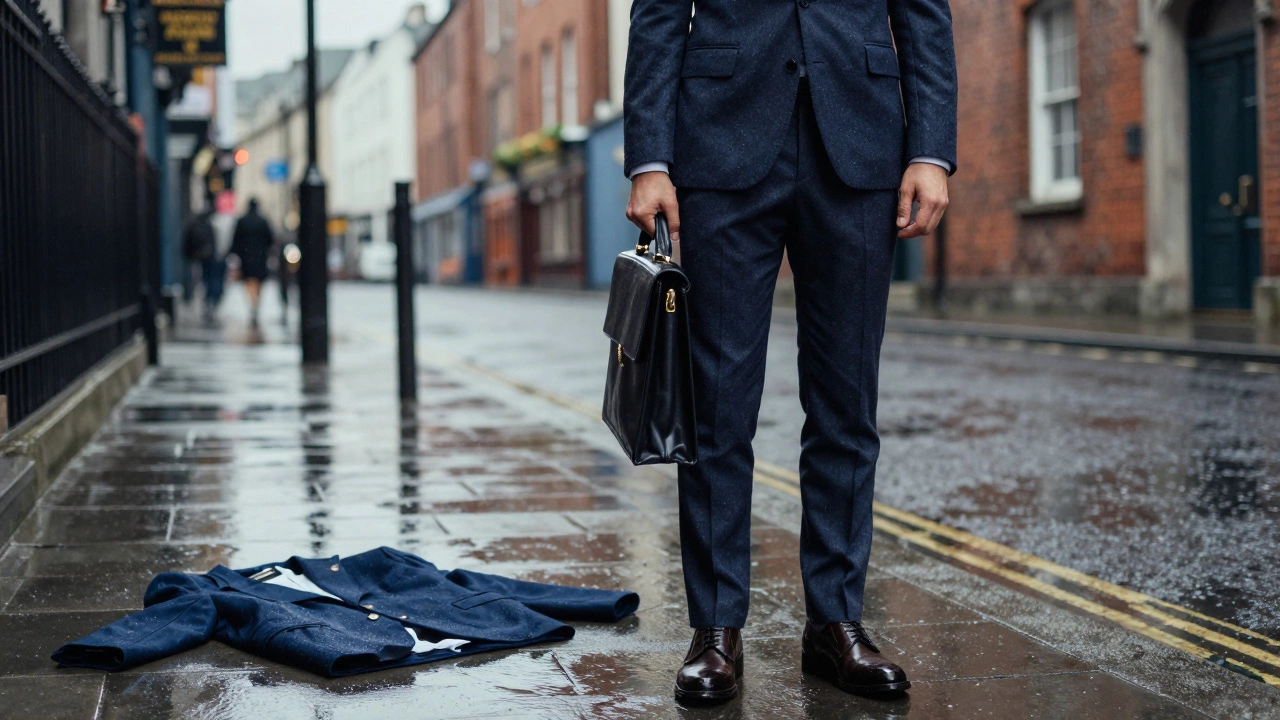
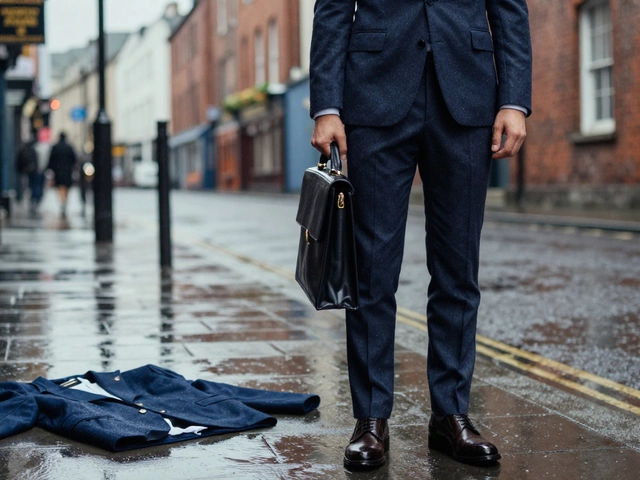
Buying a suit in Ireland isn’t just about looking sharp-it’s about surviving the weather, fitting into Dublin’s business meetings, and not looking out of place at a Galway wedding. With prices rising and fast fashion flooding the market, it’s easy to grab a bargain suit from a high street store and regret it by March. The truth? A cheap suit doesn’t just look bad-it falls apart faster than a wet wool coat in an Irish downpour.
Look at the Fabric First
The fabric tells you everything. A cheap suit in Ireland often uses 100% polyester or a low-grade wool blend. Feel it. If it feels plastic-y, stiff, or overly shiny, it’s not built to last. Real wool-especially worsted wool-has a subtle texture. It breathes. It drapes. It survives a wet commute from Heuston Station without looking like a crumpled paper bag.
Check the label. Look for ‘100% wool’ or ‘super 110s’ or higher. Brands like Barbour and Claddagh Menswear in Galway stock suits made from genuine wool blends that hold up through Dublin winters. Avoid anything that says ‘polyester, rayon, or acrylic’ as the main component. These fabrics trap heat, don’t breathe, and pill after two wears.
Check the Lining
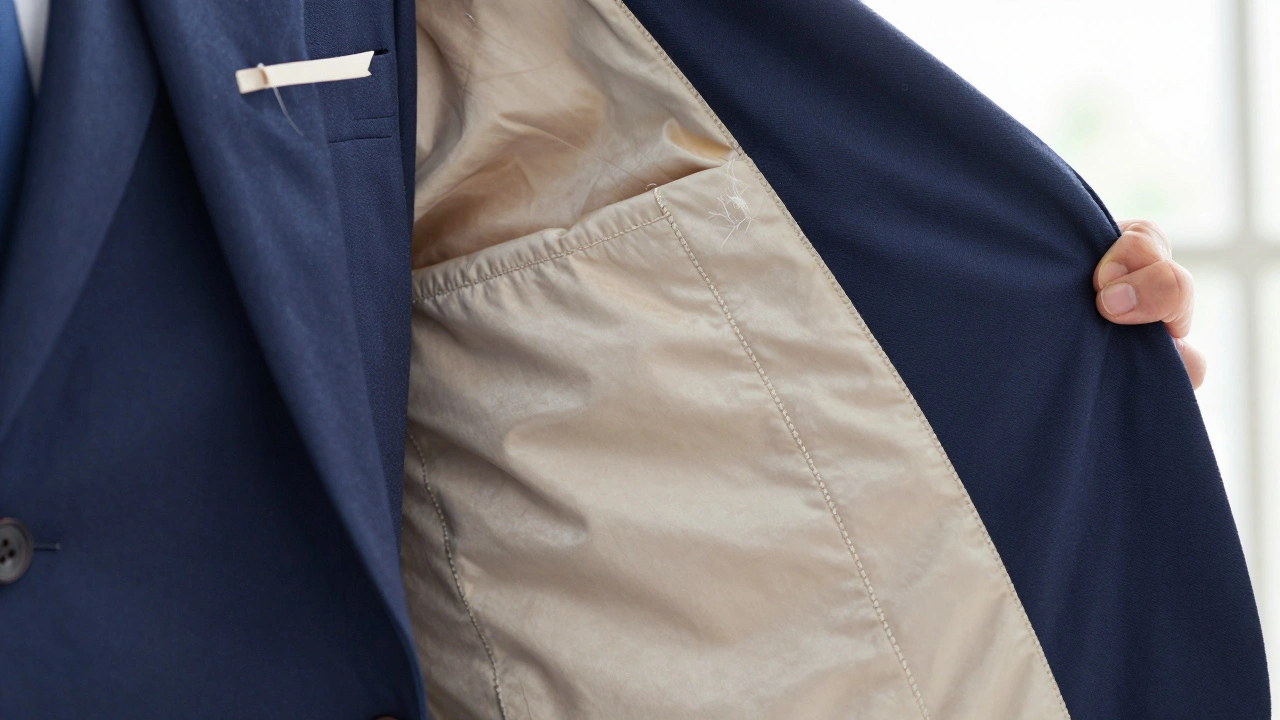
Flip up the jacket. A cheap suit will have a flimsy, cheaply stitched polyester lining that looks like it came from a discount bin at Dunnes Stores. A good suit has a lining made of viscose, cupro, or silk. It should feel smooth, not scratchy. The stitching along the edges should be even, not loose or crooked.
In Ireland, where you’re often moving between indoor pubs and outdoor events, a proper lining makes a difference. It lets the jacket move with you, not against you. You’ll notice the difference when you’re standing in a queue outside the Cork Opera House or rushing through the rain at Belfast Airport.
Stitching and Buttons Are Clues
Look at the buttons. A cheap suit uses plastic or low-grade resin buttons that feel hollow. A quality suit uses horn, mother-of-pearl, or genuine corozo nut buttons-solid, slightly heavy, with a natural sheen. You can tell the difference just by holding them.
Check the stitching. On the lapel, the stitching should be hand-rolled, not glued or machine-stitched flat. Look at the sleeve buttons. On a real suit, they’re functional-not just for show. You should be able to unbutton them and see real stitching underneath. If the sleeves are sewn shut, it’s a sign the suit was made for appearance, not wear.
The Fit Tells the Story
A cheap suit is cut for the average man. In Ireland, men come in all shapes-slim Dublin professionals, broad-shouldered Cork farmers, stocky Limerick tradesmen. A suit that fits off-the-rack in a chain store like Penneys or Primark is often too tight in the shoulders or too long in the arms.
Try it on. Raise your arms. If the jacket pulls at the seams or the sleeves ride up, it’s not tailored for real movement. The shoulder seam should sit exactly where your shoulder ends. If it’s an inch too far in, the suit was made for someone else’s frame.
Go to a tailor in Kilkenny or Waterford. Even if you buy a budget suit, getting it altered locally-like at McCarthy Tailors in Limerick-can turn a mediocre fit into something that looks custom-made. That’s how most Irishmen who look sharp in their suits do it.
The Lapel and Pockets
Look at the lapel. A cheap suit often has a fused lapel-where the outer fabric is glued to an inner layer. It looks crisp at first, but after a few wears, it starts to bubble. A good suit has a canvassed lapel, where layers of horsehair and wool are stitched together. It’s heavier, more flexible, and molds to your body over time.
Check the pockets. On a real suit, the breast pocket is stitched in a way that lets it hold a pocket square without looking stuffed. The side pockets should be lined and have a slight curve. If they’re flat, stiff, or have visible stitching on the outside, it’s a sign the maker cut corners.
Price vs Value in the Irish Market
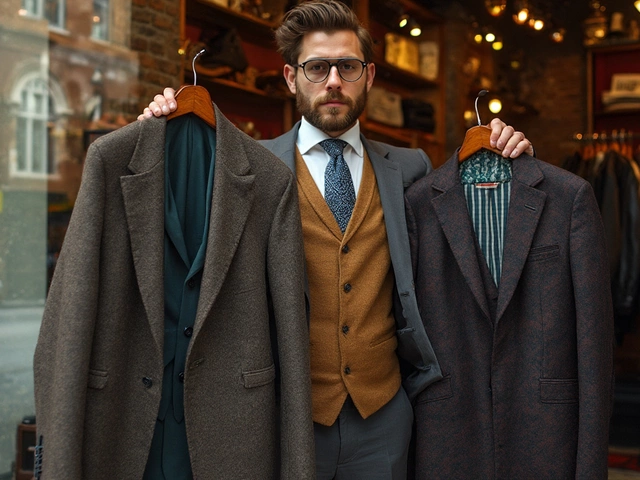
Yes, you can find a suit for €80 at a sale in Dundalk. But will it last through two weddings, a funeral, and three job interviews? Probably not. A decent wool suit in Ireland costs between €180 and €350. Brands like John Rocha, Trinity Tailor in Dublin, or Irish Made Suits offer real value-not because they’re expensive, but because they’re built to last.
Think long-term. A suit that lasts five years costs less per wear than one you replace every 12 months. And in a country where the weather changes five times a day, durability matters more than trends.
Where to Shop Smart in Ireland
Don’t assume the most expensive store has the best suit. Instead, look for:
- Trinity Tailor (Dublin) - offers made-to-measure suits starting at €299 with Irish wool
- Claddagh Menswear (Galway) - stocks hand-finished suits from Italian mills, often on sale
- John Rocha Outlet (Limerick) - last season’s stock, same quality, half the price
- Local thrift stores - try St Vincent de Paul in Cork or Salvation Army in Belfast - you’ll find vintage suits from the 80s and 90s made with real wool
Shop during the January sales or after Christmas. That’s when Irish retailers clear out winter stock. You can snag a quality suit for under €200 if you’re patient.
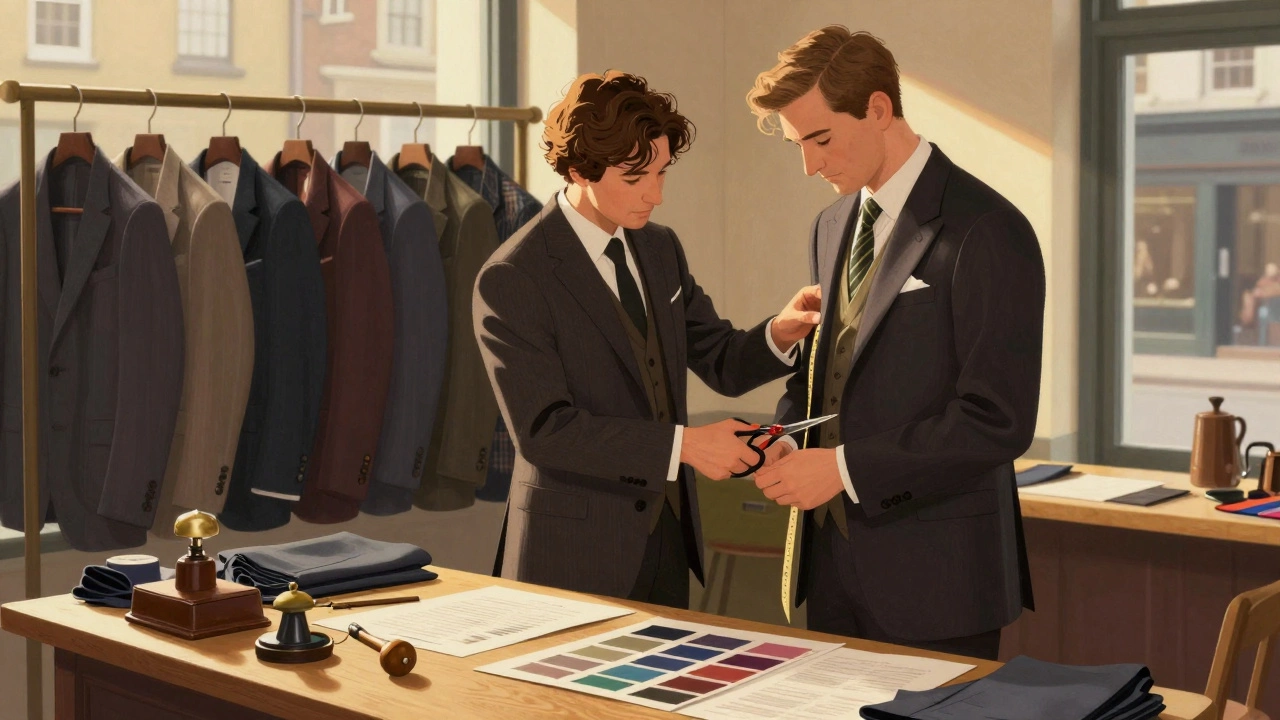
What to Avoid
Stay away from:
- Suits that come with a matching tie and shirt-this is a red flag for mass-produced, low-end manufacturing
- Brands that say ‘luxury’ or ‘designer’ but have no real name or history
- Any suit that claims to be ‘wrinkle-free’-that’s usually a chemical coating that fades after washing
- Online deals from unknown sellers with no return policy-Irish consumer law protects you, but only if you buy from a local retailer
Remember: a suit that looks good on a mannequin doesn’t always look good on you. Try it on. Move in it. Sit down. Walk around the store. If it feels like a costume, it is one.
Final Tip: The Irish Way
In Ireland, we don’t buy suits to impress. We buy them to show respect-to ourselves, to the occasion, to the people around us. Whether you’re heading to a funeral in Sligo, a job interview in Cork, or a wedding in Kilkenny, your suit should say you care.
Don’t go for the cheapest. Go for the one that lasts. The one that feels right when you’re standing in the rain outside the National Gallery. The one that still looks sharp after three seasons of Irish weather.
Can you tell a cheap suit just by looking at the price tag?
No. Some expensive suits are still poorly made, and some budget suits are surprisingly well-constructed. Price is a clue, but not a guarantee. Always check the fabric, lining, stitching, and fit. A €150 suit from a trusted Irish brand can outlast a €400 suit from a name you don’t recognize.
Is it worth getting a cheap suit altered in Ireland?
Absolutely. Tailoring in Ireland is affordable-most shops charge between €25 and €60 for basic adjustments like hemming sleeves or taking in the waist. A €180 suit that’s properly fitted looks better than a €500 suit that’s too big or too tight. Local tailors in towns like Wexford, Waterford, or Drogheda are experts at working with budget suits.
What’s the best time of year to buy a suit in Ireland?
January and late August are the best times. After Christmas, retailers clear winter stock. In late summer, they make room for autumn collections. You’ll find the best deals on wool suits during these windows. Avoid buying in spring-prices are highest then because of wedding season.
Are second-hand suits a good option in Ireland?
Yes, especially if you’re looking for quality. Many suits from the 1980s and 1990s were made with real wool and hand-stitched construction-something you rarely see today. Shops like St Vincent de Paul in Dublin or the Galway Charity Shop often have hidden gems. Just check for moth damage, fading, and worn lapels before buying.
What’s the difference between a suit for work and a suit for a wedding in Ireland?
For work, stick to navy, charcoal, or dark grey in a medium-weight wool. For weddings, especially in summer, a light grey or even a subtle pattern like a houndstooth works well. Avoid black suits unless it’s a formal funeral or evening event-Irish weddings are rarely that stiff. The key is fit and fabric, not color.
Next Steps
Start by visiting a local tailor. Bring your current suit-if you have one-and ask them to show you the difference between a fused and canvassed lapel. Ask what wool weights they recommend for Irish winters. Most won’t charge you for a quick chat.
Then, set a budget. Don’t go below €150 unless you’re buying second-hand. Save up a little. Buy one good suit. Wear it well. And when it’s time to replace it, you’ll know exactly what to look for.