31
Hang or Fold Down Jacket? The Irish Guide to Storing Outerwear
Down Jacket Storage Advisor
Not sure whether to hang or fold your jacket? Select your current situation below to get expert advice tailored to Irish weather conditions.
Daily Winter Use
I wear my jacket frequently during the cold months.
Summer Storage
It's warm outside, and I want to store it until next winter.
Post-Wash Recovery
I just washed it and need to restore its fluffiness.
Travel / Packing
I'm going on a trip and need to pack it away.
It is November in Dublin, the wind is howling off the Liffey, and you have just survived another damp, grey evening. You come home, dripping slightly from a sudden shower, and take off your prized down jacket. It’s warm, it’s light, and it has kept you comfortable while walking from Temple Bar to Merrion Square. But now comes the dilemma: do you hang it on the back of the door like you did with that old wool coat, or do you fold it away? This isn't just about tidiness; it is about preserving the life of your gear.
In Ireland, where the weather can shift from sunshine to sleet in the time it takes to get a pint at The Cobblestone, we rely heavily on our outerwear. A good down jacket is an investment. Whether you bought it from a local shop in Grafton Street or picked it up online during a Black Friday sale, treating it right means it will last for years. Getting this wrong-by hanging it improperly or folding it too tightly-can ruin the insulation, leaving you cold next winter.
The Science of Loft: Why Your Jacket Needs Air
To understand why storage matters, you need to understand what makes a down jacket work. It is not the fabric that keeps you warm; it is the air trapped between the tiny feathers. This is called "loft." Think of it like a duvet. If you compress a duvet into a small bag and leave it there for months, it loses its fluffiness. When you shake it out, it eventually recovers, but if you keep it squashed, the fibers break down over time.
Down insulation consists of clusters of fine filaments that trap body heat by creating pockets of still air. These clusters are delicate. Constant pressure from being folded in a drawer or stretched by gravity when hung on a thin wire hanger can damage the structure. In our humid Irish climate, moisture is also a factor. If a jacket is stored compressed without breathing room, mold can develop, especially if it wasn't perfectly dry before storage.
The Case for Hanging: Do It Right or Don't Do It At All
Many people default to hanging their jackets because it is convenient. You come in, you hook it up, you forget about it. However, not all hanging is created equal. If you throw your heavy winter coat on a standard plastic or thin wire hanger, the shoulders will stretch out. Over six months of sitting in the wardrobe, those shoulders will develop permanent bumps. You’ll look like you’ve been carrying a heavy load on your back all season.
If you choose to hang your down jacket, follow these rules:
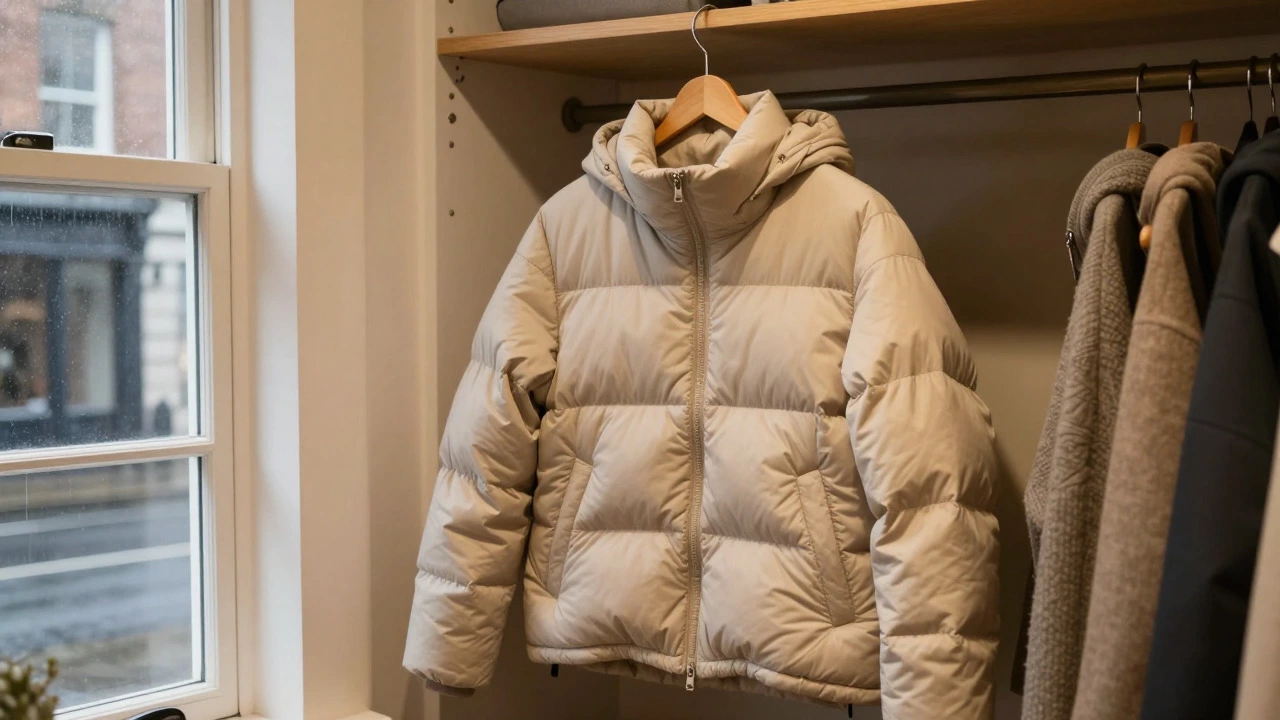
- Use a wide, padded hanger: Wooden hangers with a non-slip grip or thick velvet-covered hangers distribute the weight evenly across the shoulders. Avoid thin wires.
- Button or zip it up: Leaving the jacket open causes it to sag and lose its shape. Keep it closed so it hangs straight.
- Give it space: Irish wardrobes can be tight, especially in older apartments in cities like Cork or Galway where space is premium. Ensure the jacket isn't squeezed against other clothes. It needs airflow to prevent musty smells.
- Check for dryness: Never hang a damp jacket. Even a slight mist from the rain can lead to mildew inside the baffles (the compartments holding the down) if it sits in a dark closet for weeks.
Hanging is best for jackets you use regularly during the winter months. If you are wearing it every few days, hanging it allows any residual moisture to evaporate and keeps the loft intact between uses.
The Case for Folding: Long-Term Storage Strategy
When summer arrives and the temperature hits a rare 20°C, you don’t want your bulky winter gear taking up space. This is when folding comes into play. However, "folding" doesn't mean crumpling it into a ball and shoving it under the bed. That is a recipe for disaster.
For long-term storage (spring through autumn), folding is actually safer than hanging, provided you do it correctly. Gravity is the enemy of shoulder shape, so removing the jacket from the hanger eliminates that risk. The goal is to store it loosely.
- Clean it first: Body oils and sweat accumulate over the winter. If you store a dirty jacket, those stains set, and the odors become permanent. Follow the care label-most down jackets require a gentle cycle with a specific down wash detergent.
- Dry it thoroughly: This is crucial. Tumble dry on low heat with clean tennis balls or dryer balls. The balls beat the down gently, restoring loft. Ensure it is 100% dry before storing. Any moisture left inside will cause clumping and smell.
- Fold loosely: Lay the jacket flat. Fold the sleeves in, then fold the body in half or thirds. Do not crease it sharply. Think of it as tucking it into a large box rather than packing it into a suitcase.
- Use a breathable container: Store it in a cotton storage bag or a cardboard box. Avoid plastic vacuum bags for long periods. While vacuum bags are great for saving space temporarily, keeping down compressed for six months can permanently damage the fibers. A breathable cotton sack allows air circulation, which is vital in Ireland's damp climate.
Comparison: Hang vs. Fold for Different Scenarios
| Scenario | Recommended Method | Why? | Risk Factor |
|---|---|---|---|
| Daily Winter Use | Hanging | Easy access, maintains shape if on proper hanger | Shoulder distortion if hanger is poor quality |
| Long-Term Storage (Summer) | Folding | Saves space, prevents stretching | Clumping if compressed too tightly |
| Post-Wash Recovery | Hanging (Temporarily) | Allows final drying and loft recovery | Mildew if not fully dry |
| Travel/Packing | Folding/Rolling | Necessary for luggage constraints | Temporary loss of loft (recovers after shaking) |
Irish Climate Considerations: Humidity and Mold
We cannot talk about clothing storage in Ireland without mentioning humidity. Our average relative humidity often hovers around 80-90%. This is perfect for lush green hills, but terrible for stored textiles if they aren't protected. Mold loves dark, damp, and confined spaces.
If you live in a ground-floor apartment in Belfast or a cottage in County Kerry, moisture control is key. When storing your folded jacket, consider adding silica gel packets (the little "do not eat" sachets you find in shoe boxes) to the storage bag. They absorb excess moisture. Alternatively, place a few cedar blocks in your wardrobe. Cedar repels moths and absorbs odor, which is a nice bonus if you've been wearing your jacket while hiking the Wicklow Mountains.
Avoid storing jackets in bathrooms or unheated attics. Temperature fluctuations can cause condensation, which leads to that dreaded musty smell. A bedroom closet in a heated living area is ideal.
Common Mistakes to Avoid
I see these errors constantly, whether in my own home or among friends:
- Vacuum Sealing for Months: I mentioned this earlier, but it bears repeating. Vacuum bags are for transport, not storage. If you vacuum seal your down jacket and leave it until October, you might find the down has lost its resilience. It will feel flat and cold even after you open it.
- Using Dryer Sheets: When washing your jacket, avoid standard dryer sheets. The coating they leave behind can reduce the water-repellent properties of the outer shell. Stick to down-specific detergents.
- Ignoring the Care Label: Some modern down jackets use synthetic blends or special membranes (like Gore-Tex). Always check the label. Some may require professional cleaning rather than home washing.
- Storing Dirty:** As noted, dirt attracts pests and breaks down fibers. A quick wash before putting it away costs nothing and extends the life of the garment significantly.
Reviving a Compressed Jacket
Did you accidentally leave your jacket in a tight bag? Or did you pack it for a trip to Connemara and forget to unpack it properly? Don't panic. Down is resilient. Here is how to bring it back to life:
- Shake it out: Vigorously shake the jacket to loosen the clumps.
- Tumble Dry Low: Put it in the dryer on the lowest heat setting. Add two or three clean tennis balls. The balls bounce around and physically break up the clumps of down. Run it for 20-30 minutes.
- Check Baffles: Feel inside the jacket. Are there hard lumps? Those are wet or matted down. Focus your drying efforts there. You may need to gently massage the lumps apart while drying.
- Patience: It might take a couple of cycles. Once the jacket feels fluffy and light again, it is ready to wear.
FAQs About Storing Down Jackets
Can I hang my down jacket in the bathroom?
No, it is not recommended. Bathrooms are typically the most humid rooms in an Irish home due to showers and baths. High humidity can lead to mildew growth inside the jacket's insulation. Hang it in a well-ventilated bedroom or hallway instead.
How long can I keep my down jacket in a vacuum bag?
Ideally, no longer than a few weeks. For long-term storage (several months), remove it from the vacuum bag. Prolonged compression can damage the down clusters, reducing their ability to trap heat effectively.
Do I need to wash my down jacket before storing it for summer?
Yes. Body oils, sweat, and environmental dirt can degrade the down and fabric over time. Washing removes these contaminants and prevents odors from setting in during storage. Use a gentle, down-specific detergent.
What is the best type of hanger for a heavy down jacket?
Use a wide, wooden hanger with a non-slip surface or a padded velvet hanger. These distribute the weight of the jacket evenly across the shoulders, preventing the fabric from stretching and developing unsightly bumps.
My down jacket smells musty. How do I fix it?
First, wash the jacket according to the care label. Then, tumble dry it on low heat with tennis balls to restore loft and ensure complete dryness. If the smell persists, air it out outside on a sunny day, as UV light helps kill bacteria and mold spores.