23
Boot Size vs Shoe Size: A Guide for Irish Women
Irish Women's Boot Size Converter & Advisor
Recommended Boot Size
--
You’re standing in a fitting room at Brown Thomas or browsing the latest arrivals on ASOS, staring at two different numbers. Your trusty sneakers are a UK 6, but the sales assistant suggests you try a UK 7 in those leather ankle boots. Confused? You’re not alone. The question is my boot size the same as my shoe size is one of the most common queries we hear from shoppers across Ireland, and the answer isn’t a simple yes or no.
Here’s the reality: your foot doesn’t change shape between wearing trainers and putting on boots, but the shoe does. Boots have structure, insulation, and often a different last (the mold used to shape the shoe) that can make them fit tighter or looser than your everyday footwear. If you’ve ever bought a pair of boots online only to find they pinch your toes or leave too much heel slip, this guide will help you navigate the sizing maze without wasting money on returns.
Why Boots Often Fit Differently Than Shoes
To understand why your size might shift, you need to look at how boots are built. Unlike a flexible canvas sneaker, a leather boot has rigidity. When you walk in a boot, your foot slides forward slightly before hitting the toe box. If the boot is too short, your toes jam against the front with every step. If it’s too long, your heel lifts up and down, causing blisters.
Most standard shoes, like loafers or flats, are designed to hug the foot closely because they lack height. Boots, however, cover the ankle and sometimes the calf. This extra coverage means manufacturers often build in a bit more volume in the toe box to accommodate thicker socks-especially relevant here in Ireland where wool blends are a staple year-round. Consequently, many women find they need to go up half a size in boots compared to their flat shoe size.
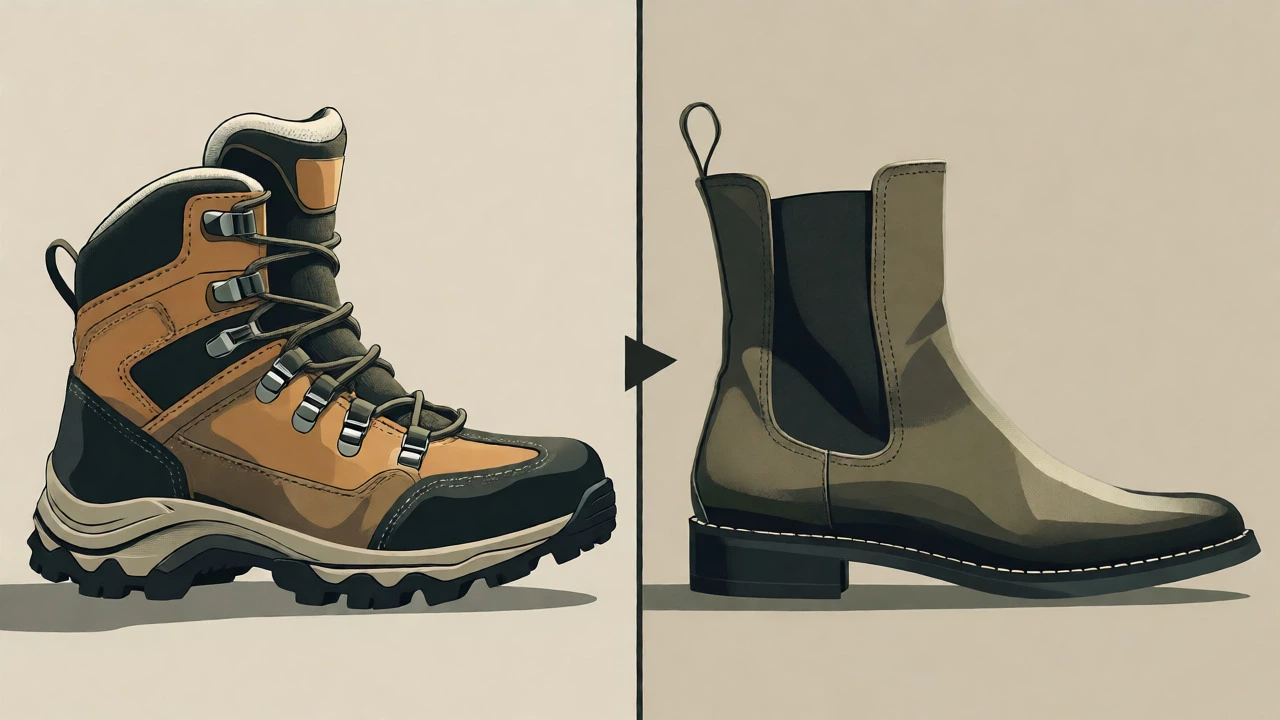
However, this isn't a universal rule. It depends entirely on the type of boot and the brand. A sleek Chelsea boot from a high-street chain might run true to size, while a rugged hiking boot from Keen or Salomon might require a full size up due to its wider toe box and internal padding.
The Irish Sizing Standard: Understanding UK Sizes
If you’re shopping in Dublin, Cork, or Galway, you’ll almost always see sizes listed in UK measurements. But if you order from US-based sites like Zappos or certain Amazon listings, you’ll see US sizes. This conversion is where most mistakes happen.
| UK Size | US Size | EU Size | Foot Length (cm) |
|---|---|---|---|
| 3 | 5 | 36 | 22.0 |
| 4 | 6 | 37 | 22.8 |
| 5 | 7 | 38 | 23.5 |
| 6 | 8 | 39 | 24.3 |
| 7 | 9 | 40 | 25.1 |
| 8 | 10 | 41 | 25.9 |
Notice the gap? A UK 6 is roughly a US 8. If you mistakenly order a US 6 thinking it matches your UK 6, you’ll end up with boots that are two sizes too small. Always check the specific brand’s size chart. Brands like Clarks or Ecco often provide detailed millimeter measurements, which are far more accurate than relying solely on the number on the box.
Key Factors That Change Your Boot Size
Your feet aren’t static objects. They swell during the day, react to temperature, and change based on what you’re doing. Here’s what specifically impacts your boot fit:
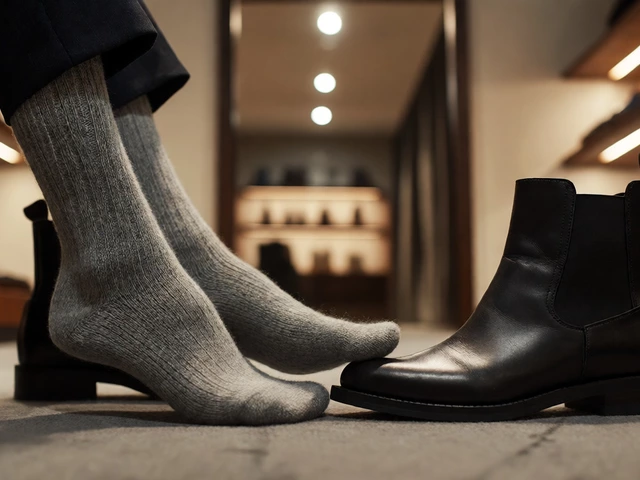
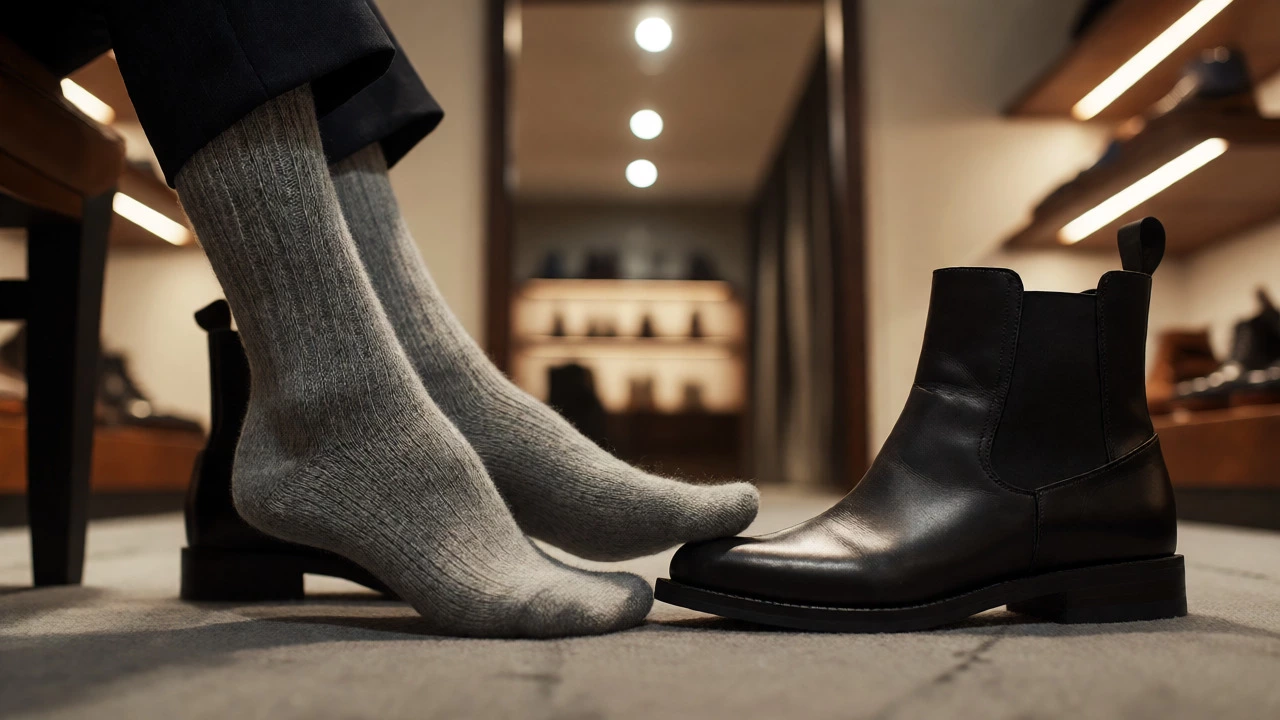
- Sock Thickness: In Ireland, we wear thick wool socks in winter. If you plan to wear chunky knit socks with your boots, measure your foot while wearing them. A thin liner sock won’t change your size, but a heavy thermal sock might push you up a half-size.
- Time of Day: Feet naturally expand by the afternoon due to gravity and activity. Never try on boots first thing in the morning when your feet are smallest. Wait until late afternoon or evening for the most accurate fit.
- Width vs. Length: Many women have narrow heels but wide forefeet. If you buy a boot that fits your length but squeezes your toes, don’t just size up-you’ll create heel slippage. Look for brands that offer width options (like 'D' for standard or 'E' for wide). Some Irish retailers stock specialized widths, but online, you may need to seek out brands known for accommodating wider feet.
- Insoles and Orthotics: If you use custom orthotics from a podiatrist, they take up space inside the boot. You will likely need a larger size or a removable insole to make room.
Trial-and-Error: How to Test Fit Properly
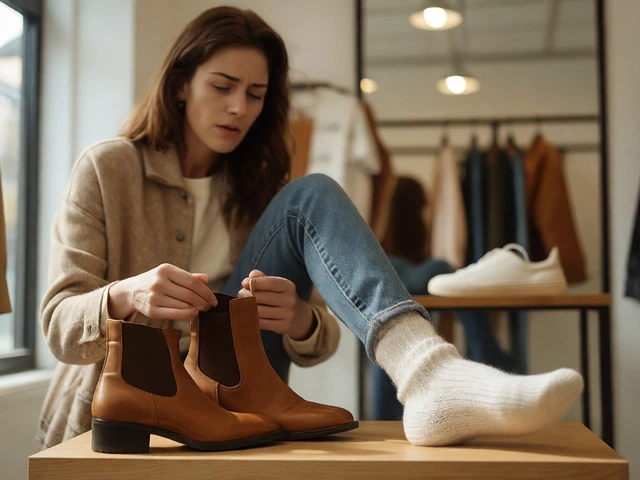
Buying boots in-store is ideal, but even then, you need to test them correctly. Don’t just stand there. Walk around. Staircases are your best friend. Go up and down a few steps. Does your heel lift off the back? That’s bad news-it causes blisters and means the boot is too long or lacks proper ankle support.
Check the toe room. Press down on the front of the boot. You should feel about a thumb’s width of space between your longest toe and the end of the boot. Not more, not less. Too little space leads to black toenails; too much makes you slide forward, causing pain on the ball of your foot.
Also, consider the break-in period. Leather stretches, but synthetic materials do not. If a genuine leather boot feels snug but not painful, it will likely loosen up after a few wears. If it hurts immediately, it’s too small. No amount of breaking in will fix acute pain.
Shopping Tips for the Irish Market
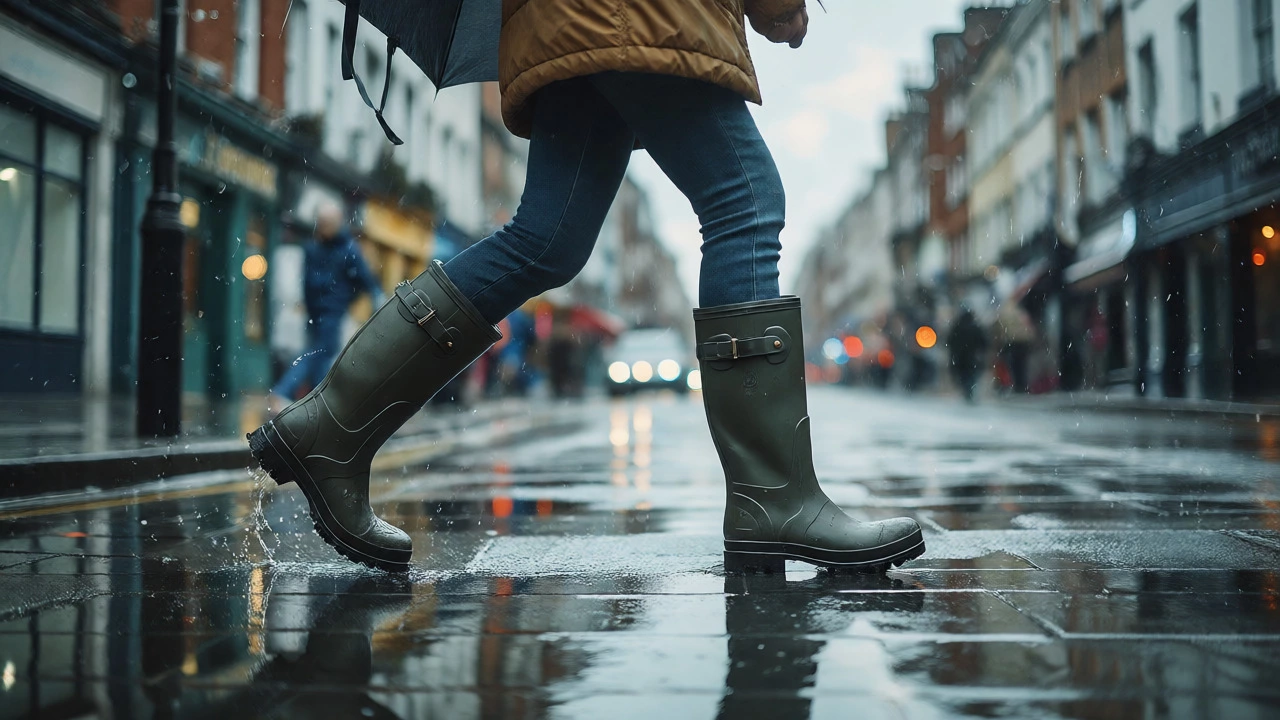
When buying boots in Ireland, keep local climate conditions in mind. We deal with dampness and rain more than snow. Waterproofing is key. Brands like Hunter Boots are popular here, but note that their classic wellies often run large. Many locals recommend sizing down by a full size for Hunter boots unless you plan to wear very thick socks.
Conversely, fashion-forward boots from European designers (often sold in boutiques in Temple Bar or Grafton Street) tend to run smaller and narrower. Italian-made boots, for example, often assume a narrower foot shape. If you have wider feet, stick to British or American brands, which typically design for a broader average foot width.
Don’t ignore the return policy. Online shopping is huge in Ireland, with free delivery often available from major players like Zalando or Next. Use this to your advantage. Order two sizes-one your usual shoe size, one half-size up. Try both on at home with the socks you intend to wear. Keep the boxes clean so you can return the pair that doesn’t fit without hassle.
Common Myths About Boot Sizing
Let’s bust a few myths that cause unnecessary stress:
- "My feet stop growing, so my size is fixed." False. Pregnancy, weight changes, and age can all alter foot size and width. Many women find they need a wider shoe after having children.
- "Boots stretch forever." Only natural fibers like leather and suede stretch. Synthetic faux-leather and rubber stay exactly as they are. Don’t buy tight synthetic boots expecting them to become comfortable.
- "Half sizes don’t matter." They absolutely do. Half a size is about 4mm of length. In a boot, that difference determines whether your toes hit the front wall or have breathing room.
Final Verdict: What Should You Buy?
So, is your boot size the same as your shoe size? Usually, no. For most women, especially those buying structured leather or waterproof boots, going up a half-size from your standard shoe size is a safe starting point. If you have wide feet or plan to wear thick wool socks, consider going up a full size.
Always prioritize comfort over style. A beautiful pair of boots that hurts your feet after ten minutes on O’Connell Street isn’t worth the price tag. Measure your feet, know your width, and respect the differences between shoe types. Your feet will thank you during those long walks along the Cliffs of Moher or quick dashes through the rain in Dublin.
Should I wear thick socks when trying on boots?
Yes, if you plan to wear thick socks with those boots regularly. Trying on boots with thin liners when you intend to wear wool socks will result in boots that are too tight once you switch to your preferred hosiery. Always simulate your real-world usage during the fitting process.
Do leather boots really stretch over time?
Genuine leather does stretch and mold to the shape of your foot, usually gaining about half a size in width and some length. However, synthetic materials and rubber do not stretch significantly. If a synthetic boot feels tight initially, it will likely remain uncomfortable.
How do I convert UK boot sizes to EU sizes?
There is no perfect mathematical formula because EU sizing varies by manufacturer. Generally, add 33 to your UK size to get a rough EU estimate (e.g., UK 6 + 33 = EU 39). However, always consult the specific brand’s size chart, as discrepancies of up to a full EU size are common between brands.
What if my left and right feet are different sizes?
It is very common for one foot to be slightly larger than the other. Always fit your boots to your larger foot. The smaller foot can be padded with an insole or thicker sock to prevent slipping. Fitting to the smaller foot will cause pain and potential injury to the larger one.
Are waterproof boots sized differently?
Waterproof boots, such as wellies or Gore-Tex lined hiking boots, often have thicker walls and internal linings that reduce interior volume. Consequently, they frequently run smaller than regular shoes. It is often recommended to size up by a half-size or full-size for waterproof footwear to ensure adequate circulation and comfort.