30
Wide Feet Guide for Women in Ireland: Boots & Sizing

Women's Wide Foot Width Calculator
Enter your details below to find out if you need a standard or wide fit boot.
Standard Fit
- Your Measurement:
- Standard B-Width Target:
- Difference:
Widest point is at the ball of the foot.
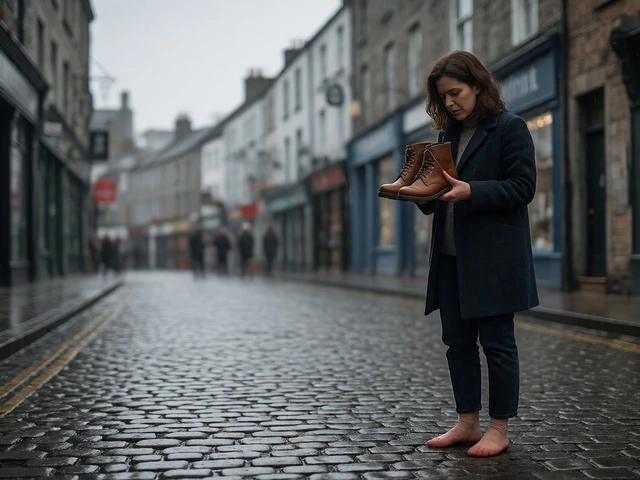
It’s a rainy Tuesday in Galway, and you’re standing outside a shop on Shop Street, staring at a pair of leather boots that look perfect-until you try them on. Your toes feel crushed, the sides dig into your instep, and within ten minutes, you’re limping back to the car. If this sounds familiar, you likely have wide feet, a condition affecting a significant portion of women in Ireland who struggle with standard retail sizing. The frustration isn’t just about comfort; it’s about finding shoes that don’t turn a walk along the Claddagh Quay or a day shopping in Dublin’s Grafton Street into an ordeal.
So, what actually counts as a "wide" foot? It’s not just about how much space your toes need. In the world of footwear, width is measured by the girth-the circumference around the ball of your foot-not just the length. For women in the Irish market, where many brands still default to narrow European lasts, understanding your specific width category is the difference between a blister-free day and a weekend spent icing your feet.
The Standard vs. The Reality: Understanding Width Codes
Most women’s shoes sold in high street chains like Penneys (Primark) or Brown Thomas are made on a "B" last. This is considered medium or standard width. But here’s the kicker: if your foot measures wider than the average for your shoe size, a B-width boot will squeeze your metatarsals together, causing pain and potentially long-term issues like bunions. If you’ve ever felt like your feet are spilling over the sides of your trainers, you might be looking for a D-width or even an E-width.
In Ireland, we often rely on UK sizing standards, which differ slightly from US or EU metrics. A UK size 6 is roughly equivalent to a US 8 or EU 39. However, width codes remain consistent across these systems. Here is a quick breakdown of what the letters mean when you’re hunting for wide fit boots:
| Width Code | Classification | Who Is It For? | Common Availability in Ireland |
|---|---|---|---|
| AA / A | Narrow | Feet significantly narrower than average. | Rarely found in mainstream stores. |
| B | Medium (Standard) | The average female foot. Most common in Irish shops. | Widely available everywhere. |
| C | Wide (Soft Wide) | Slightly wider than average, often confused with D. | Occasionally found in specialist brands. |
| D | Wide | Clearly wider than standard; toes may touch edges in B. | Available in larger retailers like Deichmann. |
| E / EE | Extra Wide | Significantly wide; requires extra depth and girth. | Limited; usually online or specialty orthopedic. |
If you’re trying on a boot and the material stretches noticeably after an hour, but feels tight immediately upon putting it on, you probably need a C or D width. Don’t guess. Measure your foot properly.
How to Measure Your Foot Width at Home
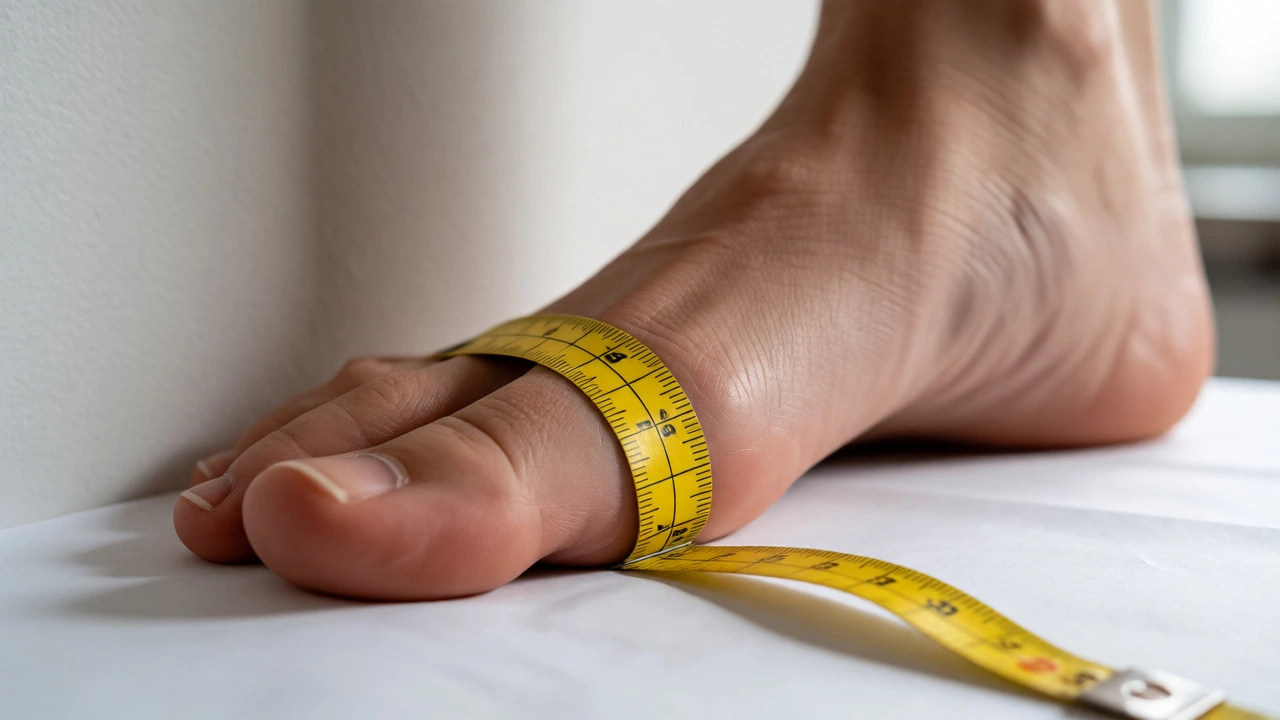
You don’t need a podiatrist in Cork or a visit to a specialist fitter in Dublin to get started. You can do this in your kitchen with a piece of paper and a tape measure. Stand on the paper against a wall. Mark the widest part of your foot-usually just below the big toe joint. Then, wrap the tape measure around that exact point. Note the measurement in centimeters.
Now, compare it to your shoe size. There isn’t one universal chart because width scales with length. A wide size 4 is different from a wide size 10. However, a general rule of thumb used by many Irish independent shoe fitters is this: if your foot girth exceeds the standard chart value by more than 5mm, you are likely a D-width. If it exceeds by 10mm or more, you’re likely an E or EE.
For example, if you wear a UK size 7 (EU 40), a standard B-width foot has a girth of approximately 23.5cm. If your measurement comes in at 24.5cm, you are definitely in wide territory. Ignoring this leads to the classic mistake: buying a larger size to accommodate width, only to find your heel slips out every time you walk up the stairs of your Victorian terrace house.
Why Irish Weather Makes Wide Feet Pain Worse
Living in Ireland means dealing with damp, cold, and unpredictable weather. When your feet get cold, they swell less than they would in heat, but wet socks and heavy wool liners change the dynamics inside a boot. If your boot is already too narrow, adding a thick thermal sock-which is essential during a winter hike in the Wicklow Mountains or a commute in Belfast rain-will make a bad situation painful.
Furthermore, many stylish autumn boots featured in fashion magazines are designed with aesthetic slenderness in mind, using stiff leathers that offer little give. For women with wide feet, these materials are unforgiving. You need boots that offer structural support without compression. Look for features like side zippers that extend down the calf, allowing you to open the boot fully before inserting your foot, rather than forcing it through a narrow opening.
Where to Find Wide Fit Boots in Ireland
Shopping for wide feet in Ireland can feel like a treasure hunt, but there are reliable spots. While major chains like Penneys offer affordable options, their width consistency can vary wildly between styles. You might find a great pair of ankle boots in one collection, but the next season’s models might run narrow again.
For consistent quality, consider visiting specialist retailers. Stores like Deichmann often stock a broader range of widths, particularly in their comfort lines. They use clearer labeling for "Comfort" or "Relaxed Fit," which often corresponds to a C or D width. Another excellent option is independent shoemakers who specialize in orthopedic-friendly designs. Many towns across Ireland, from Limerick to Waterford, have local cobblers or shoe boutiques that carry brands like Ara, Rieker, or Geox, which frequently produce wider lasts.
Online shopping has also opened doors. Brands like Clarks and Scholl often provide detailed width guides and generous return policies, which is crucial when you can’t try them on first. Just remember to check if they ship to Ireland without excessive customs fees post-Brexit, especially if ordering from UK-based sites.
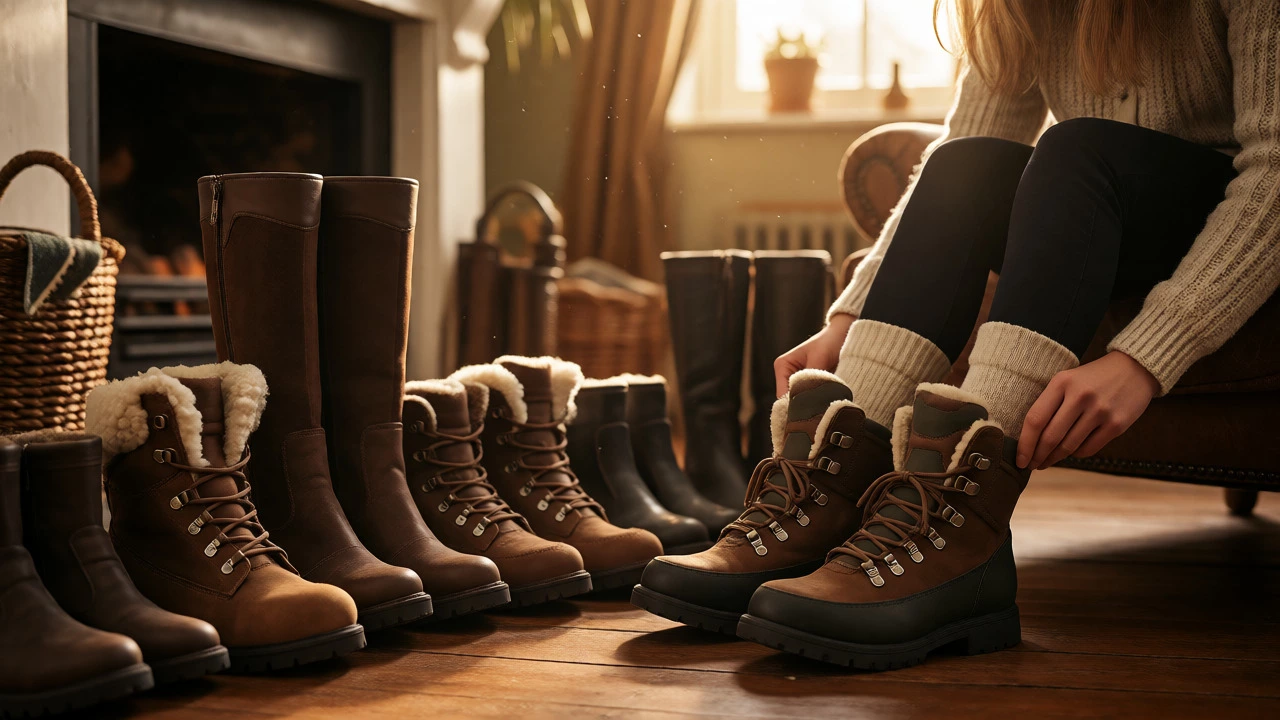
Tips for Breaking In Wide Boots
Even if you buy the correct width, new leather boots need breaking in. For wide-footed women, this process requires care. Never wear brand-new boots for a full day out. Start by wearing them indoors for an hour while doing light tasks. Use a thick pair of socks to gently stretch the upper material.
If you find specific pressure points-say, on the pinky toe or the arch-you can use a hairdryer method. Wear thick socks, put on the boots, and apply warm air from a hairdryer to the tight areas for 20-30 seconds while wiggling your toes. Let them cool while still on your feet. This helps the leather mold to your specific shape. Be cautious with synthetic materials, as they may melt or warp under direct heat.
Health Implications of Ignoring Width
Ignoring your foot width doesn’t just cause temporary discomfort. Chronic squeezing of the forefoot can lead to neuromas (nerve pain), hammertoes, and exacerbate arthritis. Given that many Irish women spend hours on their feet-whether working in hospitality in Galway city or commuting in Dublin-long-term foot health is vital. Investing in correctly fitted footwear is cheaper than paying for physiotherapy or orthotics later.
Remember, having wide feet is normal. It’s simply a variation in anatomy, much like having blue eyes or red hair. The problem isn’t your feet; it’s the industry’s tendency to prioritize sleek looks over functional diversity. By knowing your measurements and seeking out the right retailers, you can enjoy stylish, comfortable boots that survive an Irish winter.
How do I know if I need wide fit boots?
If your toes spill over the sole edge, if the sides of the shoe bulge outward, or if you experience numbness/pain in the ball of your foot after short walks, you likely need wide fit boots. Measuring your foot girth and comparing it to standard charts confirms this.
Is a D width the same as Extra Wide?
No. In women's sizing, D is typically considered "Wide." E or EE is considered "Extra Wide." Always check the specific brand's size guide, as definitions can vary slightly between manufacturers.
Can I stretch narrow boots to fit wide feet?
You can stretch leather boots by half a width using professional cobbler services or home methods like the freezer water bag trick. However, stretching synthetic materials or mesh is difficult and often ineffective. It’s better to buy the correct width initially.
Are Irish shoe sizes different from UK sizes?
Ireland uses the UK sizing system. So, a size 6 in Ireland is the same as a size 6 in the UK. However, some brands manufactured in Asia or Europe may label sizes differently (e.g., EU 39 instead of UK 6), so always convert carefully.
What brands are best for wide feet in Ireland?
Brands like Clarks, Rieker, Ara, and Geox are widely available in Ireland and known for offering wider fits. Retailers like Deichmann and specialist orthopedic shops also carry a good selection of wide-fit options.