19
What is the American Word for Trainers? A Guide for Irish Shoe Lovers
Irish & American Shoe Terminology Converter
Select a term below to see its equivalent in the other dialect. Perfect for online shopping or chatting with international friends.
Translation Result
-
-
Context Note: -
Did You Know?
The term "Sneaker" originated in the 1880s in the US because rubber-soled shoes allowed wearers to "sneak" up on people quietly. "Trainers" emerged in the UK/Ireland in the 1960s, derived from their use for physical training.
If you’ve ever walked into a shoe store in Dublin or Cork and asked for trainers, you probably got exactly what you wanted. But if you’re chatting with an American friend on a video call from Galway, or shopping online on a US-based site, that same pair of shoes might be called something entirely different. The question pops up often: What is the American word for trainers? The short answer is sneakers. But language is rarely that simple, especially when you’re navigating the subtle differences between Irish English, British English, and American English.
Living in Ireland, we sit right in the middle of this linguistic tug-of-war. We share historical ties with the UK, so our vocabulary leans heavily toward British terms like "trainers," "jumper," and "boot." Yet, thanks to Hollywood, Netflix, and global brands like Nike and Adidas, American slang seeps into our daily conversations constantly. Understanding these shifts isn’t just about trivia; it helps you shop smarter, communicate clearly with international friends, and avoid awkward misunderstandings at the gym or the pub.
The Core Difference: Sneakers vs. Trainers
In the United States, the standard term for athletic footwear is sneakers. This word has been dominant across the Atlantic since the early 20th century. The origin story is actually quite literal. In the 1880s, rubber-soled shoes were introduced in the US. They made no noise when you walked on hard surfaces, allowing wearers to "sneak" up on people. Hence, sneakers.
In Ireland and the rest of the UK, we use trainers. This term emerged later, around the 1960s, derived from the idea that these shoes are designed for training or physical exercise. While Americans might occasionally use the word "tennis shoes" (especially in the South) or "running shoes" (if they are specifically for running), "sneakers" remains the catch-all category for casual athletic footwear.
| Item Description | Ireland / UK Term | USA Term | Context Note |
|---|---|---|---|
| Casual athletic shoe | Trainers | Sneakers | Standard everyday usage in both regions. |
| Shoes for playing tennis | Tennis shoes | Tennis shoes | Specific sport context; less common now. |
| Running specific gear | Runners | Running shoes | Americans specify the activity more often. |
| Fashion-focused athletic shoe | Trainers | Kicks / Drips | US slang varies by age and region. |
| Old school canvas shoe | Plimsolls | Canvas shoes | UK/Ireland term is fading but still known. |
Why Does This Matter for Irish Shoppers?
You might think, "I live in Ireland, why should I care what Americans call them?" Here’s the practical bit: online shopping. If you’re browsing Amazon.com or a US-based sneaker reseller like StockX, searching for "trainers" might yield fewer results than searching for "sneakers." Many international shipping sites use US-centric SEO. Knowing that sneakers equals trainers saves you time scrolling through irrelevant hiking boots or dress shoes.
It also matters for social interactions. Imagine you’re hosting an exchange student from Texas in your home in Limerick. You say, "Nice trainers," and they look confused because they don’t associate that word with their Jordans. Conversely, if you visit New York and ask a barista where to buy "trainers," they might point you to a gym equipment store rather than a shoe shop. Language bridges gaps, and knowing these equivalents keeps those bridges sturdy.
Beyond Sneakers: Other Footwear Slang Differences
The trainer/sneaker divide is just the tip of the iceberg. Our local dialect here in Ireland has its own flavor, influenced by both British roots and unique Irish colloquialisms. For instance, while Americans say "slippers" for indoor house shoes, many Irish people simply call them "slippers" too, though some older generations might refer to specific types as "mules" or even "clogs" depending on the style.
Let’s look at other common items:
- Wellies: In Ireland, we wear wellington boots for rain or farm work. Americans usually call these "rain boots" or "rubber boots." Given how much it rains in Galway, "wellies" is a vital part of our lexicon.
- Flip-flops: Both sides use this term, but in Australia, they’re called "thongs." If you’re chatting with an Aussie expat in Dublin, clarify you mean the beach footwear, not the underwear!
- Heels: Women’s high-heeled shoes are called "heels" everywhere, but Americans might specify "stilettos" for thin heels and "pumps" for classic closed-toe designs. In Ireland, we might just say "dress shoes" or "court shoes" for formal options.
- Boots: Work boots are universal, but "cowboy boots" are distinctly American. In rural Ireland, we might have traditional leather work boots, but we rarely use the cowboy association unless it’s for fancy dress.
Interestingly, American slang for cool shoes has evolved rapidly. Terms like "kicks," "drips," or "fresh" are used by younger demographics in the US. In Ireland, we might adopt these terms through hip-hop culture, but we also have our own ways of complimenting footwear. Saying someone has "nice kicks" is understood, but saying "great runners" or "smart shoes" might feel more natural in a casual Irish conversation.

The Influence of Global Brands on Local Language
Brands like Nike, Adidas, and Puma play a huge role in homogenizing shoe language. When you walk past a Nike store on Grafton Street in Dublin, the signage says "Sneakers" or "Footwear," not "Trainiers." Why? Because these are global corporations using US-centric marketing strategies worldwide. This creates a hybrid environment. Younger Irish shoppers might use "sneakers" interchangeably with "trainers" because they watch NBA highlights and follow US influencers.
However, regional identity persists. In parts of Cork or Kerry, you’ll still hear strong preferences for traditional terms. There’s a pride in maintaining distinct linguistic markers. Using "trainers" asserts a connection to European and Commonwealth traditions, distinguishing us from the North American market. It’s a small thing, but language is identity. When you correct someone who calls your runners "sneakers," you’re subtly reinforcing your cultural positioning.
How to Use These Terms Correctly
So, how do you navigate this without sounding pretentious or confused? Here’s a simple rule of thumb based on context:
- At Home in Ireland: Stick to trainers. It’s clear, accepted, and locally accurate. Whether you’re going to a Gaelic football match in Croke Park or heading to a yoga class in Belfast, everyone understands.
- Online Shopping (Global Sites): Use sneakers for broader search results. If you’re looking for limited-edition releases from US retailers, this keyword will unlock more inventory.
- Talking to Americans: Mirror their language. If they say "sneakers," use "sneakers." It shows adaptability and ensures clarity. Don’t worry about losing your Irishness; one word won’t change your accent!
- Formal Settings: Avoid slang. Use "athletic footwear" or "casual shoes" if you need to be precise in a professional email or product description.
Remember, communication is about being understood, not about enforcing rigid rules. If you mix up the terms, most people will figure out what you mean from context. Are you wearing them for sport? Then you’re talking about athletic shoes. Are you dressing up? Then you’re talking about dress shoes. The function defines the category, regardless of the label.
Regional Variations Within the USA
Even within America, the language isn’t uniform. This adds another layer of complexity. In the Southern US, many people still say "tennis shoes" for any casual athletic shoe, even if they aren’t playing tennis. In New York City, "sneakers" is king. In California, you might hear "runners" or just brand names like "Nikes" or "Yeezys" used as generic nouns.
For Irish travelers visiting the US, this can be tricky. If you’re in Atlanta and ask for "trainers," you might get blank stares. Try asking for "sneakers" or "athletic shoes." If you’re in Los Angeles and want trendy streetwear, asking for "kicks" might earn you a nod of approval from the sales staff. Adapting to local dialects makes you seem more culturally aware and friendly.
Conversely, Americans visiting Ireland often struggle with our terms. They might look for "sneakers" in a shop window and see "trainers" listed. Usually, they figure it out quickly, but sometimes they assume they’re in the wrong section. A helpful tip for hosts: if you’re guiding an American tourist to a shoe shop in Dublin, mention that "here we call them trainers." It breaks the ice and starts a fun conversation about language differences.
The Evolution of "Plimsolls" and Other Legacy Terms
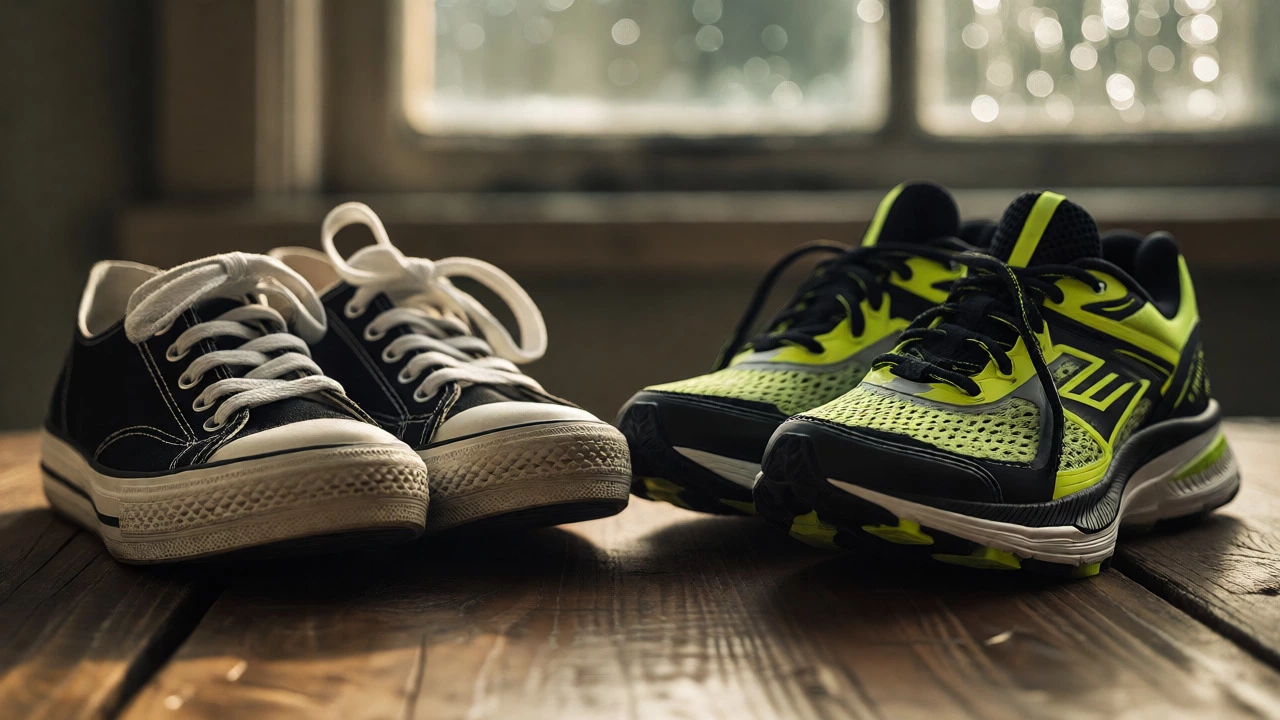
Older generations in Ireland might remember "plimsolls." These were basic canvas shoes with rubber soles, commonly worn in schools during PE lessons in the 1970s and 80s. The name comes from the resemblance to the waterline of a ship (the plimsoll line). Today, plimsolls are largely obsolete in favor of branded trainers, but the term lingers in nostalgia.
Americans had similar legacy terms like "Oxfords" (for low-top lace-ups) or "brogues" (though brogues are technically dress shoes). The shift to modern synthetic materials changed the game. Now, almost all casual athletic shoes fall under the sneaker/trainer umbrella. The distinction between a "gym shoe" and a "fashion sneaker" has blurred, making the general terms even more important.
This evolution reflects broader changes in fashion. Shoes are no longer just functional; they’re status symbols. In Ireland, wearing the latest release of Air Jordan or Yeezy signals trend awareness, just as it does in Chicago or Tokyo. The global nature of hype culture means that while the words differ, the desire for the same products unites us. Whether you call them trainers or sneakers, you’re likely eyeing the same pairs.
Practical Tips for Clear Communication
To wrap up, here are some quick tips to ensure your footwear conversations go smoothly, whether you’re in a shop in Galway or on a Zoom call with colleagues in Boston:
- Describe, don’t just label: If unsure, describe the shoe. "The white rubber-soled shoes I wear for running" works universally.
- Use brand names: Saying "I need new Nikes" or "My Adidases are worn out" transcends language barriers. Brand recognition is global.
- Ask for clarification: If an American uses a term you don’t know, ask! "Do you mean sneakers?" is a perfectly fine question. Most people enjoy explaining their local slang.
- Check the website locale: Before buying online, check if the site is set to .com (US) or .ie/.co.uk (Europe). This often hints at which terminology will be used in descriptions.
Language is alive. It changes with trends, technology, and migration. As Ireland becomes more connected globally, our vocabulary absorbs new influences while retaining its core character. Knowing that "sneakers" is the American equivalent of "trainers" is just one small piece of understanding this dynamic landscape. It empowers you to shop better, travel easier, and connect deeper with people from across the ocean.
Is there a difference between trainers and sneakers?
Physically, no. They refer to the same type of footwear: shoes with flexible soles and upper material made of leather, nylon, or cloth, designed for sports or casual wear. The only difference is geographical terminology. "Trainers" is used in Ireland, the UK, and many Commonwealth countries, while "sneakers" is the standard term in the United States and Canada.
Why are they called sneakers in America?
The term "sneaker" originated in the late 19th century in the United States. Rubber-soled shoes were quiet compared to leather-soled boots, allowing the wearer to "sneak" up on others unnoticed. The nickname stuck and became the generic term for athletic shoes.
Can I use "sneakers" in Ireland?
Yes, absolutely. Due to the popularity of American media and global brands, most Irish people understand "sneakers." However, "trainers" remains the more common and native term in everyday Irish conversation. Using "sneakers" might mark you as a visitor or someone heavily influenced by US culture.
What are "plimsolls"?
Plimsolls are a type of lightweight shoe with a rubber sole and canvas upper. The term was widely used in the UK and Ireland in the mid-20th century, particularly for school PE shoes. While the term is fading, some people still use it to describe basic canvas sneakers like Converse All-Stars.
Do Americans call all athletic shoes sneakers?
Generally, yes. However, Americans may use more specific terms like "running shoes," "basketball shoes," or "cleats" (for soccer/football) depending on the sport. "Tennis shoes" is also common in the Southern US for casual athletic wear, regardless of whether the person plays tennis.