6
Jacket vs Coat: What’s the Real Difference for Irish Weather?
Irish Weather Outerwear Selector
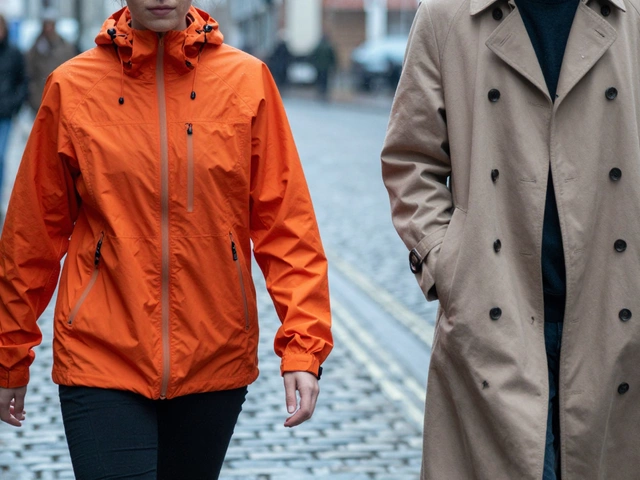
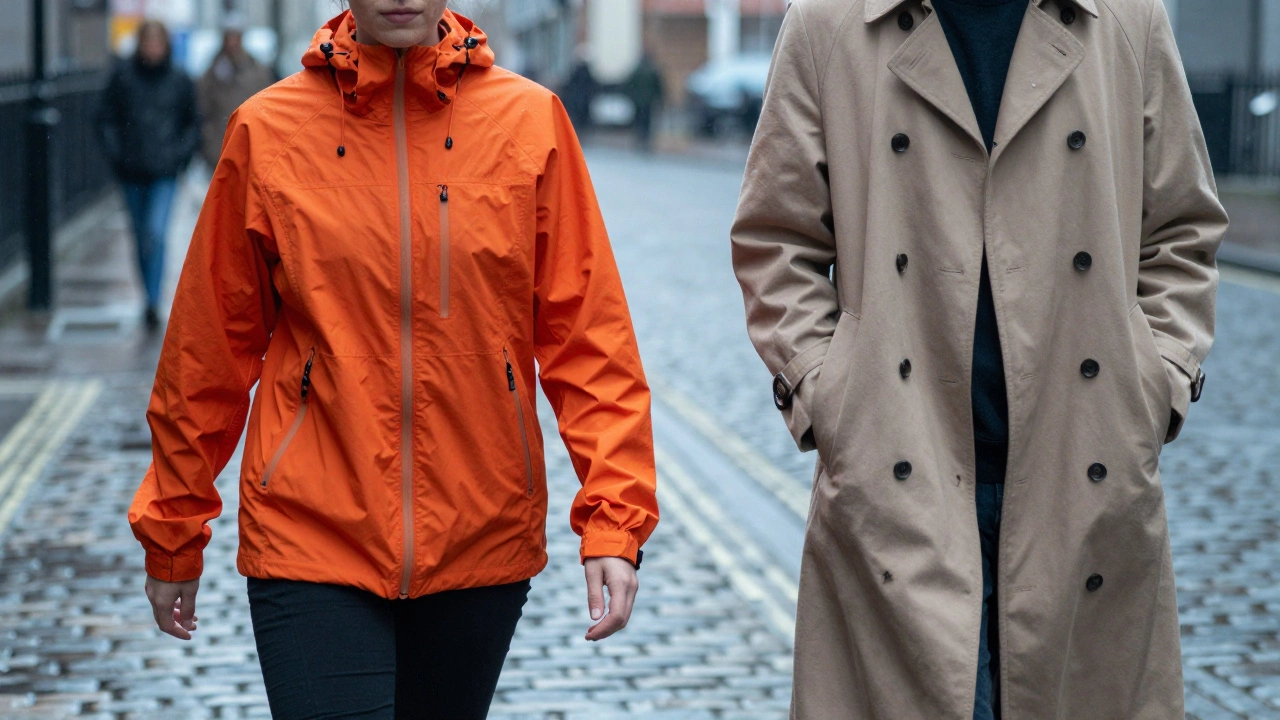
Standing on a Dublin street corner in late October, you might see someone wearing a lightweight windbreaker while the person next to them is bundled in a knee-length wool trench. Both are trying to stay dry, but they’re using two very different tools. If you’ve ever wondered what is the difference between a jacket and a coat, you aren’t alone. In Ireland, where the weather can shift from bright sunshine to horizontal rain in the time it takes to order a coffee, knowing the distinction isn't just about fashion-it's about survival.
We often use these words interchangeably, but there is a functional line that separates them. Understanding this helps you pack smarter for a trip to the Wild Atlantic Way or choose the right layer for a commute through Galway.
The Quick Rule of Thumb: Length and Weight
If you need a fast answer, look at the hemline. Generally speaking, a jacket is a garment that ends at the waist or hips. It is designed to be lighter, more flexible, and often worn as part of a layered system. A coat is a heavier outer garment that extends below the hips, often covering the thighs or knees.
This isn't just arbitrary style advice. The length dictates how much of your body is protected from the elements. In Ireland, where wind chill is a constant factor, a coat offers significantly more coverage than a jacket. However, neither is inherently "better"-they serve different jobs depending on the season and activity.
| Feature | Jacket | Coat |
|---|---|---|
| Hem Length | Waist to hip level | Below hips (thighs/knees) |
| Weight | Light to medium | Heavy to very heavy |
| Primary Use | Active movement, layering | Static warmth, extreme protection |
| Typical Materials | Nylon, polyester, denim, leather | Wool, cashmere, thick cotton, down |
| Irish Season Fit | d>Spring, Autumn, mild Winter days | Deep Winter, stormy days |
Why Length Matters in the Irish Climate
Ireland’s geography plays a huge role in how we dress. We don’t have long, freezing winters like Canada, nor do we have scorching summers like Spain. Instead, we have damp, windy, and changeable conditions. This makes the "midsection" critical. If you wear a short jacket, your lower back and legs are exposed to the wind coming off the Atlantic. A coat covers this area, trapping heat around your core.
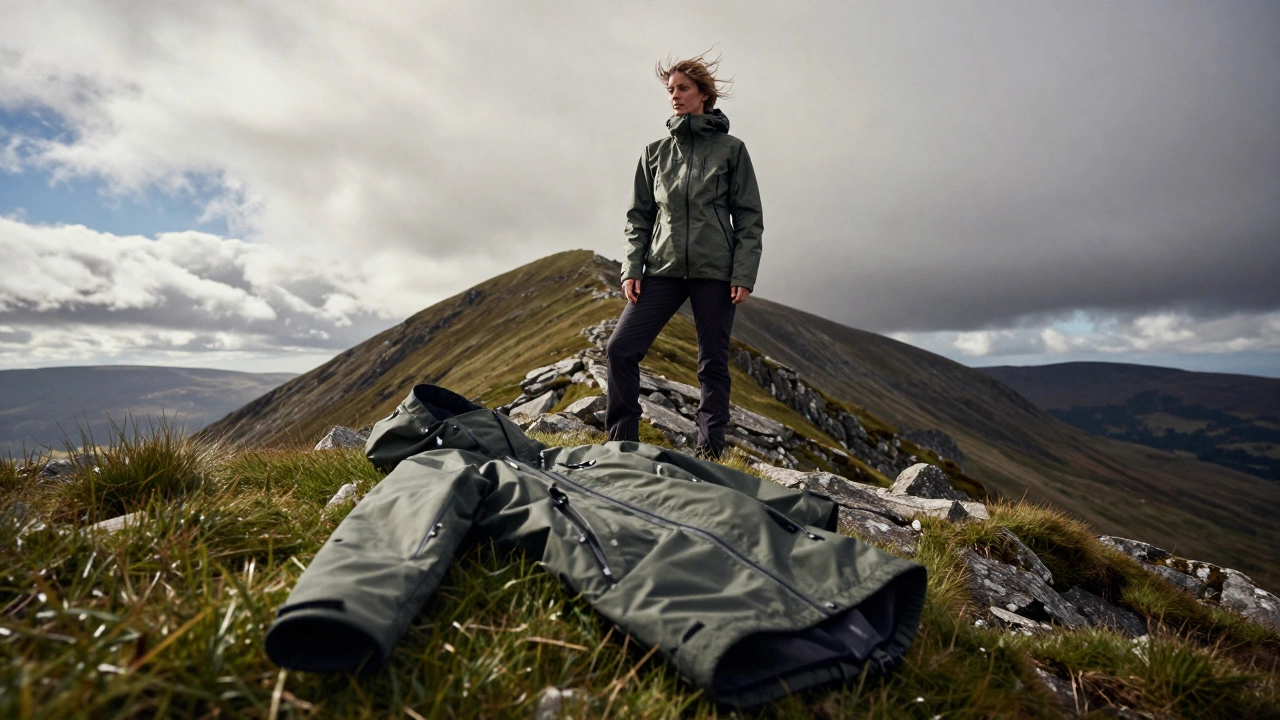
Consider a hike up Croagh Patrick in County Mayo. On a clear day, a technical hiking jacket is perfect-it allows you to move freely without tripping over fabric. But if you’re standing still at the summit waiting for the bus back down, that same jacket leaves you shivering because your legs are cold. That’s when a longer shell or a heavy coat becomes necessary.
In urban settings like Cork or Limerick, the rule shifts slightly. You might wear a smart blazer-style jacket to work, but once you step outside into a November drizzle, you’ll likely throw a raincoat over it. The coat acts as the shield; the jacket acts as the insulator.
Materials: Technical vs. Traditional
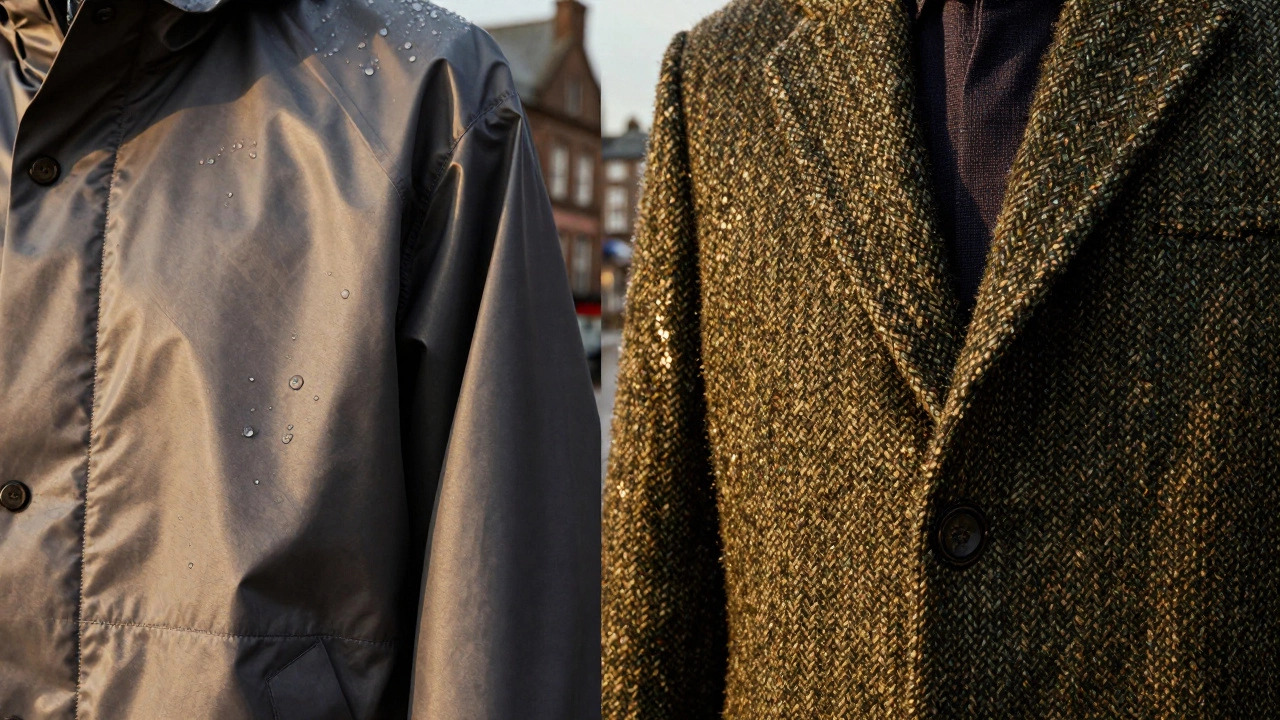
The fabric tells you what the garment is meant to do. Jackets are often made from synthetic materials designed for performance. Think of the brands you see on hikers in Killarney National Park. They use nylon or polyester with membranes like Gore-Tex. These materials are breathable, meaning sweat escapes while rain stays out. They are also durable against abrasion.
Coats, particularly those worn in cities or formal settings, lean towards natural fibers. Wool is king here. A classic Irish tweed coat, perhaps sourced from a mill in Donegal, provides excellent insulation even when wet. Unlike synthetics, wool doesn’t rely on complex chemical treatments to repel water; its structure naturally traps air. Cashmere coats offer luxury warmth but require careful handling-they aren’t built for climbing dunes in Dún Laoghaire.
Leather sits somewhere in the middle. A leather motorcycle jacket is popular among riders touring the Ring of Kerry. It’s tough and windproof, but it lacks the breathability of a technical jacket and the warmth of a wool coat. It’s a specific tool for a specific job.
Layering: The Irish Secret Weapon
You rarely need just one layer in Ireland. The concept of "layering" is essential. This is where the distinction between jacket and coat becomes practical rather than semantic.
- Base Layer: Moisture-wicking fabric (merino wool is ideal) next to your skin.
- Mid Layer: Insulation (fleece, down vest, or sweater).
- Outer Layer: Protection from wind and rain.
A jacket usually functions as the mid-layer or a light outer layer. A puffer jacket, for example, adds warmth but isn’t always waterproof on its own. A coat usually functions as the final barrier. If you wear a heavy wool coat, you might not need a thick mid-layer underneath, but you lose flexibility. If you wear a lightweight rain jacket, you must ensure your mid-layer is warm enough.
Many Irish people carry a compact "umbrella jacket" or a folded rain shell in their bag during spring. This is a jacket used strictly for emergency protection, not a full coat. It’s a smart compromise for unpredictable weather.
Style and Occasion: When to Wear Which
Beyond weather, social context dictates the choice. In Ireland, we value versatility. You want clothes that transition easily from a pub in Galway to a business meeting in Dublin.
Jackets are casual and active. A denim jacket, bomber jacket, or parka fits into everyday life. They are easy to take on and off. If you’re going to a gig at the O2 Arena or walking the dogs in Phoenix Park, a jacket is the standard choice. It signals readiness for movement.
Coats are formal and static. A trench coat, pea coat, or long wool overcoat suggests you are settled or heading somewhere significant. You wouldn’t typically climb stairs in a long fur-trimmed coat, but you would look appropriate entering a theatre in Grafton Street wearing one. Coats often define the silhouette of an outfit, whereas jackets blend into it.
Common Confusions: The Blurry Lines
Fashion has blurred the lines, creating hybrid garments that confuse the definition. Here are three common examples found in Irish high streets:
- The Parka: Originally a military coat, modern parkas are often knee-length. Technically a coat due to length, but styled like a jacket with hoods and drawstrings. Perfect for Irish winters.
- The Anorak: Usually hip-length with a hood. Despite being called a "jacket," many anoraks are heavy enough to function as primary outerwear. Look for taped seams to ensure waterproofing.
- The Blazer: A structured jacket. Never wear this as your only layer in winter. It’s a mid-layer piece that looks sharp under a coat but offers little protection against Irish rain.
Don’t get hung up on labels. Look at the construction. Is it lined? Does it zip fully? How long is it? These physical traits matter more than the name tag.
Shopping Smart in Ireland
When buying outerwear locally, consider where you live. If you’re in the west (Galway, Clare), wind resistance is priority number one. Look for jackets with high collars and secure zippers. If you’re in the east (Dublin, Wicklow), rain protection is key. Water-repellent finishes are essential.
Support local craftsmanship when possible. Irish-made coats, especially those using heritage tweeds, last decades. They are investments. For technical jackets, global brands dominate, but check for durability warranties. A jacket that fails after one rainy season is a poor purchase.
Finally, remember that maintenance matters. Waterproof coatings degrade over time. Re-treating your jacket annually ensures it performs when you need it most. Wool coats need professional cleaning to maintain their shape and insulation properties.
Can I wear a jacket instead of a coat in winter?
Yes, if you layer correctly. A thick insulated jacket combined with a warm mid-layer can provide enough heat. However, you will sacrifice leg coverage, making you more susceptible to wind chill. For extended outdoor time in Irish winters, a coat is safer.
What is the best material for an Irish rain jacket?
Nylon or polyester with a waterproof membrane (like Gore-Tex or eVent) is best. Ensure the seams are taped. Avoid cotton jackets for rain, as they absorb water and lose insulation quickly.
Is a trench coat considered a jacket or a coat?
It is a coat. Trench coats extend below the hips and are made from heavier fabrics like gabardine. They are designed as primary outerwear for formal or semi-formal occasions.
How do I know if my jacket is waterproof?
Check the label for terms like "waterproof" or a rating (e.g., 10,000mm). "Water-resistant" means it handles light drizzle but will soak through in heavy rain. Look for sealed seams and adjustable cuffs.
Are down jackets better than synthetic ones for Ireland?
Down is warmer for its weight but loses insulation when wet. Synthetic fills retain warmth even when damp. Given Ireland’s frequent rain, synthetic jackets are often more reliable unless the down is treated with a hydrophobic coating.