School Footwear Policy in Ireland: What Works, What Doesn’t, and Why It Matters
When it comes to school footwear policy, the set of rules schools in Ireland enforce about what shoes students can wear. Also known as school shoe guidelines, it’s not about fashion—it’s about safety, durability, and surviving Irish weather. Most schools don’t care if your kid’s shoes match the uniform. They care if they’ll last through puddles, muddy playgrounds, and wet bus stops without falling apart.
That’s why durable school footwear, shoes built to handle constant damp, cold, and rough use. Often includes waterproof boots and sturdy loafers, is the real standard. You won’t see many kids in flimsy sneakers or patent leather shoes in Irish schools. Those don’t survive a single winter term. Instead, brands like Clarks, Geox, and local Irish suppliers dominate because they offer grip, insulation, and soles that don’t slip on wet cobblestones or school hall floors.
The Irish school shoes, the specific types of footwear approved by schools across Ireland. Often required to be black, closed-toe, and non-slip aren’t optional. A school in Cork might require a leather oxford. A primary school in Donegal might insist on a lace-up boot with a rubber sole. But the common thread? They all need to handle rain, mud, and long days on concrete. And yes—socks matter too. Many schools ban no-show socks because they lead to blisters when shoes get damp. Thick cotton or wool socks are the quiet rule behind every policy.
It’s not just about rules. It’s about cost. Parents don’t buy one pair of shoes for the year—they buy two or three. Why? Because Irish winters turn shoes into soggy bricks. Schools know this. That’s why most policies allow for replacements mid-year. They’ve seen kids come in with shoes that split at the seam after two months of walking to school in downpours.
And then there’s the unspoken rule: no UGGs. Not because they’re ugly, but because they’re not supportive. No slip-ons, no sandals, no open toes—even in summer. The Irish school year doesn’t have a dry season, so footwear doesn’t get a vacation. Even in July, if it’s raining at 8 a.m., the policy still applies.
What you’ll find in the posts below isn’t a list of banned shoes. It’s the real talk from Irish parents, teachers, and students about what actually works. From why Clarks slippers are common in primary schools to why some schools quietly allow waterproof trainers, you’ll see the practical truth behind every policy. No fluff. No marketing. Just what’s on the ground—in every town, village, and city across Ireland.
22
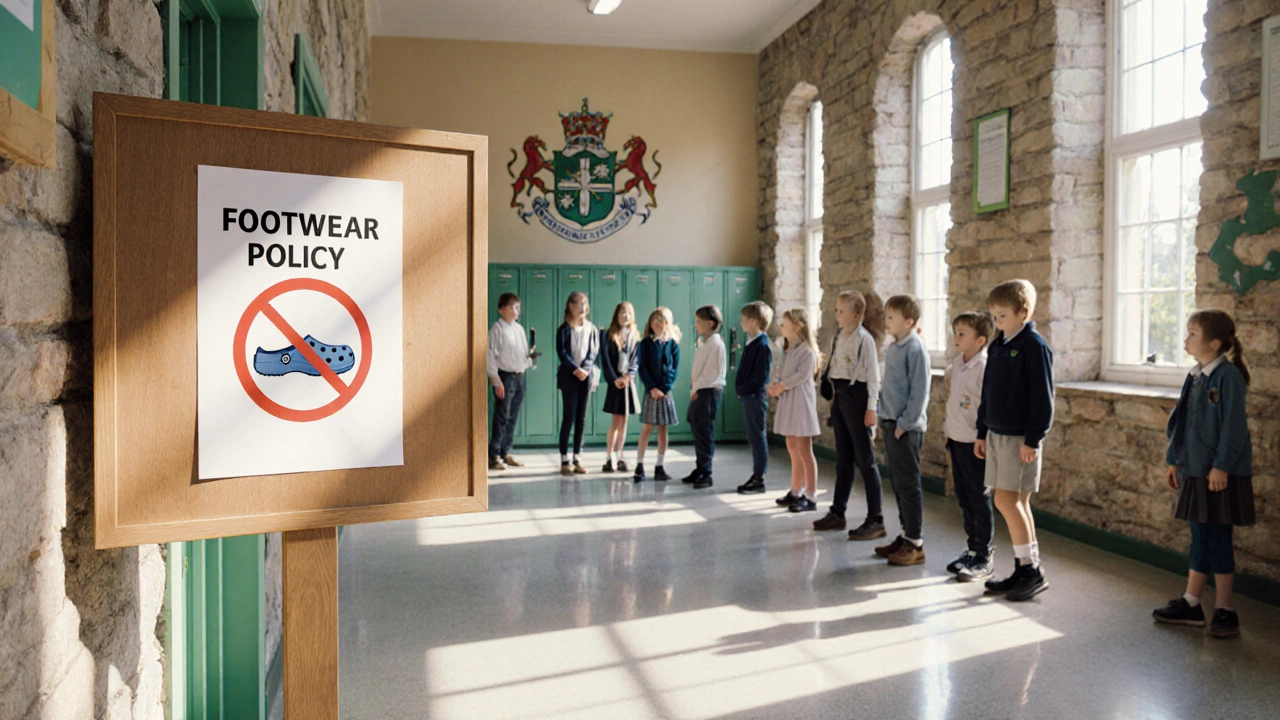
Why Irish Schools Are Banning Crocs - The Real Reasons Behind the Footwear Policy
Explore why Irish schools are banning Crocs, covering safety, uniform policies, legal guidance, and practical alternatives for parents and students.
Latest Posts


Popular Posts
-
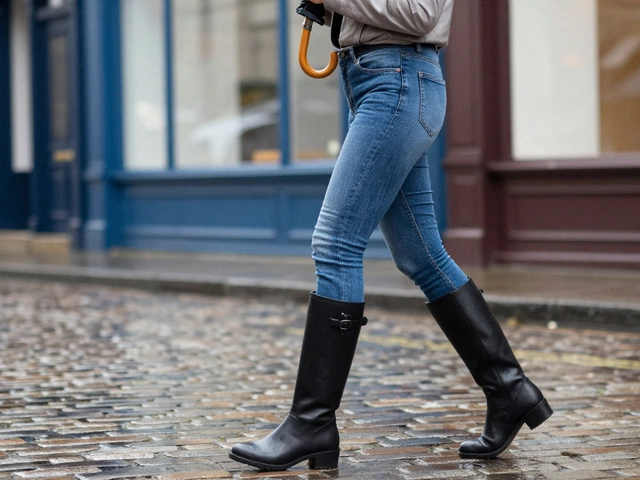 Are Skinny Jeans and Tall Boots Still in Style in Ireland?
-
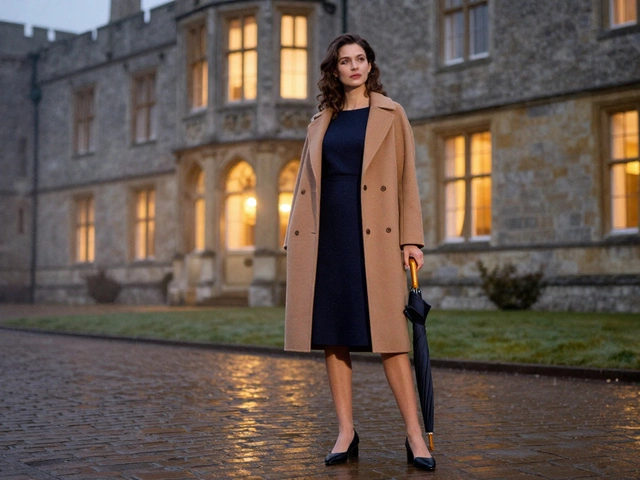 What Is the Dress Code for Evening Wear in Ireland?
-
 How to Dress and Look Classy in Ireland: Summer Dress Guide for the Irish Climate
-
 Why Not to Wear Leather Shoes in Ireland?
-
 Which is the No 1 brand of jeans in the world? The Irish perspective on denim dominance